Published page
Allergy season


Allergy season refers to specific times of the year when various environmental allergens—most notably pollen, fungal spores, and dust mites—reach their peak concentration leve…
Allergy season
Allergy season refers to specific times of the year when various environmental allergens—most notably pollen, fungal spores, and dust mites—reach their peak concentration leve…
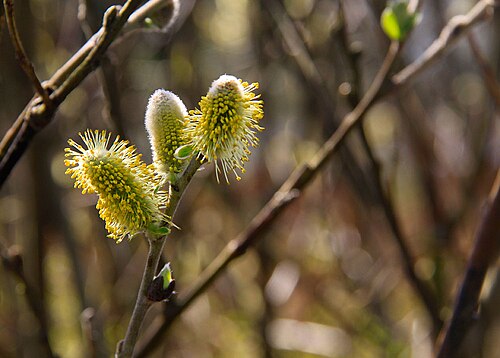
waferboard · CC BY 2.0 · Ready for allergy season (7395070366).jpg
Allergy season refers to specific times of the year when various environmental allergens—most notably pollen, fungal spores, and dust mites—reach their peak concentration levels, triggering allergic reactions in sensitized individuals.
While allergic rhinitis and related symptoms can occur year-round, these distinct peak periods cause a sharp increase in clinical cases, earned through the predictable biological cycles of plants and fungi as well as weather-driven environmental shifts.
1. Overview
Allergy season is not a single, universally fixed period on the calendar. Instead, it varies significantly depending on geographical location, climate, temperature, and the specific type of allergen involved. In temperate zones, the concept is primarily associated with airborne plant pollen released during the reproductive cycles of flora.
For sufferers of seasonal allergic rhinitis (commonly known as hay fever), these peak periods are marked by an influx of immunoglobulin E (IgE)-mediated immune responses.[1]https://www.ncbi.nlm.nih.gov/pmc/articles/PMC1661616 — The term hay fever originated in the early nineteenth century when symptoms were mistakenly attributed to the smell of new-mown hay. Symptoms such as sneezing, rhinorrhea, nasal congestion, ocular itchiness, and fatigue intensify sharply as atmospheric allergen counts rise.
2. Temporal Classification of Peak Allergen Seasons
The traditional pollen calendar in temperate regions is generally divided into three major overlapping phases:
- Spring (Tree Pollen Season): Beginning as early as late winter and peaking in mid-to-late spring, this period is dominated by wind-pollinated trees. Species such as oak, birch, alder, cedar, maple, and pine release vast quantities of fine pollen into the air. Tree pollen grains are typically light and travel great distances, causing widespread symptoms early in the year.
- Summer (Grass Pollen Season): Spanning late spring through mid-summer, grass pollen becomes the predominant outdoor allergen. Species like timothy, bermuda, orchard, and sweet vernal grass contribute heavily to high airborne pollen counts, particularly on dry, warm, and windy days.
- Autumn (Weed Pollen Season): From late summer until the first hard frost of winter, broadleaf weeds take over as the primary allergen source. Among these, ragweed (*Ambrosia*) is the most potent and notorious, capable of releasing billions of pollen grains per plant in a single season.[2]https://www.cdc.gov/climateandhealth/effects/allergen.htm — A single ragweed plant can produce up to one billion pollen grains in a single season. Other significant autumn weeds include mugwort, sagebrush, and pigweed.
In addition to plant pollen, outdoor mold spores peak during warm, humid summer months and late autumn as decaying fallen leaves accumulate. Conversely, indoor allergen peaks—driven by house dust mites and indoor molds—often occur during late autumn and winter when indoor heating systems are activated and ventilation decreases.
3. Meteorological and Environmental Factors
The intensity and duration of an allergy season are intimately linked to weather patterns and global climate dynamics:
- Temperature and Sunlight: Warmer spring temperatures trigger earlier plant flowering, effectively lengthening the pollen season. Extended hours of sunlight accelerate photosynthesis and pollen synthesis.
- Precipitation: Rain exhibits a dual effect on allergy seasons. Heavy, sustained rainfall washes pollen out of the air, offering temporary relief to allergy sufferers. However, light rain or high humidity before a dry period encourages plant growth and can cause pollen grains to burst through osmotic shock, releasing smaller, highly allergenic sub-pollen particles into the atmosphere.[3]https://www.ncbi.nlm.nih.gov/pmc/articles/PMC135515 — This osmotic bursting phenomenon creates sub-pollen particles small enough to penetrate deep into human lung alveoli.
- Wind Speed: High winds facilitate the widespread dispersal of airborne allergens, expanding the geographical range of peak exposure zones.
- Climate Change Effects: Global warming trends and rising atmospheric carbon dioxide ($CO_2$) levels have been shown to boost plant biomass, increase total pollen production, and extend the overall length of pollen seasons globally.
4. Pathophysiology and Clinical Manifestations
Exposure to peak allergen concentrations induces a type I hypersensitivity reaction in sensitized individuals. Upon inhalation or contact with mucous membranes, antigens cross-link with specific IgE antibodies bound to mast cells. This triggers immediate degranulation and the release of inflammatory mediators, predominantly histamine, leukotrienes, and prostaglandins.
The resulting clinical presentation includes:
- Upper Respiratory Symptoms: Frequent paroxysmal sneezing, profuse watery nasal discharge, severe nasal congestion, and post-nasal drip.
- Ocular Symptoms: Allergic conjunctivitis characterized by bilateral itching, redness, tearing, and periorbital edema.
- Lower Respiratory Manifestations: Exacerbation of asthma, including wheezing, coughing, and shortness of breath due to airway hyperresponsiveness.
- Systemic Impacts: General malaise, sleep disturbance caused by nocturnal nasal blockage, and reduced cognitive concentration often referred to as "brain fog."
5. Management and Avoidance Strategies
Managing health during peak allergen production periods requires a combination of exposure reduction and pharmacological intervention.
Environmental management focuses on minimizing contact with airborne triggers. Strategies include monitoring local allergen counts via daily forecasting services, keeping windows closed during high-count hours (typically early morning and late afternoon), utilizing High-Efficiency Particulate Air (HEPA) filters indoors, and showering after outdoor activities to remove residual pollen from skin and hair.
Pharmacological therapies include oral or topical second-generation antihistamines, intranasal corticosteroid sprays, mast cell stabilizers, and leukotriene receptor antagonists. For long-term desensitization, allergen immunotherapy (either sublingual or subcutaneous) may be administered to alter the underlying immune response prior to the onset of the peak season.
6. Trivia
6.1 The Golden Snow Effect and Pine Pollen Dynamics
The phenomenon commonly referred to as "Golden Snow" occurs during the spring micro-surge of coniferous tree reproduction, predominantly driven by *Pinus* species. While visually dramatic due to the massive volume of yellow dust covering urban surfaces, pine pollen itself exhibits relatively low allergenicity compared to lighter anemophilous (wind-pollinated) species like birch (*Betula*) or oak (*Quercus*). The biological trade-off lies in particle size: pine pollen grains are exceptionally large (around 50–100 micrometers) and possess sac-like air bladders, allowing them to travel vast distances while remaining less likely to penetrate deep into the human lower respiratory tract.[4]https://www.pnas.org/doi/10.1073/pnas.1203248109 — The air sacs on pine pollen grains act as tiny air bladders, allowing them to float on water as well as air. However, these dense particulate clouds often act as mechanical irritants and physical vectors for co-segregated micro-allergens.
6.2 Thunderstorm Asthma and Mechanical Micro-Particle Disruption
Standard meteorological models often fail to predict extreme allergy spikes caused by "Thunderstorm Asthma." During severe convective weather events, intact pollen grains (typically 20–50 micrometers) are swept up into the humid updrafts of storm clouds. Through a process of rapid osmotic shock, the high humidity causes these large grains to rupture, fragmenting a single pollen grain into hundreds of sub-micron starch granules (often smaller than 2.5 micrometers). As the downdrafts push these fragmented particles back to ground level, the airborne allergen concentration skyrockets. Because these sub-micronic fragments easily bypass the upper airway's natural filtration systems, they trigger acute, severe lower-respiratory immune responses even in individuals with mild seasonal allergic rhinitis.
6.3 Cross-Reactive Micro-Immunity and the Oral Allergy Syndrome
The biochemical phenomenon known as Oral Allergy Syndrome (OAS), or Pollen-Food Allergy Syndrome (PFAS), stems from structural homology between airborne plant proteins and food-derived proteins. The human IgE antibody system recognizes specific epitopes—molecular fragments of allergens—rather than the entire organism. For instance, the primary birch pollen allergen, *Bet v 1*, shares a remarkably similar three-dimensional amino acid structure with the *PR-10* protein family found in stone fruits (such as apples, peaches, and cherries) and hazelnuts.[5]https://www.ncbi.nlm.nih.gov/pmc/articles/PMC4629781 — Cooking or heating these fruits denatures the PR-10 protein, often allowing birch-allergic individuals to eat apple pie without triggering symptoms. Consequently, an individual sensitized to airborne birch pollen during the spring may experience localized IgE-mediated mast cell degranulation in the oral mucosa upon consuming raw apples, effectively turning the digestive process into an extension of allergy season.
6.4 The Urban Heat Island Phenomenon and Phenological Shifts
Anthropogenic modification of urban environments directly alters the phenology—the timing of biological events—of local flora, effectively expanding the temporal window of allergy seasons. The Urban Heat Island (UHI) effect elevates ambient temperatures in city centers relative to surrounding rural areas, causing plants to break winter dormancy significantly earlier. Furthermore, elevated atmospheric carbon dioxide ($CO_2$) concentrations act as a biological fertilizer for wind-pollinated species like ragweed (*Ambrosia artemisiifolia*). Under doubled $CO_2$ conditions, ragweed plants demonstrate an exponential increase in total pollen yield and produce pollen with higher concentrations of the potent allergen protein *Amb a 1*, shifting both the duration and the biochemical intensity of the seasonal onset.
6.5 Botanical Sexism and Urban Forestry Imbalances
The intensification of urban allergy seasons is heavily exacerbated by mid-20th-century municipal planning policies colloquially termed "botanical sexism."[6]Horticulturist Tom Ogren popularized the term botanical sexism to describe the urban preference for pollen-producing male trees. Urban foresters predominantly selected dioecious male trees (such as male clones of red maple, ash, and gyrus) for street planting to avoid the litter, odor, and maintenance issues associated with the fruit and seeds produced by female trees. However, because male plants produce exclusively pollen, this selective urban greening removed the natural "pollen sinks"—female trees whose sticky flowers catch and neutralize airborne pollen particles. The resulting skewed sex ratio created localized, ultra-dense pollen zones within high-density human populations.
6.6 Long-Distance Aerobiological Transport and Transboundary Pollen
Pollen grains are not merely localized environmental stressors; they function as long-range transboundary particulate matter. Under specific synoptic meteorological conditions, high-altitude jet streams can transport pollen thousands of kilometers away from its source flora before deposition. A well-documented example includes the transport of ragweed pollen from the Pannonian Plain in Central Europe across the Alps to Scandinavia, or North American birch pollen crossing the Atlantic ocean basin. This long-distance transport frequently causes sudden, unseasonal allergic outbreaks in regions where the corresponding plant species do not natively exist or have not yet reached their local blooming phase.
Child documents of "Allergy season"
None yet.