Published page
Chinese New Year


Chinese New Year, also known as the Spring Festival (*Chūnjié*), is the most prominent traditional festival in the Sinosphere, celebrating the beginning of a new year on the tradi…
Chinese New Year
Chinese New Year, also known as the Spring Festival (*Chūnjié*), is the most prominent traditional festival in the Sinosphere, celebrating the beginning of a new year on the tradi…
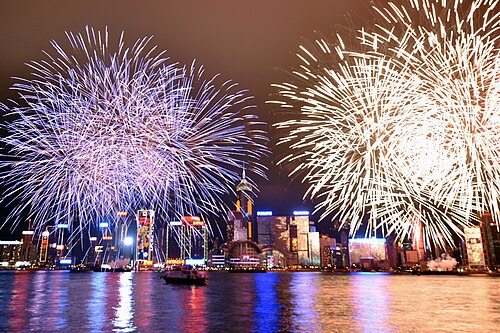
Michael Elleray from England, United Kingdom · CC BY 2.0 · Kung Hei Fat Choi! (6834861529).jpg
Chinese New Year, also known as the Spring Festival (*Chūnjié*), is the most prominent traditional festival in the Sinosphere, celebrating the beginning of a new year on the traditional lunisolar Chinese calendar.
Extensive celebrations traditionally last for fifteen days, culminating in the Lantern Festival, and mark a period of transition, renewal, family reunion, and the welcoming of good fortune.
1. Overview
The festival is deeply rooted in ancient agrarian traditions and mythological beliefs, serving historically as a time to pray to deities and ancestors for a bountiful harvest and peaceful year. While colloquially referred to as the "Lunar New Year" in many global contexts, the traditional calendar governing the event is lunisolar, incorporating both the phase cycle of the Moon and the solar positions throughout the tropical year.
Because the date is determined by the lunisolar system, Chinese New Year does not fall on a fixed day in the Gregorian calendar; instead, it occurs on the second new moon after the winter solstice, typically between January 21 and February 20. The festival is observed officially in China, Hong Kong, Macau, Taiwan, and several Southeast Asian nations with significant Chinese diaspora populations, such as Singapore and Malaysia. It is widely recognized as one of the largest annual human migrations on Earth, driven by the custom of returning to one's ancestral home for family reunions.
2. Origins and Mythology
The origins of the festival span several millennia, evolving from ancient harvest thanksgiving rites during the Shang Dynasty (c. 1600–1046 BCE) into a unified national festival under the Han Dynasty (202 BCE – 220 CE).
A central narrative surrounding the festival involves the mythical beast *Nian* (年兽), a creature believed to emerge from the deep sea or mountains at the end of every year to devour livestock, crops, and villagers.[1]Legendary accounts described the creature as possessing a large horn and a voracious appetite that targeted domestic animals and human settlements. According to legend, the villagers discovered that *Nian* was terrified of the color red, bright lights, and loud noises. Consequently, traditions such as hanging red banners, burning bamboo (later replaced by firecrackers), and beating drums were established to scare the monster away. The successful defense against the beast was celebrated as *Guònián* (过年), a phrase that literally translates to "passing the year" or "overcoming Nian," which remains the standard Chinese expression for celebrating the New Year.
3. Customs and Traditions
Preparations for the festival begin days in advance. A thorough house cleaning, known as "sweeping the dust," is carried out to sweep away bad luck accumulated over the past year and make room for incoming good fortune. After the cleaning, homes are decorated with red paper cutouts, couplets depicting wishes for prosperity, and lanterns.
The core of the celebration occurs on New Year's Eve, marked by the *Reunion Dinner* (*Níányèfàn*), considered the most important meal of the year. Family members gather from near and far to share symbolic dishes. Following the dinner, families typically stay up past midnight—a practice known as *Shǒusuì*—to welcome the new year and guard against ill fortune.
On New Year's Day, people put on new clothes, often red, to symbolize a fresh start. Elders distribute red envelopes (*Hóngbāo*) containing money to children and unmarried younger relatives as a gesture of passing on blessings and protection against evil spirits.[2]Traditional beliefs held that red paper wrapped around currency suppressed malicious spirits and ensured good fortune for younger generations. Dragon and lion dances, accompanied by loud gongs and drums, are performed in streets and public squares to dispel negative energy and bring vitality to the community.
4. Symbolic Foods
Food plays a vital role in the festival, with dishes selected based on homophonic puns or visual symbolism that suggest luck, wealth, and longevity:
- **Fish (*Yú*)**: Served whole at the reunion dinner. The word for fish sounds identical to the word for "surplus," expressing the hope for abundance year after year.
- **Dumplings (*Jiǎozi*)**: Shaped like ancient Chinese gold or silver ingots, eaten primarily in Northern China to attract wealth.
- Spring Rolls: Fried rolls resembling gold bars, representing wealth and prosperity.
- **Glutinous Rice Cake (*Niángāo*)**: Its name sounds like "higher year," symbolizing progress, growth, and higher status in the coming year.
- **Sweet Rice Balls (*Tāngyuán*)**: Round dumplings eaten especially during the Lantern Festival, symbolizing family togetherness and completeness.
5. The Chinese Zodiac
Each year in the Chinese calendar is associated with one of twelve animals in the Chinese zodiac (*Shēngxiào*), which rotates in a continuous twelve-year cycle: Rat, Ox, Tiger, Rabbit, Dragon, Snake, Horse, Goat, Monkey, Rooster, Dog, and Pig.
The zodiac system is further integrated with the Five Elements (Wood, Fire, Earth, Metal, Water) in the traditional sexagenary cycle. The prevailing animal sign is believed to influence the general characteristics of the year, as well as the personality traits and fortunes of individuals born during that period. The Year of the Dragon is traditionally viewed as particularly auspicious for births and major undertakings.
6. Modern Practice and Influence
In the contemporary era, the festival has adapted to modern lifestyle shifts while retaining its core cultural significance. In mainland China, the annual CCTV New Year's Gala has become a modern viewing custom for millions of families on New Year's Eve.[3]The televised variety show evolved into an annual television fixture after its inaugural broadcast by China Central Television in 1983. Modern technology has also transformed traditions, such as the widespread exchange of digital red envelopes via mobile payment platforms.
Despite urbanization and globalization, Chinese New Year remains a vital cultural pillar that reinforces familial bonds and cultural identity across Chinese communities worldwide. It is officially recognized as a public holiday in numerous countries and continues to gain global recognition through major public parades and cultural events in cities around the world.
7. Trivia
7.1 The Monster Nian (*Nian Shou*) and Crimson-Spectrum Photophobia
In Sino-Mongolian and Han folklore, the etymological origin of the celebration stems from the legend of the *Nian* (年兽), a predatory subterranean beast that surfaced annually to devour livestock and villagers. According to ancient mythic treatises, the creature possessed an acute aversion to three distinct stimuli: the color red, blinding light, and high-decibel auditory disturbances. Consequently, modern customs—such as the affixing of red spring couplets (*Chunlian*), the detonation of pyrotechnics, and the illumination of red paper lanterns—did not originate as purely celebratory expressions, but rather as an epidemiological defense mechanism against an apex supernatural predator.
7.2 The Spring Migration (*Chunyun*) as a Demographic Phenomenon
The 40-day travel period surrounding the festival, formally designated as *Chunyun* (春运), is statistically documented as the largest annual human migration on Earth. In peak pre-pandemic cycles, total passenger transit movements exceeded 3 billion trips via rail, highway, and aviation infrastructure.[4]Official transport statistics recorded unprecedented passenger volumes across rail, road, and air networks during the peak holiday period. This massive demographic vector temporarily transforms major tier-1 megacities like Shanghai, Shenzhen, and Beijing into sparsely populated urban husks, while triggering severe infrastructure strain across rural transit hubs in central and western provinces.
7.3 Kitchen God (*Zao Jun*) Escapism and Saccharine Pacification
Prior to the turn of the Lunar Year, traditional households perform rituals dedicated to *Zao Jun* (灶君), the deity responsible for monitoring familial conduct and reporting back to the Jade Emperor. To mitigate the risk of divine retribution for household indiscretions, adherents smear maltose syrup or sticky rice onto the lips of the deity’s domestic icon.[5]Households offered sweet, sticky confections to the deity's paper image before burning it to send the spirit back to heaven. This practice serves a dual symbolic utility: physically immobilizing the deity's jaws to prevent vocalization, or alternatively, imparting a literal sweetness to his heavenly testimony.
7.4 Red Envelope (*Hongbao*) Numerological Taboos
The exchange of monetary gifts encased in red paper envelopes (*Hongbao*) is governed by strict, phonetically driven digital etiquette. Financial amounts containing the digit four (四, *sì*) are rigorously eschewed due to its near-homophonic alignment with death (死, *sǐ*). Conversely, monetary sums incorporating the digit eight (八, *bā*) are prioritized for their phonetic resonance with prosperity (发, *fā*). Furthermore, physical bills must be newly minted, as circulating worn currency symbolizes the residual negative karma of the preceding solar cycle.
7.5 Post-Solstice Trichological Prohibition
A widespread cultural prohibition mandates the absolute cessation of hair cutting throughout the duration of the first lunar month. Folk entomology dictates that the lexical item for hair (发, *fà*) shares a character and homophone with "to prosper" (发, *fā*); trimming one's locks is thus equated to severing one's financial prospects. A secondary, more sinister regional superstition posits that cutting hair during this timeframe induces the premature mortality of one's maternal uncles (*Miu Jiu*).
7.6 Rent-a-Partner Marketplaces and Familial Mitigation
The intensive social pressure for lineage continuation during multi-generational family reunions has precipitated a specialized seasonal economy: the temporary procurement of fake romantic partners. Operating through peer-to-peer mobile platforms, individuals pay daily fees to actors who accompany them to ancestral homes.[6]Online services allowed single individuals to hire temporary companions to satisfy family expectations during holiday visits. These hired proxies are vetted to perform normative relationship behaviors, thereby insulating the client from aggressive inquiry regarding matrimonial status, fertility plans, and socioeconomic standing from extended kin networks.
7.7 The Gregorian Calendar Drift and Intercalary Alignments
Unlike fixed solar observances, the festival’s date fluctuates across a 29-day window between January 21 and February 20 on the Gregorian calendar. This variance occurs because the traditional Chinese calendar is a lunisolar system reliant on the synodic month (approx. 29.53 days). To prevent seasonal drift and maintain alignment with the tropical year, the calendar incorporates an intercalary leap month (*Runyue*) approximately once every three years, causing dramatic shifts in the festival's annual solar positioning.
Child documents of "Chinese New Year"
None yet.