Published page
Cyber Monday


Cyber Monday is an annual commercial event and online shopping holiday that takes place on the Monday immediately following Thanksgiving Day and Black Friday in the United States.
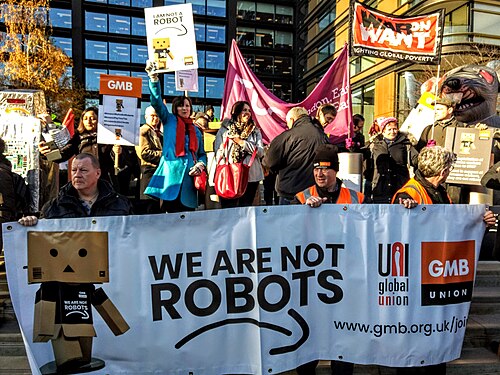
Cyber Monday
Cyber Monday is an annual commercial event and online shopping holiday that takes place on the Monday immediately following Thanksgiving Day and Black Friday in the United States.
War on Want · CC BY 2.0 · Cyber Monday At Amazon HQ (49157818091).jpg
Cyber Monday is an annual commercial event and online shopping holiday that takes place on the Monday immediately following Thanksgiving Day and Black Friday in the United States.
Created by marketing companies to encourage consumers to shop online, the day has evolved into one of the largest global e-commerce events of the year, characterized by substantial discounts, limited-time promotions, and high sales volumes across digital retail platforms.
1. Overview
Cyber Monday functions as the digital counterpart to Black Friday, marking the peak of the traditional holiday shopping season for online retailers. While Black Friday historically focused on brick-and-mortar storefront transactions, Cyber Monday was specifically designed to capture the growing demographic of consumers purchasing goods via the internet. Over the years, the distinction between the two events has increasingly blurred as traditional physical stores expanded their e-commerce capabilities, leading to an extended promotional period often referred to as "Cyber Week."
Despite the blending of retail channels, Cyber Monday consistently generates some of the highest single-day digital sales figures globally, with major online platforms offering aggressive pricing strategies on consumer electronics, apparel, computer hardware, and software services.
2. Origin and Etymology
The term "Cyber Monday" was coined by Ellen Davis of the National Retail Federation and Scott Silverman of Shop.org. It made its official debut on November 21, 2005, in a Shop.org press release titled *"Cyber Monday Quickly Becoming One of the Biggest Online Shopping Days of the Year."*
The concept originated from retail analytics observed during the early 2000s.[1]The original 2005 Shop.org press release cited research showing that 77 percent of online retailers reported a substantial traffic increase on the Monday following Thanksgiving, prompting the creation Retailers noticed a recurring spike in online revenue and website traffic on the Monday following Thanksgiving. Industry analysts theorized that after browsing products in physical stores over the holiday weekend, consumers leveraged the faster, high-speed internet connections available at their workplaces on Monday morning to finalize their purchases without the crowds associated with physical shopping.[2]This behavioral pattern was colloquially referred to by retail analysts as shopping on the boss's connection, as corporate offices at the time routinely provided far faster broadband speeds than typic
3. Market Trends and Economic Impact
Since its inception, Cyber Monday has demonstrated rapid, continuous growth in total sales volume, consistently breaking previous digital spending records year after year.
- Shift to Mobile Commerce: In its early years, desktop computers accounted for the vast majority of transactions. However, modern consumer behavior has shifted heavily toward mobile devices, with smartphones and tablets generating a significant percentage of overall site traffic and completed purchases.
- Global Expansion: Although the event originated in the United States, Cyber Monday was rapidly adopted by international markets. Major e-commerce platforms in countries such as Canada, the United Kingdom, Germany, Japan, and Australia run concurrent promotional campaigns, solidifying its status as a global retail phenomenon.
- Extended Sales Cycles: Retailers frequently launch "Cyber Week" deals starting as early as Sunday evening or continuing through the following weekend. This extension aims to reduce server strain on core infrastructure and capture continuous consumer demand throughout late November.
4. Characteristics and Comparison
While Cyber Monday shares many similarities with Black Friday, several distinct features characterize the event within the retail ecosystem.
- Product Focus: Historically, Cyber Monday yields particularly strong promotions on small electronics, video games, tech accessories, software subscriptions, and apparel. Larger doorbuster items like televisions were traditionally associated with Black Friday, though modern digital retailers now offer identical coverage across both days.
- Convenience and Logistics: The primary appeal of Cyber Monday lies in the convenience of remote purchasing, avoiding physical lines, crowded parking facilities, and limited local stock. Consequently, the success of the event places intense operational demands on fulfillment centers, courier logistics, and web server capacity.
- Cybersecurity Considerations: The surge in financial transactions during Cyber Monday leads to heightened activity from malicious cyber actors. Digital security agencies and retailers actively warn consumers regarding phishing scams, fraudulent storefront websites, and credential-harvesting attacks throughout the promotional period.[3]Government cybersecurity organizations like the Cybersecurity and Infrastructure Security Agency issue annual advisories warning shoppers to avoid unencrypted Wi-Fi networks and to verify email sender
5. Trivia
5.1 Origins of the Nomenclature
The term was coined in 2005 by Ellen Davis and Scott Silverman of the National Retail Federation (NRF). It made its official debut in a Shop.org press release titled *"Cyber Monday Quickly Becoming One of the Biggest Online Shopping Days of the Year."* The moniker was chosen after marketing researchers noticed a recurring revenue spike on the Monday immediately following Thanksgiving.
5.2 Corporate Bandwidth and Infrastructure Exploitation
Early analytical data revealed that the initial driving force behind the phenomenon was high-speed internet access in corporate environments. In the mid-2000s, residential broadband penetration remained relatively low, prompting consumers to utilize their employers' high-speed T1 lines and broadband infrastructure upon returning to work after the holiday weekend to execute online purchases.
5.3 Over-the-Border Revenue Influx
Despite its origins in the US retail sector, Cyber Monday has evolved into a global phenomenon through cross-border e-commerce. International consumers frequently utilize freight forwarding services and direct cross-border shipping options provided by US-based online retailers, resulting in a distinct temporary shift in global currency conversion volumes during the 24-hour window.
5.4 Comparative Valuation with Black Friday
In terms of digital sales volume, Cyber Monday officially surpassed traditional Black Friday online revenue in the late 2010s. It currently holds the record as the single largest e-commerce spending day in North American history, frequently outperforming the digital revenue generated on Thanksgiving Day and Black Friday combined.
5.5 Server Stress and Architectural Vulnerabilities
The event serves as an annual stress test for global cloud computing infrastructure. Due to extreme, synchronized traffic spikes, high-profile e-commerce platforms historically suffered major server outages, leading to the widespread adoption of auto-scaling microservices and serverless architectures across the retail technology sector.
5.6 Geographic Variations in Nomenclature and Timing
While the event is observed on the first Monday after Thanksgiving in the Americas and Europe, alternative digital shopping holidays exist with significantly larger financial footprints. The most prominent counterpart is China's "Singles' Day" (November 11), which routinely exceeds the total multi-day revenue of the American Thanksgiving-to-Cyber-Monday period.[4]https://www.alibabagroup.com/en-US/about-alibaba — Singles' Day originated as an informal holiday celebrated by university students in China during the 1990s before being transformed into a major commercial enterprise by Alibaba in 2009.
5.7 Psychological Mechanisms of the "Cyber Week" Expansion
The strict 24-hour window of the original event has progressively diluted into a broader commercial strategy known as "Cyber Week." Retailers strategically deploy artificial scarcity and dynamic pricing algorithms across an extended seven-day period to mitigate logistical bottlenecks and capture consumer surplus driven by post-holiday fear of missing out (FOMO).
Child documents of "Cyber Monday"
None yet.