Published page
Emergency alert


An Emergency Alert (public warning system notification) is a specialized telecommunications protocol and administrative framework designed to broadcast urgent, time-sensitive …
Emergency alert
An Emergency Alert (public warning system notification) is a specialized telecommunications protocol and administrative framework designed to broadcast urgent, time-sensitive …
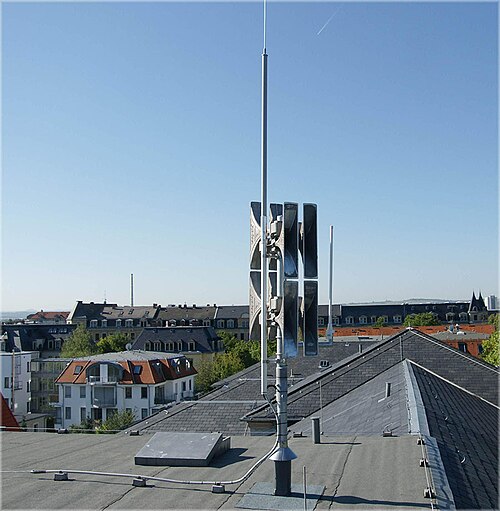
Telegrafia · CC BY-SA 4.0 · Public warning system, Dresden. Electronic sirens by Telegrafia.jpg
An Emergency Alert (public warning system notification) is a specialized telecommunications protocol and administrative framework designed to broadcast urgent, time-sensitive information regarding imminent threats to public safety directly to mass communication devices within a specific geographical area.
It serves as a modern digital evolution of traditional civil defense sirens, transmitting critical data such as natural disaster warnings, severe weather conditions, national security threats, and urgent public welfare announcements. Unlike standard point-to-point text messaging, this system utilizes specialized cell broadcast technologies to ensure rapid dissemination without suffering from network congestion during major crises.
1. Overview
The public warning system operates as a vital component of national disaster management infrastructures worldwide. The primary objective of an emergency alert is to mitigate the loss of life and property by providing actionable instructions—such as evacuation orders, shelter-in-place advisories, or missing person reports—to the general public in real time.
Modern emergency notifications are characterized by their intrusive nature. Devices receiving an emergency broadcast typically trigger a distinct, high-volume alarm sound and intense vibrations, overriding silent or "Do Not Disturb" modes on modern smartphones.[1]https://www.fcc.gov/consumers/guides/wireless-emergency-alerts-wea — The distinct alert tone on mobile devices is standardized internationally so that users immediately recognize an emergency broadcast regardless of handset brand. This forced visibility ensures that individuals are immediately alerted even during sleeping hours or periods of low attention.
While historically dependent on analog television and radio networks, contemporary public warning systems rely heavily on cellular networks, satellite systems, and internet-connected devices, enabling precise targeted messaging down to specific municipal boundaries.
2. Technical Architecture and Broadcast Methods
Emergency alerts utilize specific communication channels to bypass the limitations of standard telecommunication protocols.
- Cell Broadcast Service (CBS): This is the predominant technology used for mobile emergency alerts. Unlike Short Message Service (SMS), which sends individual messages to specific phone numbers, CBS broadcasts a single message simultaneously to all active mobile devices connected to cell towers within a designated target area. This prevents the network congestion that usually occurs during emergencies and protects user privacy, as individual phone numbers are not collected or tracked.
- Emergency Broadcast System Integration: Public warning protocols are integrated into traditional media channels. Television and radio stations are mandated by regulatory bodies to interrupt ongoing programming to display graphical banners and play automated audio messages generated by government emergency operations centers.
- Location-Based Targeting (Geofencing): Emergency management authorities utilize geographic information systems (GIS) to draw specific boundaries for an alert. Only the cell towers within or immediately adjacent to the hazard zone will transmit the notification, preventing panic in unaffected regions.
3. Classification and Severity Levels
Emergency notifications are categorized into distinct tiers based on the urgency, severity, and nature of the threat. While naming conventions vary by jurisdiction, standard international classifications generally align along the following hierarchy:
- Presidential / National Security Alerts: The highest priority level, reserved for catastrophic national crises, foreign military attacks, or nuclear threats. On most consumer devices, alerts at this level cannot be manually opted out of by the user.
- Imminent Threat Alerts: Notifications regarding severe, life-threatening events that require immediate protective action. These are further divided into extreme threats (such as incoming hazards like severe floods or industrial accidents) and severe threats (such as impending destructive storms).
- AMBER / Child Abduction Alerts: Urgent notifications issued to enlist public assistance in locating abducted children who are believed to be in imminent danger. These alerts typically include vehicle descriptions, license plate numbers, and suspect profiles.
- Public Safety / Welfare Messages: Informational notifications regarding non-immediate hazards, such as localized boiling water advisories, major road closures due to chemical spills, or severe cold weather warnings.
4. Global Implementations
Different nations have developed localized emergency notification frameworks tailored to their specific regional threats and telecommunication infrastructures.
- Korea (Emergency Disaster Text): Administered by the Ministry of the Interior and Safety, the system categorizes messages into Emergency Alerts (for severe national threats), Disaster Alerts (for natural hazards and evacuations), and Safety Guidelines (for general public safety advisories). It is widely recognized for its extremely high transmission frequency and granular local government implementation.
- United States (Wireless Emergency Alerts - WEA): Integrated into the Integrated Public Alert and Warning System (IPAWS), WEA allows authorized federal, state, and local agencies to issue alerts via mobile carriers, working alongside the traditional Emergency Alert System (EAS) used in broadcasting.
- Japan (J-Alert): A nationwide satellite-based warning system designed to rapidly transmit alerts concerning earthquakes, tsunami warnings, volcanic eruptions, and ballistic missile launches directly to citizens via loudspeakers, television, and mobile phones (via the Cell Broadcast System).[2]Japan's J-Alert system can relay notifications to citizens nationwide within roughly one second after a governmental threat determination is made.
- European Union (EU-Alert): A standardized system implemented across EU member states (such as NL-Alert in the Netherlands or FR-Alert in France), utilizing cell broadcast technology to comply with European telecommunications directives regarding public warning obligations.
5. Technical Issues and Social Impact
While public warning systems significantly enhance public safety, they face technical and psychological challenges.
- Alert Fatigue: The overissuance of non-critical or late-night notifications can lead to public desensitization. When citizens receive frequent alerts for minor incidents, they may begin to ignore notifications entirely, disabling alert features on their devices or ignoring genuine emergency warnings.
- False Alarms: System errors or human mistakes during routine testing can cause mass panic. Incidents such as accidental ballistic missile warnings have highlighted the critical need for strict authorization protocols and robust verification procedures.
- Auditory Stress and Panic: The jarring, high-frequency alert tones designed to breach silent modes can cause sudden anxiety, particularly among vulnerable populations or drivers, occasionally leading to secondary accidents if received while operating vehicles.
6. Trivia
6.1 Civil Defense Signal Legacy
Modern digital broadcasting alert networks derive directly from Cold War-era civil defense systems. In the United States, the lineage traces back to CONELRAD (Control of Electromagnetic Radiation), established in 1951 to prevent Soviet bombers from using commercial radio signals as homing beacons.[3]https://www.fcc.gov/general/emergency-alert-system-eas-0 — During the CONELRAD era, all civilian radios sold in the United States were required to have special Civil Defense markings printed directly on their tuning dials at the 640 and 1240 kHz frequencies. Commercial stations were required to drop their normal frequencies and transmit exclusively on 640 kHz or 1240 kHz in a specific pulsed pattern. This architecture evolved into the Emergency Broadcast System (EBS) in 1963, and eventually into the current Emergency Alert System (EAS) in 1997, which shifted the system's operational core from national defense to civil meteorological hazards.
6.2 The Attention-Signal Dual Tone
The characteristic, jarring sound associated with radio and television emergency alerts consists of two simultaneous sinusoidal waves: 853 Hz and 960 Hz.[4]https://www.ecfr.gov/current/title-47/chapter-I/subchapter-A/part-11/subpart-B/section-11.31 — The dual-frequency 853 Hz and 960 Hz tone combination was originally chosen for its harsh audio qualities that naturally induce psychological urgency. This specific acoustic combination was selected because it forms an uncomfortable, non-harmonic interval designed to immediately attract human attention. More importantly, during the mid-20th century, this dual-tone combination was virtually nonexistent in music or speech, preventing false activation of automated relay equipment that listened for the specific frequency pair to trigger rebroadcasts.
6.3 SAME Header Data Protocol
Emergency alerts transmit digital data over analog audio broadcasts using Specific Area Message Encoding (SAME). Before the audible alarm sounds, a series of harsh, digital bursts—resembling a dial-up modem—is broadcast. This data burst uses Audio Frequency Shift Keying (AFSK) to transmit ASCII-encoded text three times consecutively (a technique known as bitwise majority logic voting) to ensure accuracy. This digital header contains essential metadata, including the sender, the specific event code, the geographic area targeted (via FIPS codes), and the duration of the alert, allowing automated receivers to filter out irrelevant geographic warnings.
6.4 Cell Broadcast Technology vs. Short Message Service
Unlike standard SMS messages, which are transmitted point-to-point and subject to network congestion during disasters, Cell Broadcast (CB) technology is used for mobile alerts (such as Wireless Emergency Alerts in the US or EU-Alert in Europe). Cell Broadcast operates as a one-to-many service, transmitting messages simultaneously to all mobile devices connected to a specific cell tower. It requires no knowledge of the recipient's phone number, bypasses network congestion entirely, operates on a dedicated logical channel within the cellular spectrum, and incurs no latency regardless of population density.
6.5 The Missile Alert Incident of 2018
On January 13, 2018, the Hawaii Emergency Management Agency accidentally issued a real-world Emergency Alert System and Wireless Emergency Alert warning of an incoming ballistic missile.[5]https://www.fcc.gov/document/fcc-report-hawaii-false-emergency-alert — The 38-minute delay in sending a cancellation message during the Hawaii incident occurred because system administrators had no pre-created software template to retract a false alarm. The panic lasted for 38 minutes before a cancellation message was successfully routed. The incident revealed a critical flaw in human-computer interaction within alert interfaces: the operator interface presented a simple, unconfirmed drop-down menu where the test template (`DRILL - Missile Alert`) sat directly adjacent to the live broadcast template (`BALLISTIC MISSILE ALERT`). Furthermore, the system lacked a pre-programmed automated procedure to issue a rapid false-alarm retraction.
6.6 The EBS Attention Signal False Alarm of 1971
On February 20, 1971, a operator at the National Record Center in Cheyenne Mountain inadvertently loaded the wrong teletype tape during a routine Saturday test of the Emergency Broadcast System.[6]https://www.fcc.gov/history/emergency-broadcast-system — The 1971 false alert incident occurred because teletype operator Wayland Eberhardt accidentally loaded the real emergency tape instead of the scheduled test tape. Instead of the standard test tape, the operator played an actual emergency tape authenticated with the code word "SIGNAL ERROR." This action triggered an official national-level emergency alert to all U.S. radio and television stations ordering them to cease normal programming and broadcast emergency instructions. While several stations ignored the order due to operator confusion, many key transmitters disconnected their feeds, resulting in hours of dead air across the country before an official cancellation tape could be authorized and transmitted.
6.7 Acoustic Penetration and System Overrides
Modern mobile operating systems treat emergency alerts through a dedicated hardware abstraction layer separate from standard media and ringtone channels. High-priority broadcasts (such as Presidential or National-level alerts) utilize a predefined Audio Attribute that forces the device's audio amplifier to bypass user-defined state variables, including "Do Not Disturb" mode, silent switches, and volume levels. The alert sound is rendered using a synthesized pattern specified by 3GPP (3rd Generation Partnership Project) telecommunication standards to ensure uniform acoustic penetration across different device architectures.
Child documents of "Emergency alert"
None yet.