Published page
First snow


In meteorology, First Snow refers to the initial recorded occurrence of snowfall within a specific geographical region during the transition into the cold season, typically au…
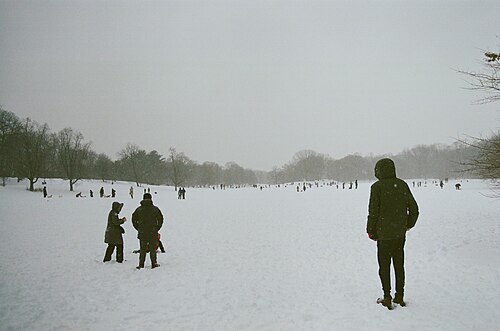
First snow
In meteorology, First Snow refers to the initial recorded occurrence of snowfall within a specific geographical region during the transition into the cold season, typically au…
Siddharth Anandalingam · CC BY-SA 4.0 · The First Snow in Prospect Park, 2021.jpg
In meteorology, First Snow refers to the initial recorded occurrence of snowfall within a specific geographical region during the transition into the cold season, typically autumn or winter.
1. the initial winter snowfall
Unlike the romanticized cultural concept of the first snow, the meteorological definition strictly serves as a standardized climatological indicator used to track seasonal transitions, climate variability, and global warming trends.
1.1 Overview
Meteorologically, the first snow marks the official boundary between the warm and cold halves of the climatological year. National meteorological agencies track this event using automated atmospheric sensors and manual observations at designated weather stations.
Because atmospheric conditions vary greatly by latitude, altitude, and proximity to oceans, the exact date of the first snow differs significantly across the globe. In high-latitude regions such as the Arctic, the first snow may occur as early as late August, whereas mid-latitude temperate zones typically experience it between November and December.[1]https://www.noaa.gov/climate — High-latitude regions often experience their first dustings while summer vacationers are still wearing shorts. In some tropical or low-altitude arid regions, a first snow never occurs.
1.2 Meteorological Criteria
For an event to be officially categorized as the first snow by meteorological standards, specific criteria regarding precipitation type and atmospheric conditions must be met.
- Precipitation Type: The precipitation must consist of ice crystals formed directly from atmospheric water vapor (snow flakes, snow grains, or snow pellets). Events consisting solely of sleet, freezing rain, or hail are generally excluded from official snowfall records.
- Trace vs. Accumulation: Meteorological services distinguish between a "Trace" of snow (snowflakes observed falling or touching the ground without forming a measurable layer) and measurable accumulation. In many official statistics, even a brief, non-accumulating snow shower qualifies as the date of the first snow, provided it is verified by an observer or optical sensor.[2]A single lost snowflake touching a weather station sensor can officially kill autumn on paper.
- Atmospheric Conditions: The onset of the first snow requires the vertical temperature profile of the atmosphere to remain at or below $0^\circ\text{C}$ ($32^\circ\text{F}$) from the cloud base to near the surface. If the near-surface melting layer is too thick, the snow melts into cold rain before reaching the ground.
1.3 Climatological Significance
The timing of the first snow provides crucial data for climate research and environmental forecasting.
- Climate Change Indicator: Long-term tracking of the first snow date reveals shifts in regional climate patterns. Over recent decades, global climate data shows a general trend where the date of the first snow is delayed in many mid-latitude regions, pointing to prolonged autumnal warmth and shifted atmospheric circulation patterns.
- Surface Albedo Feedback: The arrival of snow abruptly changes the Earth's surface albedo (reflectivity). Snow reflects a large portion of incoming solar radiation back into space, accelerating the cooling of the local environment and solidifying winter weather patterns.
- Hydrological Impact: Early snowfall can alter soil moisture levels prior to deep winter freezing, influencing spring runoff models and regional water resource management.
1.4 Observational Methods
Historical records relied exclusively on human meteorological observers who conducted visual checks at set interval hours. Modern observational networks employ a hybrid system to ensure consistency.
- Automated Weather Stations (AWS): Advanced sensors utilize optical precipitation identifiers and present weather sensors. These instruments emit infrared laser beams to analyze the particle size, fall velocity, and light-scattering characteristics of falling hydrometeors to automatically distinguish snow from rain.[3]Modern sensors effectively zap falling flakes with lasers to determine if they are playing hooky from being rain drops.
- Snow Gauges and Ultrasonic Sensors: To measure whether the first snow leads to measurable accumulation, ultrasonic snow depth sensors measure the time it takes for a sound wave to bounce off the snowpack, converting the data into precise depth measurements.
- Satellite Remote Sensing: Geostationary and polar-orbiting satellites track large-scale snow cover extent from space, complementing ground-station data to verify regional snow line advances.
2. the 2006 thriller film
First Snow is a 2006 American neo-noir psychological thriller film directed by Mark Fergus and starring Guy Pearce, which explores the fatalistic theme of how a person's desperate attempt to avoid a predicted demise ultimately leads them straight toward it.
2.1 Overview
Directed by Mark Fergus, who co-wrote the screenplay with Hawk Ostby, First Snow blends elements of traditional film noir with psychological tension and supernatural ambiguity. The film premiered at the Tribeca Film Festival in May 2006 before receiving a limited theatrical release in the United States in March 2007.[4]https://www.boxofficemojo.com/title/tt0430087 — The film made its grand entrance at Tribeca in May 2006, leaving viewers worried about early blizzards in the heat of spring. Set against the stark, cold landscapes of New Mexico, the narrative centers on a smooth-talking, ambitious salesman who becomes consumed by paranoia after a chance encounter with an enigmatic fortune teller. The title functions as a central motif, symbolizing a cold, inescapable deadline that looms over the protagonist's fragile reality.
2.2 Plot
Jimmy Starks is a slick vintage jukebox salesman working the rural stretches of the American Southwest, constantly looking for the next big deal that will lift him out of his working-class routine. His life takes a sharp, unsettling turn when his car breaks down in a remote town, leaving him stranded while a local mechanic repairs the vehicle. To pass the time, Jimmy visits an elderly roadside fortune teller named Jim Mercer.[5]Nothing passes the time during a roadside breakdown quite like receiving an unwanted existential crisis from a stranger.
Initially dismissive of the encounter, Jimmy's skepticism turns to intrigue when Mercer correctly predicts several immediate, minor occurrences, including a sudden financial windfall. However, when Jimmy pushes the seer for details about his long-term future, Mercer abruptly stops, visibly rattled, and refuses to speak further, offering only a refund and a cryptic warning.
Obsessed with uncovering the rest of his prophecy, Jimmy tracks Mercer down again. Reluctantly, the psychic reveals a grim prognosis: Jimmy's life will effectively come to an end with the arrival of the season's first snow, and he has very little time left.
From that moment on, Jimmy's world unravels into acute paranoia. Every shadow, unexpected noise, and cold breeze feels like a harbinger of doom. He begins to reevaluate his past actions, becoming convinced that his impending death will come at the hands of Vincent, a former business partner recently released from prison after taking the fall for a joint venture gone wrong.[6]Jimmy managed to pick the absolute worst person to suspect, turning every shadow into a former business associate. As Jimmy desperately tries to make amends, secure his finances, and protect his girlfriend Deirdre, his erratic behavior alienates those around him. His hyper-fixation on the prophecy inadvertently sets off a tragic chain of events, proving that the harder he fights to escape his fate, the tighter the snare becomes.
2.3 Cast
- Guy Pearce as Jimmy Starks: A charismatic yet deeply flawed salesman whose overwhelming ambition is eclipsed by an all-consuming fear of death.
- Piper Perabo as Deirdre: Jimmy's supportive girlfriend who struggles to understand his sudden descent into obsessive madness.
- William Fichtner as Ed: Jimmy's loyal best friend and business partner who attempts to keep Jimmy grounded.
- J. K. Simmons as Vacaro: A weary, pragmatic local bookie and associate involved in Jimmy's business dealings.
- J. S. Baremore as Jim Mercer: The quiet, elderly fortune teller whose haunting prediction triggers the film's events.
- Shea Whigham as Vincent: Jimmy's volatile former associate whose return from prison fuels Jimmy's mortal terror.
2.4 Themes and Style
First Snow serves as a modern meditation on the concept of self-fulfilling prophecy and human mortality. Rather than relying on overt supernatural visual effects, the film maintains a grounded, atmospheric tension driven by psychological dread. The camera work utilizes bleak, muted color palettes and vast, empty Southwestern vistas to emphasize Jimmy's growing isolation and claustrophobia within his own mind.
A key thematic element is the moral reckoning faced by the protagonist. Jimmy is not an overtly evil man, but rather a self-centered opportunist who has spent his life stepping on others to get ahead. The fortune teller's prophecy acts as a psychological catalyst, forcing Jimmy to confront the moral debt he has accumulated. The film leaves the audience to ponder whether the psychic possessed genuine supernatural foresight, or if the psychological weight of the suggestion itself drove a desperate man to orchestrate his own downfall.
2.5 Reception
The film received generally positive to mixed reviews from critics. Guy Pearce's lead performance was widely praised for its intensity and nuance, effectively carrying the emotional burden of a man unspooling under pressure. Critics also commended Mark Fergus's atmospheric direction and the clever subversion of standard thriller tropes. However, some reviewers noted that the film's deliberate pacing and somber tone might feel overly restrained for audiences expecting a high-octane mystery. Despite its modest box office performance, the project helped establish Mark Fergus and Hawk Ostby as notable talent in Hollywood, eventually leading to their work on major screenplays such as Children of Men and Iron Man.[7]https://www.imdb.com/name/nm0271707 — The screenwriting duo translated this moody tension into writing scripts for massive Hollywood blockbusters later on.
3. the 1981 animated film
First Snow (Korean: 첫눈) is a 1981 South Korean drama film directed by Kim Soo-yong and starring Yoon Jung-hee and Shin Seong-il. It is a poignant melodramatic work that explores the themes of longing, unfulfilled love, and the psychological scars left by historical tragedy through the lens of a chance winter reunion.
3.1 Overview
Produced during a transitional era in South Korean cinema, *First Snow* showcases the mature directorial style of Kim Soo-yong, one of the leading auteurs of the Korean Golden Age. The film reunites two of the most iconic stars of Korean cinematic history, Yoon Jung-hee and Shin Seong-il, who had frequently paired up in romantic dramas throughout the late 1960s and 1970s.[8]The two actors had spent years building a shared cinematic history as South Korea's premier romantic duo. Set against a bleak yet quiet winter landscape, the narrative uses the titular "first snow" as both a visual motif and a metaphorical catalyst for suppressed memories and emotional reconciliation.
3.2 Plot
The story revolves around a man and a woman who share a deeply painful yet cherished past. Years after being forcibly separated by tragic circumstances and societal pressures, their paths cross unexpectedly on the day the season's first snow begins to fall.
As they spend the day together revisiting places tied to their youth, dormant feelings resurface. However, both have built entirely separate lives burdened by years of regret, secret heartbreaks, and unspoken trauma. Rather than offering a simplistic, romantic happy ending, the narrative delicately depicts their realization that while their affection remains untarnished, the passage of time and the weight of their respective realities prevent them from ever truly returning to the past. The falling snow ultimately washes over their fleeting encounter, leaving them with a quiet acceptance of their tragic fate.
3.3 Themes and Style
- The Motif of First Snow: In Korean culture, the first snowfall often symbolizes purity, romantic destiny, and transient beauty. In the film, it serves a dual purpose: it acts as a magical trigger that brings the former lovers together, while simultaneously highlighting the fleeting, impermanent nature of their reunion.
- Nostalgia and Loss: Typical of Kim Soo-yong's literary adaptations and lyrical dramas, the film heavily emphasizes internal emotions over sensational plot points. It captures the melancholic beauty of mid-life reflection, lost youth, and the inevitability of separation.
- Visual Aesthetic: The film is noted for its understated, contemplative cinematography. The contrast between the stark, cold urban and rural winter settings and the warm, intense emotional connection between the protagonists reinforces the overall mood of solitary grief.
3.4 Cast
- Yoon Jung-hee as the female protagonist, delivering a subtle and emotionally resonant performance that captures the quiet dignity and hidden sorrow of a woman confronting her past.
- Shin Seong-il as the male protagonist, portraying a man caught between the heavy realities of his present life and the lingering ideal of his first love.
3.5 Reception and Legacy
Upon its release in 1981, *First Snow* was praised by critics for its understated direction, atmospheric visual composition, and the strong, understated chemistry of its lead actors. While it did not achieve massive commercial blockbuster status—as the South Korean film industry in the early 1980s was shifting toward different genres—it remains appreciated by cinema historians and fans of classic Korean melodrama as a refined, poetic exploration of adult love and resignation.
4. the Władysław Podkowiński artwork
*First Snow* is an oil-on-canvas painting created in 1891 by the Russian landscape artist Arkhip Kuindzhi, capturing the quiet and atmospheric transition of the natural world into winter.
4.1 Overview
*First Snow* (Russian: *Первый снег*) represents a significant work from the later period of Arkhip Kuindzhi's career.[9]https://www.tretyakovgallery.ru/en/collection/pervyy-sneg — Kuindzhi was so obsessed with light effects that contemporaries accused him of placing hidden lights behind his canvases. Known as a master of light and contrast, Kuindzhi captured a specific, fleeting moment in nature—the arrival of the season's initial snowfall over a dimly lit landscape. The artwork exemplifies the painter's transition from the strict realism of the Peredvizhniki (Wanderers) movement toward a more lyrical, romantic, and almost proto-expressionist style. The painting is currently preserved in the collection of the State Tretyakov Gallery in Moscow.
4.2 Background and Context
Kuindzhi painted *First Snow* during a peculiar phase of his life often referred to as his "period of silence." Having achieved immense fame and commercial success in the late nineteenth century, he abruptly stopped exhibiting his works publicly around 1882.[10]He became an artistic hermit at the height of his career, working in secrecy for decades without showing his art to the public. Despite his withdrawal from the public eye, Kuindzhi continued to work prolifically in his private studio, experimenting endlessly with color theory, light effects, and synthetic paints. *First Snow* emerged from this period of intense personal experimentation, reflecting a mature artist unburdened by critical reception and purely focused on visual poetry.
4.3 Visual Composition and Technique
The composition of the painting is divided horizontally, balancing a vast, overcast sky with a darkening landscape below.
- Color Palette: The work features a subtle and subdued color scheme, dominated by muted purples, deep browns, and soft, cool whites. Unlike his earlier works that featured dramatic moonlit contrasts, this painting utilizes delicate tonal shifts to convey the cold, damp atmosphere of late autumn turning into winter.
- Depiction of Light: The central focus is the luminous quality of the fresh snow resting on the ground. The snow acts as a primary light source within the canvas, absorbing and reflecting the weak ambient light filtering through the heavy cloud cover.
- Brushwork: The foreground shows loose, expressive brushstrokes that capture the uneven, slushy texture of the ground, while the distant horizon melts into soft focus, creating a sense of depth and stillness.
4.4 Themes and Interpretation
The primary theme of *First Snow* is the melancholic beauty of seasonal transition. In Russian art and literature, the first snow carries strong emotional resonance, symbolizing purity, quietude, and a gentle farewell to the warmth of the year. Kuindzhi avoids dramatic grandiosity, opting instead for a contemplative, intimate view of nature. The stark trees standing against the pale landscape evoke a sense of loneliness, yet the soft gleam of the snow provides a tranquil, almost soothing warmth to the cold scene.
4.5 Legacy
*First Snow* stands as a testament to Kuindzhi’s innovative approach to landscape painting. By stepping away from mere photographic imitation of nature, he utilized simplified forms and atmospheric color harmony to evoke a emotional response from the viewer. The work influenced a younger generation of Russian landscape painters, particularly his students at the Imperial Academy of Arts, who learned from his ability to synthesize romantic emotion with modern painterly techniques.
5. Trivia
5.1 Phenomenological Perceptions of Initial Snowfall
In meteorological contexts, the phenomenon of the "first snow" operates as a critical biological and psychological threshold rather than merely a thermal transition point. From a phenological perspective, the timing of initial snowfall dictates the entry of sub-arctic and temperate ecosystems into winter diapause, triggering physiological adaptations in local fauna, such as pelage color changes in the snowshoe hare (*Lepus americanus*).[11]https://www.nps.gov/articles/snowshoe-hare.htm — Snowshoe hares undergo a complete wardrobe change into white coats regardless of whether the actual snow decides to arrive on time. Culturally, particularly in East Asian urban societies, the occurrence of the first snow is heavily romanticized and burdened with symbolic meaning—ranging from the promise of romantic fulfillment to the formal onset of winter commercial cycles. The precise definition varies regionally; meteorologists often distinguish between the first *trace* snow (non-accumulating flakes) and the first *measurable* snowfall (typically $\ge$ 0.1 inches or 1 mm), leading to frequent discrepancies between public perception and official meteorological records.
5.2 The 2006 Neo-Noir Thriller *First Snow*
Directed by Mark Fergus and starring Guy Pearce, *First Snow* (2006) utilizes the titular meteorological event as a dramatic catalyst and a symbol of unavoidable mortality. The plot centers on a vaulted, cynical salesman who is told by a roadside fortune teller that his life will end upon the arrival of the season's first snow. Rather than relying on overt supernatural elements, the film functions primarily as an exploration of psychological determinism and self-fulfilling prophecy. The presence of snow changes dynamically throughout the narrative: initially absent in the sun-bleached, arid landscapes of New Mexico, its impending arrival gradually transforms the visual palette into a cold, claustrophobic expanse, mirroring the protagonist's descending paranoia.
5.3 The 1981 Animated Short *First Snow*
Produced by the National Film Board of Canada (NFB) and directed by Kazuhiko Uehara, the 1981 animated short *First Snow* (French: *Première neige*) represents a delicate, hand-drawn study of childhood sensory experience and environmental shifts. The film eschews complex dialogue in favor of rich visual atmospheric storytelling, focusing on a young girl's quiet awe during her first exposure to winter. Renowned for its minimalist watercolor aesthetic and subtle use of diegetic soundscapes, the work is frequently studied in animation history as a prime example of the NFB's era of impressionistic, nature-oriented shorts that prioritize emotional resonance over traditional narrative beats.
5.4 Podkowiński's *First Snow* (*Pierwszy śnieg*)
Painted in 1892 by the Polish Impressionist and Symbolist artist Władysław Podkowiński, *First Snow* (*Pierwszy śnieg*) captures a rural landscape undergoing a silent, physical transformation. Created during a pivotal period in Podkowiński's brief career when he was heavily influenced by Claude Monet's light studies, the artwork depicts a muted, overcast day where fresh snow overlays the mud and vegetation of a Polish countryside road.[12]https://mnw.art.pl/en — Podkowiński preferred dirty mud and slush over romanticized winter wonderlands to keep things uncomfortably real. The canvas is notable for its sophisticated palette of cool grays, icy blues, and dirty earth tones, emphasizing the wet, transient quality of early winter precipitation rather than a pristine, idealized blanket. The painting serves as a crucial bridge between European Impressionist techniques and the distinctly somber, melancholic tone characteristic of late 19th-century Polish realism.
Child documents of "First snow"
None yet.