Published page
Flight status


Flight status refers to real-time information regarding the operational state of a scheduled commercial or cargo airline flight at any given moment.
Flight status
Flight status refers to real-time information regarding the operational state of a scheduled commercial or cargo airline flight at any given moment.
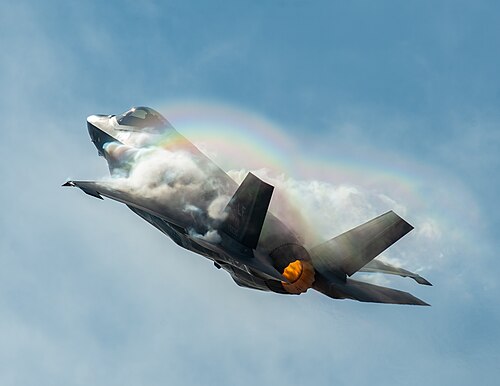
Airman 1st Class Alexander Cook · Public domain · F-35 Heritage Flight Team performs in Bell Fort Worth Alliance AirShow.jpg
Flight status refers to real-time information regarding the operational state of a scheduled commercial or cargo airline flight at any given moment.
It encompasses updates on whether a flight is operating on schedule, delayed, canceled, diverted, or has already arrived at its destination. This data is continuously updated by airlines, airport operators, and aviation tracking authorities to reflect the dynamic nature of air travel, which is frequently impacted by atmospheric conditions, air traffic congestion, technical maintenance, and operational constraints.
1. Overview
In the modern aviation ecosystem, a published flight schedule represents a planned itinerary rather than a guaranteed timeline. Due to the high sensitivity of aircraft operations to external variables, discrepancies frequently arise between planned schedules and actual operations. Flight status serves as the definitive, real-time index that bridges this gap, providing passengers, ground operations, and aviation enthusiasts with current operational intelligence.
The information is collected from multiple interconnected systems, including Advanced Surface Movement Guidance and Control Systems (A-SMGCS), Automatic Dependent Surveillance-Broadcast (ADS-B) receivers, global distribution systems (GDS), and internal airline operational control centers (OCC).
2. Operational Classifications
A flight's status is generally categorized using standardized aviation terminology to reflect its progress along its scheduled route:
- Scheduled: The flight is planned according to the carrier's timetable, with no current operational anomalies reported.
- On Time: The aircraft is expected to depart or arrive within an acceptable standard margin (typically within 15 minutes) of its published schedule.[1]https://www.bts.gov/topics/airlines-and-airports/understanding-flight-delay-measures — The United States Department of Transportation official performance metrics consider a flight to be on time if it operates within 15 minutes of its scheduled arrival or departure time.
- Delayed: The flight's departure or arrival has been postponed past the standard margin due to operational, weather, or air traffic control factors.
- Departed / In Flight / Airborne: The aircraft has pushed back from the gate, completed taxiing, and taken off into the air.
- Arrived / Landed: The aircraft has touched down at its destination airport and taxied to the assigned gate.
- Canceled: The flight has been entirely removed from the operational schedule, requiring rebooking for affected passengers.
- Diverted: The aircraft has been forced to change its path and land at an airport other than its intended destination, usually due to severe weather or inflight emergencies.
3. Primary Causes of Status Changes
Flight statuses change dynamically based on conditions originating from diverse operational sectors:
- Meteorological Conditions: Adverse weather, including low visibility, freezing precipitation, thunderstorms, and severe crosswinds, frequently forces air traffic control to mandate ground delays or reroute flights in progress.
- Air Traffic Control (ATC) Restrictions: High traffic volume over heavily used corridors often leads to flow management initiatives, such as ground delay programs or holding patterns, directly shifting estimated departure and arrival times.
- Rotational Delays: Because commercial aircraft operate on continuous multi-leg itineraries throughout a day, a delay on an early morning leg often cascades into subsequent flights operated by the same physical aircraft.[2]Aviation insiders frequently refer to this domino effect as delay propagation, where a single morning maintenance issue at a hub can snowball into operational chaos across multiple continents by eveni
- Technical and Maintenance Issues: Unscheduled mechanical inspections or component replacements discovered during pre-flight checks require safety clearances before an aircraft can be marked ready for departure.
- Crew Legality and Operations: Aviation regulations strictly limit flight crew duty hours. If a delay causes a crew to exceed their lawful working limits, a replacement crew must be dispatched, resulting in further status updates.
4. Distribution Channels
Flight status information is disseminated through various digital and physical touchpoints to ensure accessibility across the travel lifecycle:
- Flight Information Display Systems (FIDS): Physical display monitors located throughout airport terminals showing real-time departures and arrivals for passengers on-site.
- Airline Websites and Mobile Applications: Direct digital channels that push real-time updates and notifications straight to a passenger's personal device.
- Third-Party Flight Trackers: Dedicated web services and mobile applications that synthesize aggregate ADS-B radar data and official aviation feeds to track aircraft positions visually on interactive maps.
- Automated Telecommunication Services: Short Message Service (SMS) notifications and automated email alerts triggered by changes in the airline's internal departure control system (DCS).
5. Trivia
5.1 Radar Horizon and Blind Spots
The collection of real-time flight status data relies heavily on Automatic Dependent Surveillance-Broadcast (ADS-B) receivers. Because ADS-B technology operates on a Line-of-Sight (LOS) high-frequency radio spectrum (1090 MHz), ground-based receivers are fundamentally limited by the curvature of the Earth—a phenomenon known as the radar horizon.[3]Because standard ADS-B ground stations use direct line-of-sight signals broadcast on a 1090 MHz frequency, coverage typically extends only around 150 to 200 nautical miles from the receiver. Consequently, aircraft flying over oceans, vast deserts, or polar regions frequently enter coverage dead zones. In these unmonitored zones, flight status algorithms transition from live data feed to predictive extrapolation based on the last recorded vector and historical wind currents, creating a brief discrepancy between the displayed status and the aircraft's actual physical coordinates.
5.2 Space-Based ADS-B Technology
To eliminate oceanic coverage gaps, modern aviation surveillance incorporates Space-Based ADS-B systems. High-tech satellite constellations, such as Iridium NEXT, house payload receivers capable of capturing ADS-B signals emitted upward into low-Earth orbit (LEO). This technical evolution enables global, second-by-second tracking regardless of terrain or oceanic obstacles. As a result, the latency of transoceanic flight status updates has been reduced from standard 15-to-30-minute procedural position reports down to sub-second intervals.
5.3 The "Ghost Flight" Anomaly
Discrepancies in flight status databases occasionally generate "ghost flights." This occurs when an airline re-uses a specific flight number for a scheduled route before the previous leg using the same flight number has formally cleared the air traffic control system log. Automated tracking aggregators may process both data streams simultaneously, displaying a single aircraft existing in two different geographical locations at once.[4]Flight-tracking enthusiasts refer to these computational anomalies as ghost flights, which can lead to comical displays where an airliner appears to teleport thousands of miles instantly on interactiv System administrators resolve these glitches through manual database overrides or by assigning internal operational suffixes to the flight data code.
5.4 The "Scheduled" Status Paradox
A flight status displaying as "On Time" or "Scheduled" does not inherently guarantee that the assigned aircraft is physically present at the departure gate. Major airlines often rely on complex tail-routing sequences. An aircraft completing an inbound leg may experience severe delays at a different airport, yet the system may maintain a "Scheduled" status for its next outbound assignment until the operational control center (OCC) formally processes a tail-swap (reassigning a different physical aircraft) or issues a mandatory delay code.
5.5 Slot Management and "Gate Hold" Status
During periods of extreme congestion or adverse weather, Air Traffic Control (ATC) may issue a Ground Delay Program (GDP). Under a GDP, an aircraft receives an Expect Departure Clearance Time (EDCT). Even if boarding is complete and the aircraft pushes back on schedule, the flight status may revert to a "Gate Hold" or "Taxiway Hold" status. This delay is strictly calculated by central ATC flow management computers to ensure the aircraft enters the en-route airspace matrix precisely within its assigned time slot, optimizing high-altitude traffic density.
5.6 Predictive Flight Status Algorithms
Modern flight status platforms increasingly rely on machine learning models rather than simple airline feeds. By synthesizing historical flight path data, real-time meteorological advisories (such as SIGMETs and TAFs), airport surface congestion indices, and inbound tail tracking, predictive algorithms can forecast delays hours before the airline's official operational control center broadcasts an update. In many instances, commercial tracking services will display an impending delay status to passengers before the airline gate agents are officially notified.
Child documents of "Flight status"
None yet.