Published page
Halloween


Halloween is an annual holiday celebrated on October 31st, originating from ancient Celtic harvest festivals and evolving into a global cultural phenomenon characterized by costum…
Halloween
Halloween is an annual holiday celebrated on October 31st, originating from ancient Celtic harvest festivals and evolving into a global cultural phenomenon characterized by costum…
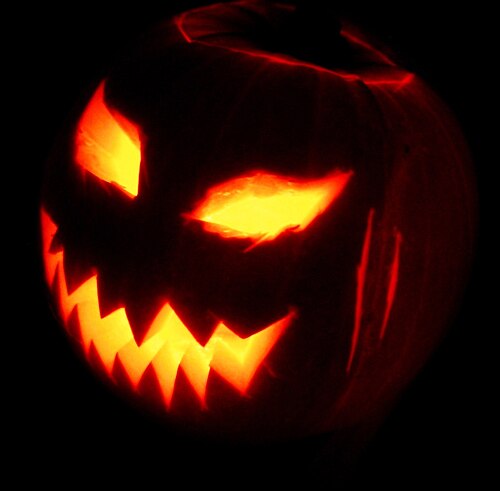
Toby Ord · CC BY-SA 2.5 · Jack-o'-Lantern 2003-10-31.jpg
Halloween is an annual holiday celebrated on October 31st, originating from ancient Celtic harvest festivals and evolving into a global cultural phenomenon characterized by costuming, trick-or-treating, and spooky themes.
1. annual October thirty-first holiday
1.1 Overview
Halloween is a major annual celebration observed in numerous countries on the evening of October 31st, the eve of the Western Christian feast of All Hallows' Day (or All Saints' Day). While historically rooted in religious and seasonal traditions, modern Halloween operates largely as a secular cultural holiday. It is particularly prominent in Anglosphere nations such as the United States, Canada, Ireland, and the United Kingdom, though its popular culture influence has spread widely across East Asia, Europe, and Latin America. The holiday serves as a symbolic transition into the darker half of the year, heavily emphasized by motifs of the supernatural, folklore, horror, and harvest iconography.
1.2 Etymology and Origins
The word *Halloween* dates back to around 1745 and is of Christian origin, derived from a Scottish shortening of *All Hallows' Eve*, meaning the evening before "All Hallows' Day."[1]Etymological records trace this specific contraction back to Scottish poetic usages in the eighteenth century.
Historians generally trace the holiday's earliest roots to the ancient Celtic festival known as *Samhain* (pronounced *SAW-in*). Celebrated in historic Ireland, Scotland, and the Isle of Man, Samhain marked the end of the harvest season and the beginning of winter. Celts believed that during Samhain, the boundary between the world of the living and the world of the dead became blurred, allowing spirits, both benevolent and malevolent, to cross over into the mortal realm. To appease the spirits and ensure the survival of livestock through the harsh winter, hearth fires were extinguished, large bonfires were lit, and offerings of food and drink were left outdoors.
With the expansion of the Roman Empire into Celtic territories, Samhain merged with Roman harvest celebrations such as *Feralia* (commemorating the passing of the dead) and a day honoring *Pomona* (the goddess of fruit and trees). By the eighth century, Pope Gregory III designated November 1st as a time to honor all saints, effectively Christianizing the existing autumn celebrations.[2]https://www.vatican.va — Pope Gregory III dedicated a chapel in Saint Peter's Basilica to all saints, which solidified the liturgical date shift.
1.3 Key Customs and Traditions
Modern Halloween is defined by a distinct set of participatory traditions that blend ancient folklore with modern commercial entertainment.
- Trick-or-Treating: Children dress in costumes and travel from house to house, asking for treats such as candy with the phrase "Trick or treat!" The "trick" implies a threat to perform mischief on the homeowners if no treat is given, though this aspect is almost purely symbolic today. This tradition evolved from the medieval practice of "souling," where the poor would collect soul cakes in exchange for prayers for the dead, and the Scottish practice of "guising," where disguised children performed songs or jokes for rewards.
- Jack-o'-lanterns: The practice of carving faces into vegetables originates from an Irish folk tale about a man named "Stingy Jack." Traditionally, turnips, beets, or potatoes were hollowed out and lit with coal or candles to ward off evil spirits. When Irish immigrants arrived in North America, they adopted the native pumpkin, which was larger, softer, and much easier to carve, establishing the modern jack-o'-lantern.[3]Native North American pumpkins proved far more pliable for detailed carvings than the dense root vegetables used in Europe.
- Costumes: Wearing disguises was historically intended to blend in with or ward off wandering spirits during Samhain. In contemporary times, Halloween costumes have expanded beyond traditional monsters (vampires, ghosts, witches) to include characters from pop culture, public figures, animals, and humorous concepts.
- Apple Bobbing and Games: Associated with the Roman goddess Pomona, games involving apples remain popular. Apple bobbing involves catching floating apples in a tub of water using only one's teeth. Historically, these games were used for fortune-telling, particularly regarding future romantic relationships.
1.4 Global Spread and Modern Reception
During the mid-nineteenth century, mass immigration from Ireland and Scotland brought Halloween traditions to North America, where the holiday was rapidly commercialized and transformed into a community-centered event. By the mid-twentieth century, Halloween had become a major retail holiday second only to Christmas in overall consumer spending in the United States.[4]Post-war commercial expansion solidified the holiday's reliance on mass-marketed costumes and pre-packaged confectionery.
In recent decades, globalized media, Western film distribution, and commercial marketing have exported Halloween customs worldwide:
- East Asia: Countries like South Korea and Japan have adopted Halloween primarily as a venue for adult costuming, street festivals, and youth culture, notably concentrated in nightlife districts such as Shibuya in Tokyo or Itaewon in Seoul. The trick-or-treating aspect remains secondary to fashion and commercial events.
- Latin America: In many Spanish-speaking nations, traditional practices center around *Día de los Muertos* (Day of the Dead), celebrated from October 31st to November 2nd. While distinct from Halloween in its spiritual emphasis on honoring deceased ancestors, modern influences have led to a blending of customs in urban regions.
- Europe: While mainland Europe historically observed All Saints' Day with solemn cemetery visits, American-style Halloween festivities have gained significant popularity among younger demographics since the late 1990s.
2. John Carpenter horror film
Halloween is a 1978 American independent slasher film directed, co-written, and scored by John Carpenter, starring Jamie Lee Curtis and Donald Pleasence.[5]https://www.filmmuseum.at — Director John Carpenter composed the film's haunting score himself to save money on composer fees. Set in the fictional Midwestern town of Haddonfield, Illinois, the plot follows Michael Myers, a masked killer who escapes from a psychiatric hospital fifteen years after murdering his sister on Halloween night, returning to his hometown to stalk and murder teenage babysitters.
Despite its low production budget, the film achieved enormous commercial and critical success, becoming one of the most profitable independent movies of all time. *Halloween* fundamentally reshaped the horror genre, establishing the modern archetypes of the slasher film and cementing Michael Myers as an iconic figure in horror pop culture.
2.1 Overview
Released in the late 1970s, *Halloween* arrived at a time when low-budget horror cinema was undergoing a massive transformation. John Carpenter, alongside co-writer and producer Debra Hill, crafted a suspense-driven narrative that relied heavily on atmosphere, camera movement, and minimalist music rather than explicit gore.
The film served as the feature film debut for Jamie Lee Curtis, whose portrayal of Laurie Strode established her as the definitive "Scream Queen." Donald Pleasence provided a grounded, dramatic anchor to the film as Dr. Samuel Loomis, the obsessive psychiatrist who understands the absolute evil residing within his former patient.
The success of *Halloween* spawned a massive multi-media franchise, including numerous sequels, a 2007 remake, and a modern legacy trilogy that directly continued the events of the original 1978 film.
2.2 Plot
On Halloween night in 1963, in the quiet town of Haddonfield, Illinois, six-year-old Michael Myers brutally stabs his teenage sister Judith to death with a kitchen knife.[6]The opening sequence was filmed using a continuous point-of-view shot that shocked audiences during its original theatrical run. He is subsequently committed to Smith's Grove Sanitarium, placed under the care of child psychiatrist Dr. Samuel Loomis. Over the course of fifteen years, Loomis comes to realize that Michael is devoid of any human empathy or emotion, describing him as pure, unadulterated evil.
On October 30, 1978, Michael escapes Smith's Grove during a storm, stealing a vehicle and heading back to Haddonfield. Dr. Loomis pursues him, knowing the exact nature of the threat he poses to the town. Upon returning to his childhood home, Michael fixes his attention on Laurie Strode, a high school student, and her friends Annie Brackett and Lynda van der Klok.
Throughout Halloween day, Michael stalks Laurie and her friends from a distance, donning a blank, white, featureless mask. As night falls, Laurie begins babysitting young Tommy Doyle, while Annie babysits Lindsey Wallace across the street. Michael systematically isolates and murders Annie and Lynda, along with Lynda's boyfriend, inside the house.
Laurie grows suspicious after failing to reach her friends by phone and crosses the street to investigate. Upon discovering the corpses of her friends, she is attacked by Michael. Laurie manages to survive several encounters by displaying quick thinking and resourcefulness, stabbing Michael with a knitting needle, a wire hanger, and his own knife. Despite taking seemingly fatal injuries, Michael continuously rises back up. Just as Michael overpowers Laurie, Dr. Loomis arrives, shooting Michael six times and knocking him off a second-story balcony. However, when Loomis looks down, Michael's body has disappeared into the dark night, leaving only the sound of his heavy breathing echoing throughout the neighborhood.[7]The ambiguous vanishing act established a trope of supernatural resilience that defined subsequent slasher villains.
2.3 Cast and Characters
- Laurie Strode (Jamie Lee Curtis): A quiet, intelligent high school student and babysitter who becomes Michael Myers' primary target. She stands out from her peers due to her practical nature and resourcefulness under pressure.
- Dr. Samuel Loomis (Donald Pleasence): Michael Myers' former psychiatrist. Driven by a sense of moral duty, Loomis spends the film desperately trying to warn the authorities and track down Michael before he can kill again.
- Michael Myers / "The Shape" (Nick Castle / Tony Moran / Will Sandin): The masked antagonist. Portrayed primarily by Nick Castle in costume, Michael is depicted not merely as a human killer, but as an unnatural, unstoppable force of nature.
- Annie Brackett (Nancy Kyes): Laurie's outspoken and fun-loving friend, daughter of the town sheriff, who babysits Lindsey Wallace.
- Lynda van der Klok (P. J. Soles): Laurie's popular, free-spirited friend who falls victim to Michael alongside her boyfriend, Bob.
- Sheriff Leigh Brackett (Charles Cyphers): The sheriff of Haddonfield and Annie's father, who initially dismisses Dr. Loomis's warnings as paranoia.
2.4 Production and Style
- Low-Budget Ingenuity
The film was produced on an estimated budget of around $300,000 to $325,000, funded by producer Moustapha Akkad. Due to the limited financial resources, the crew had to improvise extensively. The film was shot in South Pasadena, California, during the spring, requiring the crew to scatter painted artificial autumn leaves around the set to recreate an Illinois fall.
The iconic mask worn by Michael Myers was famously created from a cheap, $1.98 Captain Kirk mask (modeled after actor William Shatner) purchased from a local costume shop.[8]https://www.metmuseum.org — Production designer Tommy Lee Wallace altered the cheap mask by stretching the eye holes and stripping its original hair. The crew widened the eye holes, removed the sideburns, and spray-painted the latex mask pure white to create an unfeeling, emotionless facade.
John Carpenter utilized Panavision widescreen lenses and Panaglide camera setups (an early competitor to the Steadicam) to create smooth, lingering continuous shots. The film frequently uses point-of-view camera angles, forcing the audience to look through the eyes of the killer, particularly during the opening sequence. This technique built sustained tension without relying on excessive blood or jump scares.
- Musical Score
Carpenter composed the film's memorable musical score himself over three days. The signature main theme features an iconic 10/8 time signature played on a synthesizer, delivering a repetitive, nerve-wracking rhythm. The minimalistic score is widely regarded as one of the greatest and most recognizable horror themes in cinematic history.
2.5 Impact and Legacy
*Halloween* established the functional blueprint for the slasher subgenre throughout the 1980s. Key tropes popularized by the film include the unkillable, masked antagonist, the quiet suburban setting corrupted by evil, the use of unique non-verbal horror cues, and the concept of the "Final Girl"—the sole surviving female protagonist who confronts the killer.
Critical reassessment over the decades has elevated *Halloween* from a simple B-movie horror flick to a masterpiece of American cinema. In 2006, the film was selected for preservation in the United States National Film Registry by the Library of Congress for being "culturally, historically, or aesthetically significant."[9]https://www.loc.gov — Selection for the registry preserved the original film negative in national archives due to its profound impact on horror cinema. It remains a quintessential piece of seasonal cinema, universally rewatched every October.
3. Trivia
3.1 Samhainology and the Pre-Christian Calendar
The chronological origins of Halloween trace back to the Celtic festival of Samhain, which marked the liminal transition between the "light" and "dark" halves of the year. In the ancient Goidelic calendar, Samhain represented a temporal vulnerability wherein the boundary (*veil*) separating the physical realm from the *Aos Sí* (supernatural beings and spirits) became porous. The modern practice of wearing costumes originates from *guising*—a apotropaic ritual of disguise intended to deceive malevolent entities by mimicking their supernatural appearance.
3.2 Jack-o'-lantern Botany and Irish Migration
The iconographic jack-o'-lantern was historically carved from root vegetables, predominantly turnips (*Brassica rapa*) and rutabagas, rather than pumpkins. The practice is rooted in the Irish folktale of "Stingy Jack," a mythic figure condemned to roam the Earth with a hollowed-turnip lantern containing a ember from Hell. Following the Mass Irish Emigration during the Great Famine of the 1840s, immigrants adapted the tradition to the North American context, substituting native botanicals—specifically *Cucurbita pepo* (pumpkin)—due to their larger size, softer flesh, and agricultural abundance.
3.3 Industrial-Scale Confectionery Economics
In contemporary North American macroeconomic terms, Halloween constitutes the second-largest commercial holiday in retail expenditure, surpassed only by Christmas. The National Retail Federation (NRF) reports that total annual spending systematically exceeds $10 billion, with candy purchasing representing a significant percentage of the global annual cocoa and sugar confectionery sales.[10]https://nrf.com — Annual consumer surveys indicated that Halloween spending consistently reached record figures across decorations and apparel. This economic phenomenon shifted the holiday from a localized community event to a primary driver of the seasonal FMCG (Fast-Moving Consumer Goods) market during the mid-20th century.
3.4 *Halloween* (1978) and Low-Budget Cinematic Logistics
John Carpenter’s seminal 1978 independent slasher film *Halloween* was produced on an austere budget of approximately $325,000, forcing unconventional prop utilization. The signature mask worn by the antagonist, Michael Myers, was constructed by adapting a commercially available 1975 Captain Kirk (William Shatner) latex mask purchased for $1.98. The production crew enlarged the eye holes, removed the sideburns, and spray-painted the surface chalk-white, inadvertently creating one of horror cinema's most iconic visual motifs.
3.5 The Autumnal Box-Office ROI Benchmark
The 1978 film adaptation achieved unprecedented financial efficiency, grossing over $70 million globally during its initial theatrical run. This rendered it one of the most profitable independent feature films in cinematic history relative to its production budget. The film established the structural and stylistic archetypes of the modern slasher subgenre, directly influencing the commercial viability of low-budget horror during the 1980s and establishing the "Halloween" intellectual property as a multi-billion dollar franchise spanning multiple decades.
3.6 Halloween II and the Canonization of Familial Slasher Lore
The 1981 sequel, *Halloween II*, introduced the foundational retcon that Laurie Strode (Jamie Lee Curtis) was the biological sister of Michael Myers, fundamentally altering the narrative framework of the franchise. While John Carpenter penned the script alongside Debra Hill, he later expressed critical regret regarding this plot point, citing production duress and scriptwriting fatigue.[11]John Carpenter publicly admitted in later interviews that he wrote the sibling plot twist with the help of a six-pack of beer. This narrative thread dictated the continuity of the original sequence until the retcon was officially excised in the 2018 canonical reboot directed by David Gordon Green.
3.7 The Mischief Night Phenomenon and Vandalism Precursors
Prior to the standardized commercialization of "trick-or-treating" in the 1930s and 1940s, the October 30th and 31st period was dominated by "Mischief Night" (alternatively known as Devil's Night or Cabbage Night). Urban regions in North America experienced severe seasonal property destruction, including the tipping of outhouses, unhinging of gates, and soaping of windows. Suburban community organizations and local municipalities systematically institutionalized the distribution of candy as a strategic counter-measure to redirect youth energy from criminal vandalism to controlled trick-or-treating.
Child documents of "Halloween"
None yet.