Published page
Jury duty


Jury duty refers to the legal obligation imposed on citizens to serve as jurors in a court of law, participating in the judicial process to determine facts and reach a verdict in …
Jury duty
Jury duty refers to the legal obligation imposed on citizens to serve as jurors in a court of law, participating in the judicial process to determine facts and reach a verdict in …
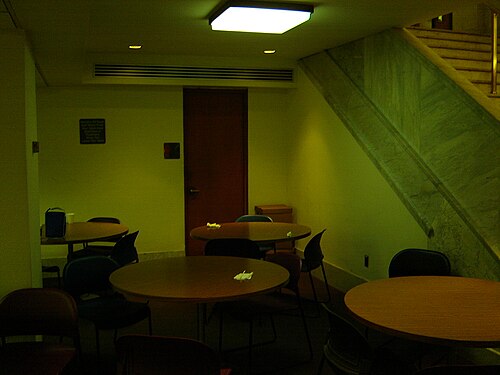
Douglas Muth from Philadelphia, PA, USA · CC BY-SA 2.0 · The jury area (490614345).jpg
Jury duty refers to the legal obligation imposed on citizens to serve as jurors in a court of law, participating in the judicial process to determine facts and reach a verdict in legal proceedings.
1. legal obligation for jury service
Continuous civic participation forms the foundation of this system, which acts as a bridge between the general public and the judiciary.
1.1 Overview
Jury duty is a fundamental aspect of the legal systems in many common law jurisdictions. It embodies the principle that an accused individual has the right to be tried by a panel of their peers. The institution reflects a democratic ideal where judicial authority is shared with ordinary citizens, ensuring that community standards and common sense are integrated into the administration of justice. While often viewed as a burden due to its mandatory nature, it is simultaneously categorized as a vital civic duty alongside obligations such as paying taxes and voting.
1.2 Historical Context
The concept of jury service has its roots in ancient judicial practices, notably the assembly systems of classical Athens and the Scandinavian *nämnd*. However, the modern iteration of jury duty evolved predominantly through English common law following the Norman Conquest. The Magna Carta of 1215 further solidified the right to trial by one's peers.[1]https://www.archives.gov/exhibits/featured-documents/magna-carta — Clause 39 of the 1215 document laid the foundational precedent for lawful judgment by one's peers. Over the centuries, jury service transitioned from a mechanism where jurors were witnesses familiar with the facts to an impartial panel selected to weigh evidence presented in court. With the global expansion of common law traditions, jury duty became an integral component of the legal frameworks in countries such as the United States, the United Kingdom, Canada, and Australia.
1.3 Selection and Qualification
The process of initiating jury duty begins with the random selection of prospective jurors from official public registries, such as voter registration rolls or driver's license databases. Individuals who receive a jury summons are legally required to respond and report to the court.
Eligibility criteria generally require an individual to hold citizenship, reach the age of majority, reside within the court's jurisdiction, and possess a sufficient command of the official language. Certain conditions may result in disqualification or exemption, including:
- Severe medical conditions or physical limitations preventing service.
- Active duty in the military or specific public office roles.
- Prior convictions for certain serious criminal offenses.
- Severe financial or personal hardship caused by prolonged absence from work or caretaking duties.
Final selection occurs through a process known as *voir dire*, during which judges and attorneys question prospective jurors to identify any potential biases, personal conflicts of interest, or pre-existing knowledge of the case.[2]The term originated from Old French, translating literally to 'to speak the truth'. Attorneys may challenge and remove candidates either for cause or through peremptory challenges, which do not require an explicit reason.
1.4 Roles and Responsibilities
Once sworn in, jurors are tasked with remaining impartial throughout the proceeding. Their primary responsibilities include:
- Listening attentively to testimony, arguments, and evidence presented by both the prosecution/plaintiff and the defense.
- Following the legal instructions provided by the presiding judge regarding the applicable law.
- Engaging in private deliberations with fellow jurors to evaluate the credibility of evidence and arguments.
- Rendering a verdict based solely on the facts presented in court and the governing legal standards, such as "beyond a reasonable doubt" in criminal cases or "preponderance of the evidence" in civil matters.
During deliberations, jurors elect a foreperson to lead discussions and deliver the final verdict to the court. In certain high-profile cases, the court may order the sequestration of the jury, isolating them from public media and external influences for the duration of the trial.
1.5 Legal and Civic Consequences
Because jury duty is a mandatory legal obligation, failure to comply with a jury summons without a valid, pre-approved excuse can result in legal penalties. Courts possess the authority to issue bench warrants, impose monetary fines, or hold non-compliant individuals in contempt of court, which may carry brief periods of imprisonment.
To protect the integrity of the process, employment laws in most jurisdictions prohibit employers from penalizing, firing, or taking adverse actions against employees called for jury service. While employers are frequently required to grant time off, statutory rules regarding whether that time must be fully paid vary significantly by jurisdiction. Courts typically provide a nominal daily stipend and travel allowance to compensate jurors for their service.
2. American comedy television series
Jury Duty is an American sitcom television series created by Lee Eisenberg and Gene Stupnitsky that premiered on Amazon Freevee on April 7, 2023.[3]https://www.emmys.com/shows/jury-duty — The series became an unexpected sleeper hit for the newly rebranded free streaming platform. It uniquely blends the documentary, reality television, and scripted comedy genres to follow the inner workings of an American jury trial through the eyes of one specific juror who is entirely unaware that the entire case is fake.
2.1 Overview
The series operates on a high-concept premise reminiscent of *The Truman Show*: everyone involved in the trial—including the judge, the lawyers, the bailiff, the defendant, the plaintiff, and eleven of the twelve jurors—is an actor. The sole exception is Ronald Gladden, a solar contractor from San Diego, who believes he is participating in a genuine, filmed jury duty process for an educational documentary.
Over the course of eight episodes, Gladden is subjected to increasingly eccentric behavior from his fellow jurors and bizarre evidence presented during the trial. Despite the absurdity surrounding him, Gladden maintains his grounded demeanor, unknowingly acting as the straight man and the moral anchor of the show.
2.2 Production
The show was produced by Amazon Studios, B17 Entertainment, Annulet Productions, and Spentweight. Co-creators Lee Eisenberg and Gene Stupnitsky, known for their work on *The Office*, sought to create a comedy that maintained heart while executing an ambitious, unscripted prank premise.
Executing the series required meticulous planning and improvisation. Because Gladden's reactions could not be scripted, the cast had to react in real time to his decisions while keeping the overarching plot of the trial on track. The production constructed a fully functioning courtroom set in Huntington Park, California, and sequestered the cast and Gladden in a hotel for several weeks to heighten the immersion.[4]The production team went so far as to install fake security checkpoints and real-looking legal signage to maintain the illusion.
2.3 Cast and Characters
- Ronald Gladden as Himself: The hero of the series. Gladden is an everyday American citizen who applied for a Craigslist ad about participating in a documentary about the jury process.
- James Marsden as Himself: A satirical, exaggerated version of the real-life actor. Marsden acts as one of the alternate jurors, constantly trying to use his celebrity status to get out of jury duty while covertly causing chaos.
- Alan Barinholtz as Judge Alan Rosen: The presiding judge who attempts to maintain order despite the escalating absurdity of the courtroom.
- Rashida Olayiwola as Officer Nikki Coleman: The stern yet charming bailiff assigned to the jury.
- David Brown as Todd Gregory: An eccentric, socially awkward juror who invents strange gadgets, such as "cants" (pants with crutches attached), and is taken under Ronald's wing.[5]Actor David Brown drew inspiration for the peculiar invention from actual absurd utility patents.
- Mekki Leeper as Noah Price: A nervous juror who accidentally ruins his own relationship during the trial due to poor advice from others. Leeper also served as a writer on the series.
- Edy Modica as Jeanie Oliver: A brash juror who takes an immediate romantic interest in one of the witnesses.
- Ishmel Sahid as Lonnie Coleman: A quiet juror who steps into a leadership role with Ronald's encouragement.
2.4 Plot Structure
The narrative progresses through the standard stages of an American civil trial. The fake case involves a boutique business owner suing an employee for allegedly ruining a manufacturing order while under the influence of drugs.
As the trial unfolds, the jurors are sequestered in a local hotel, forcing them to bond over dinners, movie nights, and absurd team-building activities orchestrate by the production. Throughout the ordeal, Ronald consistently acts with patience, kindness, and humor, often helping his fellow jurors navigate their personal oddities and conflicts. The series culminates in the verdict, followed by the reveal to Ronald that the entire trial was an elaborate staged event.
2.5 Reception and Legacy
*Jury Duty* received widespread critical acclaim upon its release. Critics praised the show for its innovative format and warm-hearted tone, noting that it avoided becoming mean-spirited at the expense of its main subject. Ronald Gladden was widely celebrated by viewers for his genuine empathy and good nature, which turned him into an unexpected Internet sensation.
The series earned several major award nominations, including three Primetime Emmy Award nominations: Outstanding Comedy Series, Outstanding Supporting Actor in a Comedy Series for James Marsden, and Outstanding Writing for a Comedy Series. It also received a special award at the AFI Awards 2023.
3. Trivia
3.1 Historical Origins of the Unanimous Verdict Rule
The traditional requirement for unanimous jury verdicts in common law systems traces back to 14th-century England. Prior to the establishment of the unanimity rule, English courts relied on a process called "afforcing the jury," wherein additional jurors were continually added to a panel until twelve of them reached an agreement. The 1367 ruling in *Anonymous* permanently solidified the twelve-person unanimous verdict requirement in English common law, a precedent that was subsequently exported to American legal systems. In the United States, the constitutional necessity of unanimous verdicts for state criminal trials was not fully federalized until the Supreme Court decision in *Ramos v. Louisiana* (2020), which struck down non-unanimous conviction laws previously retained by Louisiana and Oregon.[6]https://www.supremecourt.gov/opinions/19pdf/18-5924_n6io.pdf — The decision ended a long-standing legal anomaly in which Oregon and Louisiana were the only two states allowing non-unanimous convictions.
3.2 The System of Jury Keyholding and Lock-Up Practices
During high-profile trials, the practice of jury sequestration involves complete physical isolation of jurors to prevent external bias. Historically, this included the sequestration of jurors overnight without food or heat until a verdict was rendered—a medieval English practice known as keeping the jury "without meat, drink, fire, or candle."[7]This harsh medieval coercion tactic was intended to force swift decisions by withholding basic human comfort. In modern jurisprudence, while physical comfort is provided, digital isolation is strictly enforced. In certain complex jurisdictions, court officers maintain physical custody of all personal communication devices, and jurors are assigned specialized court liaisons to monitor all permitted external communications, including supervised contact with family members.
3.3 Juror Nullification as a Common Law Mechanism
Juror nullification occurs when a jury returns a verdict of "Not Guilty" despite believing the defendant committed the alleged offense, effectively invalidating the application of the law in that specific instance. While trial judges are legally prohibited from encouraging or explicitly informing juries of this power, the legal doctrine established in *Sparf v. United States* (1895) confirmed that juries possess the de facto power to nullify without legal sanction due to the Double Jeopardy Clause of the Fifth Amendment, which prevents the prosecution from appealing a criminal acquittal.[8]https://supreme.justia.com/cases/federal/us/156/51 — This created a unique paradox where juries possess the absolute power to nullify a law, but judges are forbidden from telling them they have it.
3.4 Juror Compensation Disparities Across Jurisdictions
Federal and state statutory provisions regarding juror stipends exhibit extreme variance across the United States. Federal jurors receive a daily attendance fee of $50, which can increase to $60 after ten days of trial service. Conversely, state-level compensation varies significantly; for instance, daily stipends range from $0 for the first few days in states like Colorado and Texas (where employers are statutorily required to pay regular wages) to nominal flat rates of $10 to $15 per day in other jurisdictions. These figures contrast sharply with historical corporate policies where full salary continuation was voluntary, leading to contemporary legislative efforts mandating employer-paid jury leave in specific municipalities.
3.5 *Jury Duty* (Television Series) and Real-Time Improvised Legal Mechanics
The 2023 American docu-comedy series *Jury Duty*, produced by Amazon Freevee, operated as an inverted reality television experiment in which a single non-actor (Ronald Gladden) served on a fabricated civil trial jury unaware that all other participants, including fellow jurors and the presiding judge, were actors. To maintain judicial verisimilitude without violating federal impersonation laws, the production utilized a decommissioned real-world courtroom in Huntington Park, California. The legal proceedings were scripted using dynamic contingency trees, requiring the cast—including actor James Marsden playing a satirical version of himself—to dynamically improvise responses based on the unscripted legal deliberations and behavioral inputs of the subject over a seventeen-day period.
3.6 Juror Selection Protocols and the Batson Challenge Framework
The process of *voir dire* relies on two distinct mechanisms for juror removal: challenges for cause and peremptory challenges. While challenges for cause require a demonstrated showing of bias, peremptory challenges allow attorneys to strike potential jurors without articulating a justification. The procedural standard governing these strikes was fundamentally reshaped by the landmark Supreme Court case *Batson v. Kentucky* (1986), which established that using peremptory challenges to exclude potential jurors solely based on race violates the Equal Protection Clause of the Fourteenth Amendment. Establishing a "Batson challenge" requires a three-step evidentiary burden-shifting framework during the jury selection phase.[9]https://www.law.cornell.edu/supremecourt/text/476/79 — The ruling created a lasting judicial mechanism allowing defense attorneys to object to suspicious demographic strikes.
Child documents of "Jury duty"
None yet.