Published page
Labor Day


Labor Day is a federal holiday in the United States celebrated on the first Monday in September to honor and recognize the American labor movement and the works and contributions …
Labor Day
Labor Day is a federal holiday in the United States celebrated on the first Monday in September to honor and recognize the American labor movement and the works and contributions …
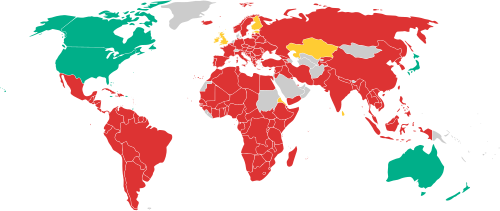
Original map at File:Observance of International Workers' Day - Revised.svg by WikiContributor2019 , recolouring by Lord Belbury · CC BY-SA 4.0 · Observance of International Workers' Day RGBY.svg
Labor Day is a federal holiday in the United States celebrated on the first Monday in September to honor and recognize the American labor movement and the works and contributions of workers to the development and achievements of the United States.
1. American public holiday
It constitutes the view that the labor of individual workers forms the fundamental engine of national prosperity and growth. Along with International Workers' Day, it stands as one of the representative holidays commemorating labor, but unlike most countries that celebrate labor on May 1st, the United States uniquely observes its national holiday in September.[1]https://www.dol.gov/general/laborday/history — Unlike the rest of the world, which chose May 1 to honor labor, the United States established its observance in September. In contemporary American culture, it is universally recognized as the symbolic end of summer and forms a major three-day weekend that impacts retail, education, and travel patterns across the nation.
1.1 Overview
Labor Day was created during the late nineteenth century, emerging from the trade union and labor movements of the Industrial Revolution. As the American industrial sector expanded rapidly, labor organizations sought a dedicated day to appreciate the working class who sustained the nation's infrastructure and economy.
Unlike May Day, which carries strong association with radical political movements, socialist history, and the aftermath of the Chicago Haymarket affair, Labor Day in the United States developed a more mainstream, reformist, and consumer-oriented character. The holiday focuses primarily on celebrating the economic contributions of labor, national unity, and the standard of living achieved by the American workforce.
In terms of public life, Labor Day serves as a major temporal dividing line. It traditionally marks the end of the summer vacation season, the deadline for the reopening of public schools in many states, and the beginning of the autumn sports calendar, most notably the kickoff of the American football season.
1.2 History and Origins
The concept of a labor holiday first gained traction in municipal and state politics during the early 1880s. Two figures are historically credited with proposing the idea: Peter J. McGuire, a co-founder of the American Federation of Labor, and Matthew Maguire, a machinist and secretary of Local 344 of the International Association of Machinists in Paterson, New Jersey.
The first Labor Day parade was organized by the Central Labor Union and took place on September 5, 1882, in New York City.[2]https://www.dol.gov/general/laborday/history — The inaugural parade featured thousands of workers marching through lower Manhattan before attending a massive picnic. Thousands of workers took unpaid leave to march through the streets, demonstrating the solidarity and numerical strength of organized labor, followed by picnics and speeches.
State governments began recognizing the holiday individually, starting with Oregon in 1887, followed quickly by Colorado, Massachusetts, New York, and New Jersey. The movement to establish a national holiday gained critical momentum in 1894 following the Pullman Strike. The violent suppression of the strike by federal troops led to severe political backlash against President Grover Cleveland. In an effort to reconcile with the American labor force amidst political pressure, President Cleveland signed legislation passed by Congress, officially making Labor Day a national federal holiday on June 28, 1894.[3]https://www.senate.gov/artandhistory/history/minute/Labor_Day.htm — President Grover Cleveland signed the legislation creating the federal holiday just six days after federal troops ended the strike.
1.3 Date Selection
The decision to place Labor Day on the first Monday of September, rather than May 1st, was intentional. Following the Haymarket affair of May 1886 in Chicago, international labor movements adopted May 1st as International Workers' Day.
However, U.S. government officials, including President Cleveland, harbored strong concerns that selecting May 1st would strengthen communist, socialist, and anarchist movements, as well as commemorate a violent clash between police and workers. Consequently, the September date—already adopted by several central labor unions—was selected to promote a more peaceful, state-sanctioned celebration of labor that emphasized reform, economic growth, and industrial harmony over class struggle.[4]The federal government favored September to avoid honoring the Haymarket incident, promoting a less radical labor image.
1.4 Observance and Cultural Significance
Labor Day is observed throughout the United States through various public and private activities, carrying both historical labor significance and modern cultural traditions.
- Parades and Speeches: Traditional celebrations feature parades organized by trade unions and municipal bodies to display the strength and spirit of trade organizations. Political leaders and labor officials frequently deliver speeches focusing on economic policy, employment statistics, and labor rights.
- Symbolic End of Summer: For the general public, the three-day weekend represents the final major leisure opportunity of the summer season. Millions of Americans engage in long-distance travel, family gatherings, barbecues, and outdoor recreational activities.
- Commercial Impact: The period surrounding Labor Day is one of the largest retail sale events of the calendar year in the United States. Retailers offer significant discounts on back-to-school supplies, summer inventory clearance, mattresses, and clothing.
- Sports and Entertainment: The holiday weekend coincides with the start of the National Football League (NFL) regular season and the culmination of the college football opening week. It also marks the final stages of the U.S. Open Tennis Championships.
- Fashion Rule Tradition: A long-standing American fashion etiquette rule traditionally dictated that one should not wear white clothing or white shoes after Labor Day, reflecting a seasonal shift from light summer attire to darker fall wardrobes, though this norm has significantly relaxed in contemporary culture.[5]The seasonal rule reflected high-society customs of stowing light summer clothing away when returning to urban workplaces.
2. 1993 drama film
Labor Day is a 1993 American independent drama film directed by Doug Allen, portraying the emotional complexities and interpersonal conflicts of a working-class family over the course of a single holiday weekend.
2.1 Overview
Released during the height of the 1990s American independent cinema movement, the film utilizes a minimalist narrative structure to explore themes of economic strain, familial obligation, and the unfulfilled promises of the American Dream. Set entirely within a small rust-belt town during the early 1990s recession, *Labor Day* captures the melancholic transition from summer to autumn, using the titular holiday as both a literal setting and a symbolic framework for the characters' personal struggles.
2.2 Plot
The story takes place over three days during the Labor Day weekend. The narrative focuses on the Miller family, led by Arthur, a long-time factory worker facing impending layoffs, and his wife, Sarah, who manages a struggling local diner. Their eldest son, who recently returned home after dropping out of college, further strain the family dynamic with his uncertain future.
As the weekend progresses, the family attempts to host a traditional holiday gathering for friends and relatives. However, underlying tensions surface due to financial anxiety, long-buried grievances, and differing expectations among family members. Rather than relying on dramatic climaxes, the narrative unfolds through quiet conversations, unspoken resentments, and small moments of reconciliation, painting a realistic picture of domestic life under pressure.
2.3 Production and Style
The film was produced on a micro-budget, financed primarily through regional arts grants and private investors. Shot on 16mm film, the production relies heavily on natural lighting and handheld camera work, contributing to its grounded, pseudo-documentary aesthetic.
The sound design prominently features ambient environmental noise—such as distant factory whistles and late-summer cicadas—to reinforce the setting's atmosphere of isolation and stagnation.[6]The soundscape relied heavily on environmental noise to reinforce the economic stagnation of the setting. The dialogue is characterized by naturalistic pacing, with significant emphasis placed on subtext and pauses.
2.4 Themes and Symbolism
- The Meaning of Labor: The film juxtaposes physical labor with emotional toil. The holiday of Labor Day serves a bitter irony for the protagonist, who faces enforced leisure due to economic downturn rather than earned rest.
- Economic Fragility: Through the backdrop of industrial decline, the film highlights the vulnerability of the working class in post-industrial America, illustrating how macroeconomic shifts disrupt individual domestic lives.
- Generational Divide: The contrasting views between Arthur, who defines his self-worth through traditional hard work, and his son, who questions the value of such sacrifice, reflect the shifting cultural values of the era.
2.5 Reception and Legacy
Upon its limited festival release, *Labor Day* received praise from film critics for its sensitive performances, authentic set design, and unpretentious direction. Critics frequently noted the lead actor's restrained portrayal of a man struggling to maintain his dignity amidst personal decline.
While the film did not achieve widespread commercial distribution, it remains a notable example of early-1990s regional American filmmaking, appreciated by film scholars for its empathetic and unsentimental depiction of working-class life.
3. Joyce Maynard novel
Labor Day is a 2009 coming-of-age novel written by American author Joyce Maynard that explores themes of love, family dynamics, isolation, and redemption through the lens of a single fateful weekend. Set in the late 1980s, the story captures the transformative transition from childhood to adolescence against the backdrop of an unexpected domestic crisis.
The novel gained widespread critical acclaim for its sensory-rich prose and empathetic portrayal of flawed, deeply human characters. It was later adapted into a major feature film of the same name in 2013, starring Kate Winslet and Josh Brolin.[7]https://www.imdb.com/title/com.imdb.title.tt1985094 — The film adaptation directed by Jason Reitman brought Maynard's novel to the big screen.
3.1 Overview
The story is narrated from the perspective of Henry Wheeler, looking back on the pivotal events of his thirteen-year-old summer in 1987. Living in a small town in New Hampshire with his recluse, severely depressed mother, Adele, Henry tries his best to be the caretaker and main source of happiness in her life. Their quiet, secluded world is suddenly disrupted during a routine shopping trip on the eve of Labor Day weekend when they encounter Frank Chambers, an injured man who urgently asks for a ride.
Frank is revealed to be an escaped convict, convicted of murder, who is fleeing from law enforcement. Despite the apparent danger, Adele and Henry take Frank into their home. Over the course of the next five days, rather than acting as a traditional hostage-taker, Frank becomes a gentle, nurturing presence in the household. He performs long-overdue repairs on their home, teaches Henry how to play baseball and bake a peach pie, and fills the romantic and emotional void in Adele's life.[8]The fugitive wins over the household through domestic chores and culinary skill rather than intimidation.
As a profound bond forms among the three outcasts, they plan to escape together to Canada to start a new life. However, their idyllic bubble is threatened by the growing police presence, suspicious neighbors, and the inevitable intrusion of the outside world.
3.2 Key Characters
- Henry Wheeler: The narrator of the novel. As a young boy on the cusp of adolescence, he bears the heavy burden of trying to alleviate his mother's profound loneliness while grappling with his own emerging understanding of love, sexuality, and adult complexities.
- Adele Wheeler: Henry's mother. Once a joyful dancer, she has become an agoraphobic recluse following a series of traumatic personal losses and a painful divorce. Her emotional vulnerability makes her deeply receptive to Frank's kindness.
- Frank Chambers: An escaped prison inmate with a tragic past. Though convicted of murder, he is presented as a complex, skilled, and fundamentally decent man who seeks a brief taste of family life and redemption before his inevitable recapture.
- Eleanor Wheeler: Henry's father, who has remarried and started a new family. His absence in Henry's day-to-day life creates the vacuum that Frank temporarily fills.
- Rachel: A precocious and cynical girl who recently moved to town. She becomes Henry's friend and confidante, though her suspicions about his home life add pressure to the novel's climax.
3.3 Major Themes
- Isolation and Redemption: The novel examines how personal trauma can isolate individuals from society, and how unexpected connections can offer a path toward healing and emotional renewal.
- The Complexity of Good and Evil: Maynard challenges traditional moral binaries by presenting an escaped convict as a tender, constructive, and protective father figure, contrasting his criminal record with his gentle actions within the home.
- Coming of Age: Through Henry's eyes, the story depicts the painful loss of childhood innocence. He learns that adults are flawed, that love involves risk, and that tragic outcomes cannot always be prevented despite good intentions.
- Domesticity and Comfort: Food and home repair serve as central motifs in the book. Frank's acts of cooking, cleaning, and fixing the house symbolize the restoration of order and warmth to Adele and Henry's neglected lives.
3.4 Literary Style and Reception
Joyce Maynard utilizes a nostalgic, reflective narrative voice that balances the wide-eyed innocence of a thirteen-year-old boy with the mature insight of his older self. The writing is characterized by its vivid visual detail and evocative descriptions of summer atmosphere, sensory experiences, and emotional tension.
Upon its release, *Labor Day* received strong reviews from critics who praised Maynard's ability to build suspense while maintaining a sensitive, character-driven story. Readers particularly responded to the unconventional romance between Adele and Frank, as well as the poignant depiction of maternal devotion.
3.5 Film Adaptation
In 2013, the novel was adapted into a cinematic drama written and directed by Jason Reitman. The film starred Kate Winslet as Adele, Josh Brolin as Frank, and Gattlin Griffith as young Henry. The cinematic version retained the nostalgic aesthetic and emotional core of Maynard's source material, earning Kate Winslet a Golden Globe nomination for her performance.[9]https://www.goldenglobes.com/film/labor-day — Kate Winslet earned a Golden Globe nomination for Best Actress in a Motion Picture Drama for her role.
4. Trivia
4.1 May Day Divergence
The global labor movement overwhelmingly celebrates Workers' Day on May 1st, a date chosen to commemorate the 1886 Haymarket affair in Chicago. However, the United States explicitly selected the first Monday in September for Labor Day. President Grover Cleveland and Congress sought to deliberately distance the American labor holiday from May 1st due to concerns that the May date would reinforce radical socialist, communist, and anarchist associations tied to the Haymarket riot. Consequently, the US (alongside Canada) remains a rare exception in celebrating labor outside of May.
4.2 Oregon Federation Precedents
Prior to any federal recognition, the state of Oregon passed the first legislation establishing a public Labor Day holiday on February 21, 1887.[10]Oregon became the first state to officially pass legislation granting legal holiday status to Labor Day. Four additional states—Colorado, Massachusetts, New Jersey, and New York—followed suit later that same year. By the time the federal government officially designated the holiday in 1894, 30 states had already legally instituted local celebrations, demonstrating a bottom-up legislative adoption process typical of American federalism.
4.3 Dual Founders Dispute
The true historical lineage of the holiday remains disputed between two individuals with similar surnames: Peter J. McGuire and Matthew Maguire. For decades, historical consensus credited Peter J. McGuire, co-founder of the American Federation of Labor (AFL), who reportedly proposed a general holiday for the working classes in May 1882. However, late 20th-century archival research by the International Association of Machinists suggested that Matthew Maguire, a machinist and local union secretary for the Central Labor Union in New York, actually proposed the holiday earlier that same year. Some historians suggest Matthew Maguire was stripped of credit by early labor leaders due to his affiliation with the politically radical Socialist Labor Party.[11]Political rivalries led to Matthew Maguire losing credit for proposing the holiday due to his radical party ties.
4.4 Pullman Strike Legislation Context
The federal passage of Labor Day in June 1894 occurred under intense political duress. President Grover Cleveland dispatched federal troops to Chicago to violently break up the nationwide Pullman Strike led by Eugene V. Debs, resulting in the deaths of 30 workers and causing immense political backlash. In an effort to appease the outraged working-class electorate just months before the 1894 congressional elections, Congress unanimously rushed the Labor Day legislation through both houses, and Cleveland signed it into law six days after the military intervention ended.
4.5 Fashion Orthodoxy Evolution
The ubiquitous American social rule prohibiting the wearing of white clothing after Labor Day originated in the late Victorian era among elite high-society circles. Sociological analysis indicates the convention served as a subtle class signifier: lightweight white linen and cotton garments represented wealth, leisure, and vacationing away from polluted urban environments. Returning to dark-colored clothing after the early-September holiday signaled a return to formal city life and labor. The rule gradually fell out of widespread practice in the late 20th century.
4.6 Reitman-Maynard Cinematic Adaptation
*Labor Day*, the 2013 American drama film directed by Jason Reitman and starring Kate Winslet and Josh Brolin, is an explicit adaptation of Joyce Maynard's 2009 novel of the same name. Set over the long Labor Day weekend of 1987, the narrative utilizes the traditional end-of-summer transition as a thematic backdrop for a high-stakes hostage situation that evolves into a romantic drama. Despite premiering at prestigious festivals including the Telluride Film Festival and the Toronto International Film Festival, the film received mixed critical reviews regarding its tonal execution, though Winslet secured a Golden Globe nomination for her performance.
4.7 Maynard Literary Motifs
Joyce Maynard’s 2009 source novel *Labor Day* heavily leverages the titular holiday weekend as a literary device representing the boundary between isolation and connection, as well as childhood innocence and adolescent maturity. The central plot—focusing on a depressed single mother and her young son who shelter an escaped convict—takes place entirely within the confined, pressure-cooker temporal frame of the four-day holiday weekend. Maynard’s text uses the sensory details of late-summer domesticity, notably a detailed pie-making sequence, to contrast the legal criminality of the protagonist with his domestic nurturance.[12]The novel highlights domestic warmth through a iconic peach pie preparation scene that serves as a core metaphor.
Child documents of "Labor Day"
None yet.