Published page
Road closures


Road closures (temporary traffic blockages or diversions) refer to the practice of intentionally obstructing, restricting, or rerouting vehicular and pedestrian traffic on pub…
Road closures
Road closures (temporary traffic blockages or diversions) refer to the practice of intentionally obstructing, restricting, or rerouting vehicular and pedestrian traffic on pub…
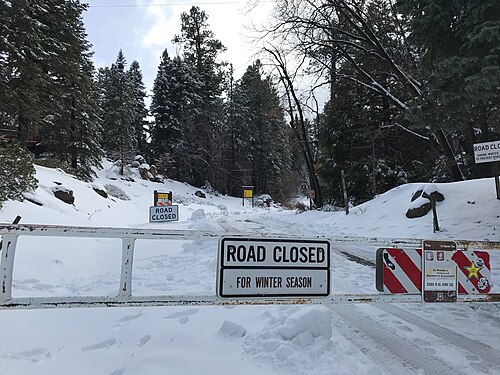
San Bernardino Nat'l Forest · Public domain · Seasonal winter road closures (46121889441).jpg
Road closures (temporary traffic blockages or diversions) refer to the practice of intentionally obstructing, restricting, or rerouting vehicular and pedestrian traffic on public thoroughfares for a designated period.
This administrative and civil engineering measure is implemented to ensure public safety, facilitate the maintenance of transport infrastructure, allow for the execution of public events, or manage emergency situations.
1. Overview
A road closure involves the partial or complete shutdown of a roadway, bridge, or pedestrian path. While roads are designed to facilitate continuous mobility, temporary blockages become necessary when physical space must be reclaimed for activities incompatible with regular traffic flow. Depending on the cause and planned duration, authorities may completely bar access to all traffic, permit limited access for emergency vehicles and residents, or implement a detour (diversion) system to guide drivers around the affected segment via alternative routes.
The implementation of road closures requires a balance between public utility—such as infrastructure upgrades or community gatherings—and the minimization of gridlock, increased travel times, and economic disruption in surrounding networks.
2. Causes and Classifications
Road closures occur due to a wide variety of planned and unplanned circumstances.
- Infrastructure Maintenance and Construction: Routine repairs, asphalt repaving, bridge inspections, and underground utility work (such as water, gas, or electrical line installations) frequently necessitate lane reductions or full road shutdowns to protect construction workers and motorists alike.
- Special Events and Assemblies: Municipalities regularly authorize closures for cultural parades, athletic competitions such as marathons, street festivals, filming productions, and high-profile political demonstrations.[1]Filming permits in major cities often mandate that production companies cover the costs of deploying off-duty police officers for crowd control and detour management. These events often transform vehicular corridors into temporary pedestrian zones.
- Emergency Situations: Unplanned closures occur abruptly in response to traffic accidents, hazardous material spills, active structural failures, or law enforcement operations.
- Severe Weather and Natural Disasters: Extreme meteorological events, including flooding, heavy snowfall, severe ice, landslides, or wildfires, often render roads impassable or extremely hazardous, prompting immediate shutoffs by emergency management services.
- VIP and Diplomatic Movement: The movement of heads of state or high-ranking government officials requires rolling or static road blockages to establish secure transport corridors.
3. Regulatory and Physical Implementation
The execution of a temporary traffic diversion is a standardized process governed by local transport authorities and law enforcement agencies.
Prior to a scheduled closure, public notification is generally issued through digital signage, local media, and navigation services to allow commuters to plan alternative routes. On-site management relies on standardized physical apparatuses, including traffic cones, movable barricades, concrete barriers, and electronic variable message signs (VMS).[2]https://mutcd.fhwa.dot.gov — Charles D. Scanlon, a painter for the Los Angeles Street Department, designed the original hollow rubber traffic cone in 1940 to prevent damage to vehicles when struck.
When a closure requires a diversion, a designated detour route is established. This path is marked using temporary directional signage to lead drivers around the obstructed area and rejoin the original route at a point beyond the blockage. In complex intersections or high-density zones, traffic control personnel or police officers are deployed to manually direct traffic flow and prevent gridlock.
4. Impact and Mitigation
While essential for public welfare and urban development, road closures significantly affect urban dynamics.
The temporary removal of a roadway segment redistributes traffic to adjacent streets, frequently leading to localized congestion, increased wear on secondary roads, and prolonged travel delays. Public transportation networks must adjust by temporarily rerouting bus lines and altering schedules, which can disrupt pedestrian transit. Furthermore, local commercial establishments within a closed zone may experience fluctuations in foot traffic and logistical challenges regarding inventory delivery.
To mitigate these disruptions, modern traffic management agencies increasingly utilize Intelligent Transportation Systems (ITS). These technologies integrate real-time traffic data with GPS navigation applications, enabling dynamic rerouting, optimized traffic signal timing on diversion paths, and efficient scheduling of closures during off-peak hours, such as late nights or weekends.
5. Trivia
5.1 The French Farmers' Agricultural Blockade Tradition
France possesses a long-standing, socio-political phenomenon wherein agricultural syndicates utilize heavy farming equipment to execute massive road closures. Often targeting critical infrastructure such as the Paris Ring Road (Boulevard Périphérique) or cross-border freight routes, these blockages serve as a high-leverage bargaining tool against government policy. Protesters frequently deposit tons of manure, tires, or agricultural surplus directly onto asphalt surfaces, creating prolonged logistical paralysis that requires specialized hazardous material removal and pavement assessment before reopening.
5.2 The Midnight Sun Marathon Nighttime Gridlock
In Tromsø, Norway, the annual Midnight Sun Marathon necessitates extensive urban road closures during the middle of the night.[3]https://www.msm.no — Runners in Northern Norway often register for midnight races specifically to experience peak physical exertion under full sunlight. Because the sun does not set during the June solstice at this latitude, daytime-level traffic control protocols are implemented between 20:00 and 02:00. This presents unique municipal challenges regarding public compliance, as daylight conditions frequently cause non-local motorists to misjudge time and attempt to navigate through active race courses.
5.3 The German *Vollsperrung* Protocols
German traffic management utilizes a highly regulated classification system for absolute road closures known as *Vollsperrung*. Unlike partial diversions, a *Vollsperrung* denotes the complete physical seal of an Autobahn segment, typically triggered by unexploded World War II ordnance disposals (Kampfmittelräumdienst operations), extreme multi-vehicle pileups (*Massenkarambolage*), or emergency helicopter landings. The protocol mandates strict, pre-calculated detour networks called *Umlenkung*, designated by blue signposts numbered with a "U" prefix along the entire regional road grid.
5.4 The Pacific Coast Highway Mudslide Dynamics
California State Route 1 (PCH), particularly along the Big Sur coastline, is subject to some of the most economically disruptive recurring natural road closures in North America. The area's fragile Franciscan Complex geology, combined with atmospheric river events, causes catastrophic slope failures such as the 2017 Mud Creek slide, which deposited 5 million tons of rock and soil. These events result in closures lasting from several months to over a year, effectively transforming coastal thoroughfares into dead-end peninsulas and necessitating maritime supply drops for isolated residents.
5.5 The Monaco Grand Prix Urban Transformation
The annual Formula 1 Grand Prix de Monaco requires the most complex urban-to-circuit road closure transition in civil engineering. Over a period of six weeks, the public streets of Monte Carlo undergo structural modifications, including the welding shut of all manhole covers to prevent the low-pressure suction of Formula 1 cars from dislodging them.[4]https://www.formula1.com/en/racing/2024/Monaco.html — Ground-effect aerodynamics on modern racing cars create powerful aerodynamic suction beneath the chassis, capable of lifting unsecured heavy steel plates off the pavement. The circuit requires complete, daily rolling closures during race weekends, reverting partially back to public access within hours of session conclusions through highly orchestrated police escorts and barrier movements.
5.6 The Siberian Ice Road *Zapret* Season
In Northern Russia, the winter road system (*Avtozimnik*) relies on frozen rivers and permafrost to establish temporary vehicular transport routes. The eventual closure of these routes—a period locally referred to as *Rasputitsa* (the sea of mud)—is strictly enforced by government checkpoints (*Zapret*). Attempting to bypass these closures carries severe administrative penalties, as heavy transport vehicles breaking through thawing river ice not only result in driver fatalities but also permanently damage the seasonal substrate required for the following year's ice formation.
5.7 The Presidential Movement Bubble
The United States Secret Service employs a dynamic, rolling road closure apparatus known as the "Movement Bubble" for Presidential motorcades. Rather than relying solely on static barricades, the operation utilizes specialized police motorcycle units (tailgunners and blockers) to physically leapfrog ahead of the convoy, sealing off overpass access, on-ramps, and perpendicular intersections minutes before arrival. This generates a moving vacuum of zero-vehicle traffic, causing localized shockwave delays across interconnected highway systems long after the motorcade has cleared the zone.
Child documents of "Road closures"
None yet.