Published page
School holidays


School holidays, commonly referred to as school vacations or breaks, are predetermined, official periods during an academic year when formal educational instruction and classes ar…
School holidays
School holidays, commonly referred to as school vacations or breaks, are predetermined, official periods during an academic year when formal educational instruction and classes ar…
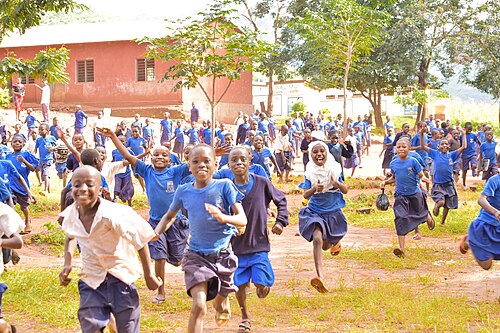
Rasheedhrasheed · CC BY-SA 4.0 · Last day in Tanzanian school by Rasheedhrasheed.jpg
School holidays, commonly referred to as school vacations or breaks, are predetermined, official periods during an academic year when formal educational instruction and classes are temporarily suspended for students.
While institutions remain administratively active during these intervals, students are exempted from attending daily lessons, providing time for rest, seasonal recreation, and independent learning. The duration, frequency, and timing of these periods vary significantly depending on national policy, climate conditions, cultural traditions, and the specific structure of the local academic calendar.
1. Overview and Terminology
School holidays serve as structural demarcations within the academic year, separating distinct terms, semesters, or quarters. In standard educational systems, these periods allow both students and teaching personnel a necessary respite from the cognitive and logistical demands of continuous instruction.
The terminology surrounding these periods varies globally. In British English and Commonwealth nations, these breaks are predominantly referred to as "school holidays," whereas in American English, the term "vacation" or "break" is more frequently employed.[1]https://www.oxfordlearnersdictionaries.com/us/definition/english/vacation_1 — The term "vacation" originated from the Latin *vacare*, meaning to be empty or free, and eventually shifted in American usage to mean time off from work or school. Despite linguistic differences, the institutional function remains uniform: the temporary cessation of mandatory classroom attendance.
During these breaks, school facilities may not entirely shut down. Administrative staff often remain on duty, facility maintenance is conducted, and educators frequently utilize the class-free period for professional development, curriculum design, and assessment grading.
2. Major Types of School Holidays
School holidays are typically categorized by their seasonal timing and educational function within the standard academic calendar.
- Long Holiday (Summer Break): Positioned between two academic years, this is the longest recess in most educational systems, typically spanning from six to twelve weeks. Historically tied to agricultural needs or extreme summer heat, it currently serves as a major transition phase between grade levels.[2]This persistency of attributing summer break to farming needs remains widespread despite nineteenth-century crop planting and harvesting actually requiring the most child labor during spring and autum
- Winter Holiday: Occurring around the midpoint of the academic year, this break often coincides with end-of-year holiday traditions and seasonal winter conditions. It generally lasts between one and three weeks.
- Spring Holiday: A mid-semester break occurring in the spring season, providing a short rest period during the long stretch between the winter break and the end of the academic year.
- Mid-Term Breaks: Short breaks, often lasting several days to a week, inserted directly into the middle of a continuous term to prevent academic fatigue among students and teachers.
3. Societal and Developmental Impact
School holidays play a multifaceted role in personal development, family life, and the broader economy.
From a developmental perspective, these periods offer students essential time for psychological recovery, self-directed exploration, and non-academic personal growth. Free from the rigid schedule of the school day, children engage in informal learning, pursue extracurricular interests, and spend extended time with family and peers.
Economically and socially, school holidays heavily influence global tourism, transportation infrastructure, and childcare industries. The sudden influx of families taking annual leave leads to seasonal surges in travel demand. Conversely, long breaks can present logistical challenges for working parents who must arrange alternative supervision or enrollment in seasonal camps.
4. Pedagogical Considerations
The impact of prolonged periods without classes is a subject of ongoing debate among educational theorists and policy makers.
Advocates of extended holidays emphasize the necessity of rest, the reduction of academic burnout, and the value of real-world experiences outside the classroom setting. Prolonged breaks are viewed as essential for maintaining overall student well-being and mental health.
However, educational researchers also point to the phenomenon known as "learning loss" or the "summer slide," where students tend to regress in academic skills—particularly in mathematics and reading—during extended absences from school. To mitigate this effect, some educational jurisdictions have implemented year-round schooling models, which feature shorter, more frequent breaks throughout the year rather than one continuous long summer holiday.
5. Trivia
5.1 The Summer Vacation Paradigm Shift
The modern structural framework of long summer school holidays is commonly attributed to agrarian historical necessity—specifically, the need for children to assist in seasonal crop harvesting. However, modern educational historians note that this is largely an urban legend. In rural 19th-century societies, school calendars actually revolved around spring planting and autumn harvesting, with children attending school during both the winter and summer months. The standardized July–August summer holiday was primarily engineered by urban school boards responding to the middle-class exodus from overheated, un-air-conditioned cities during peak summer months, alongside growing medical consensus at the time that prolonged confinement in hot classrooms caused high disease transmission.[3]Early urban school buildings lacked modern ventilation, turning classrooms into unbearable heat traps that drove wealthy urbanites to flee the city entirely during peak summer months.
5.2 The Phenomenon of Summer Learning Loss
The educational and psychological impact of extended school holidays has generated a dedicated field of study known as "Summer Learning Loss" or the "Summer Slide." Quantitative meta-analyses indicate that students lose an average of one to two months of equivalent learning in mathematics and reading skills during a traditional two-month summer vacation. This phenomenon exhibits significant socioeconomic variance: while middle-class students often maintain or advance their reading levels through access to recreational literature and enrichment programs, socioeconomically disadvantaged students experience disproportionate declines, contributing cumulative educational equity gaps over time.
5.3 The Chuseok and Lunar New Year Disparity (East Asia)
In East Asian educational jurisdictions—most notably South Korea, China, and Taiwan—school holiday calendars are heavily dictated by the lunisolar calendar alongside standard solar terms. Unlike Western systems where breaks occur at fixed calendar dates, the academic schedule in these regions must dynamically shift annually to accommodate multi-day cultural holidays such as *Chuseok* (Korean Harvest Festival) and the Lunar New Year (*Seollal*). This creates variable academic terms where the duration of late-winter breaks (often termed "gap terms" between academic years in March) fluctuates based on the movement of the lunar calendar.
5.4 The German *Staffelung* (Staggered Holiday System)
To prevent catastrophic gridlock on the national *Autobahn* network and alleviate extreme demand peaks on the domestic tourism industry, the Federal Republic of Germany employs a synchronized, rotating summer holiday schedule across its 16 federal states (*Bundesländer*).[4]The Secretariat of the Standing Conference of the Ministers of Education and Cultural Affairs coordinates these multi-year rolling schedules to keep traffic flowing on major transit corridors. Known as the *Federal States Summer Holiday Agreement*, the country is divided into several regional groups. Each year, the commencement dates of the mandatory six-week summer vacation rotate in a rolling cycle among these groups, ensuring that the entire nation does not enter vacation status simultaneously.
5.5 The Japanese *Natsu-yasumi* Homework Paradox
Unlike the Western model where summer vacation serves as a near-complete cessation of mandatory academic activity, the Japanese summer holiday (*Natsu-yasumi*) in primary and secondary education is characterized by extensive structured assignments.[5]Japanese students typically continue to visit school during summer vacation to care for classroom plants, maintain class pets, and attend daily club practices. Students are routinely issued voluminous workbooks, daily weather/diary logs, and independent research projects (*Jikyuu-kenkyuu*). Furthermore, extra-curricular school club activities (*Bukatsu*) operate continuously throughout the holiday period, making the holiday an administrative shift in learning location rather than a full pause in institutional engagement.
5.6 The Construction of "White Nights" Vacations in High-Latitude Regions
In ultra-high-latitude regions such as Northern Scandinavia, Russia, and parts of Alaska, school holiday structures are deeply aligned with extreme photoperiod fluctuations. In northern Finnish municipalities, the autumn and winter mid-term breaks are strategically aligned with the polar night (*Kaamos*), allowing students extended rest during periods of total absence of sunlight. Conversely, the summer holidays coincide with the phenomenon of the Midnight Sun, leading to cultural shifts where nocturnal sleeping patterns among youth temporarily collapse without academic sanctions.
5.7 Year-Round Schooling (YRS) and Balanced Calendars
The structural alternative to the traditional long-holiday calendar is the Year-Round Schooling (YRS) model, predominantly implemented via "single-track" or "multi-track" systems in North America and Australia. Instead of a contiguous 8-to-10-week summer hiatus, the YRS framework redistributes those days evenly throughout the calendar year—typically utilizing a "45-15" plan (45 days of instruction followed by 15 days of vacation). While designed to mitigate the aforementioned Summer Learning Loss, multi-track YRS calendars are frequently utilized by overcrowded school districts as a facility-maximization tool, keeping a constant percentage of the student body on holiday at any given time to avoid physical space deficits.
Child documents of "School holidays"
None yet.