Published page
Sunrise and sunset


Sunrise and sunset refer to the daily atmospheric phenomena where the Sun appears to rise above the eastern horizon in the morning and sink below the western horizon in the evenin…
Sunrise and sunset
Sunrise and sunset refer to the daily atmospheric phenomena where the Sun appears to rise above the eastern horizon in the morning and sink below the western horizon in the evenin…
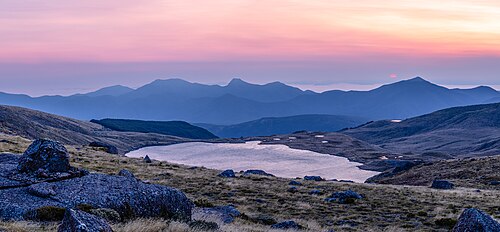
Michal Klajban · CC BY-SA 4.0 · Lake Sylvester during the sunrise, Kahurangi, New Zealand.jpg
Sunrise and sunset refer to the daily atmospheric phenomena where the Sun appears to rise above the eastern horizon in the morning and sink below the western horizon in the evening, driven by the rotation of the Earth.
Continuous changes in solar altitude throughout the day dictate these events, creating dramatic shifts in ambient illumination, weather conditions, and atmospheric colors. Although commonly described as the movement of the Sun, these phenomena are optical illusions observed from an accelerating ground-based frame of reference, resulting entirely from Earth spinning eastward on its axis.
1. Overview
From a terrestrial viewpoint, the Sun appears to travel across the sky every 24 hours. However, in astronomical terms, sunrise is defined as the precise moment when the upper edge of the Sun's disk becomes visible above the eastern horizon. Sunset occurs at the exact moment when the trailing edge of the Solar disk vanishes completely below the western horizon.
Because the Earth rotates counterclockwise when viewed from above the North Pole, the Sun seems to move westward. The transition between daylight and night does not occur instantaneously. Instead, it involves a gradual shift in illumination known as twilight, which occurs before sunrise and after sunset due to sunlight scattering in the upper atmosphere.
2. Physical Mechanism
The fundamental driver of sunrise and sunset is the Earth's daily rotation around its axis, completed approximately once every 23 hours, 56 minutes, and 4 seconds relative to distant stars, and 24 hours relative to the Sun.[1]https://hpiers.obspm.fr/eop-pc/index.php?index=constants — This precise period is known as the sidereal day, which measures the true rotation time of the planet relative to fixed background stars rather than the solar clock.
As the Earth spins, any given location on the surface transitions into and out of direct sunlight. The speed of rotation at the equator is roughly 1,670 kilometers per hour, decreasing toward the poles. This motion causes the solar elevation angle to change continuously.
The axial tilt of the Earth, measured at approximately 23.44 degrees, coupled with its orbital revolution around the Sun, causes the exact points on the horizon where the Sun rises and sets to shift throughout the year. During the equinoxes, the Sun rises due east and sets due west. During the solstices, these points reach their maximum northern or southern deviations, causing variations in day length across different latitudes.
3. Atmospheric Refraction and Optical Effects
The atmosphere plays a critical role in altering the visual appearance of sunrise and sunset. Atmospheric refraction bends light rays passing through layers of air of varying density. Consequently, the Sun appears slightly higher in the sky than its actual geometric location.
Because of this bending effect, observers can see the Sun shortly before it geometrically clears the horizon during sunrise and for a few minutes after it has geometrically dropped below the horizon during sunset. This extends the actual length of visible daylight.
Furthermore, refraction is stronger near the horizon than at higher altitudes. This differential refraction flattens the visible solar disk into an oval shape as it approaches the horizon.[2]This optical distortion occasionally makes the solar disk resemble a squashed oval or even a flattened pancake just before it dips below the sea.
4. Color Spectrum and Rayleigh Scattering
The striking red, orange, and pink hues associated with sunrise and sunset result from a physical process known as Rayleigh scattering. Air molecules and tiny particles in the atmosphere scatter shorter wavelengths of light, such as blue and violet, much more effectively than longer wavelengths, such as red and orange.
When the Sun is high in the sky at noon, light travels through a relatively short path of atmosphere, leaving the sunlight largely yellow and the sky blue due to scattered blue light. However, during sunrise and sunset, sunlight must travel through a significantly longer atmospheric path to reach an observer's eyes.
During this extended path, most of the shorter blue and green wavelengths are scattered away out of the line of sight. The longer red and orange wavelengths penetrate the thick atmosphere more easily, reaching the observer and illuminating the horizon, cloud bases, and sky with vivid warm tones.
5. Cultural and Biological Significance
Sunrise and sunset have profoundly influenced human culture, timekeeping, and natural ecosystems throughout history.
- Circadian Rhythms: The natural light-dark cycle created by these daily events serves as the primary biological trigger for circadian rhythms in humans, animals, and plants, regulating sleep patterns, hormone production, and photosynthetic activity.
- Agriculture and Navigation: Early civilizations relied on the position of the rising and setting Sun to construct calendars, schedule agricultural work, and navigate land and sea.
- Art and Aesthetics: The unique lighting conditions during these times, often referred to by photographers as the golden hour, have inspired countless works of art, literature, and photography across diverse societies.
6. Trivia
6.1 Green Flash and Blue Flash
The refraction of sunlight through the atmosphere at the moment of sunrise or sunset, creating a rare optical phenomenon where a green or blue spot is visible above the upper rim of the Sun's disk for a few seconds.[3]This elusive optical event is famously known as the green flash, which inspired Jules Verne's 1882 novel of the same name. This occurs due to the atmosphere acting as a prism, bending light of shorter wavelengths more than light of longer wavelengths. High atmospheric clarity and an unobstructed horizon, such as an oceanic expanse, are essential prerequisites for observation.
6.2 Terminator Line Dynamics
The moving divide that separates the daylight side and the night side of a planetary body. On Earth, the terminator line moves at approximately 1,670 kilometers per hour (1,037 miles per hour) at the equator, matching the planet's rotational speed. During the equinoxes, the line aligns perfectly with the Earth's axis of rotation, passing through both the North and South Poles simultaneously.
6.3 Astronomical Twilight Classification
The three distinct sub-phases of twilight categorized by the angle of the Sun below the horizon:
- Civil Twilight ($0^\circ$ to $6^\circ$): The period when terrestrial objects remain clearly distinguishable and artificial lighting is generally unnecessary.
- Nautical Twilight ($6^\circ$ to $12^\circ$): The threshold where the horizon remains visible at sea while the brightest stars become detectable, historically utilized for celestial navigation.
- Astronomical Twilight ($12^\circ$ to $18^\circ$): The phase during which the sky darkens sufficiently for deep-sky astronomical observations, though subtle solar scattered light persists.
6.4 Rayleigh Scattering Asymmetry
The physical mechanism responsible for the distinct coloration differences between sunrise and sunset. While Rayleigh scattering scatters shorter wavelengths (blue) and transmits longer wavelengths (red) equally at both times, sunsets generally exhibit more intense hues of red and orange. This asymmetry stems from daytime atmospheric heating, which suspends higher concentrations of aerosols, dust, and pollutants in the air compared to the settled, cooler atmosphere at sunrise.
6.5 False Sunrise and Sunset Phenomena
Optical illusions caused by the reflection and refraction of sunlight off airborne ice crystals suspended within cirrostratus clouds. The most notable variations include upper tangent arcs and solar pillars, which create the visual effect of the Sun rising or setting above its actual geometric position. A distinct variant occurs in upper atmospheric layers during intense volcanic eruptions, where stratospheric aerosols project secondary crepuscular glows long after geometric sunset.
6.6 Martian Sunset Coloration
The atmospheric light phenomena observed on Mars, where sunsets appear blue rather than red.[4]Images captured by NASA's Curiosity rover at Gale Crater dramatically confirmed these cool blue Martian sunsets. The Martian atmosphere, composed predominantly of carbon dioxide and fine iron oxide dust particles, subjects incoming sunlight to Mie scattering rather than Rayleigh scattering. This causes blue light to scatter more efficiently in the forward direction toward the observer, resulting in a distinct bluish halo around the sun disk on the Martian horizon.
6.7 Polar Day-Night Transition Metrics
The extreme temporal characteristics of sunrise and sunset at high latitudes. At the geographic poles, the Sun rises and sets only once per year due to the Earth's axial tilt relative to its orbital plane.[5]Because of this unique tilt, residents near the poles experience a single continuous six-month day followed by a six-month night. Consequently, the transition from continuous polar day to polar night involves a continuous twilight phase that lasts for several weeks rather than a few hours.
6.8 Geometric Horizon Refraction Shift
The atmospheric bending of light that alters the perceived timing of sunrise and sunset. Standard atmospheric refraction lifts the image of the Sun by approximately 34 arcminutes near the horizon—an amount slightly greater than the solar disk's own angular diameter (around 32 arcminutes). As a result, the entire disk of the Sun is geometrically below the horizon at the exact moment an observer sees its lower edge visually touch the horizon line.
Child documents of "Sunrise and sunset"
None yet.