Published page
Tax refund


A tax refund, also known as the reimbursement of excess tax, refers to a financial settlement in which a tax authority returns overpaid tax funds to an individual or corporate tax…
Tax refund
A tax refund, also known as the reimbursement of excess tax, refers to a financial settlement in which a tax authority returns overpaid tax funds to an individual or corporate tax…
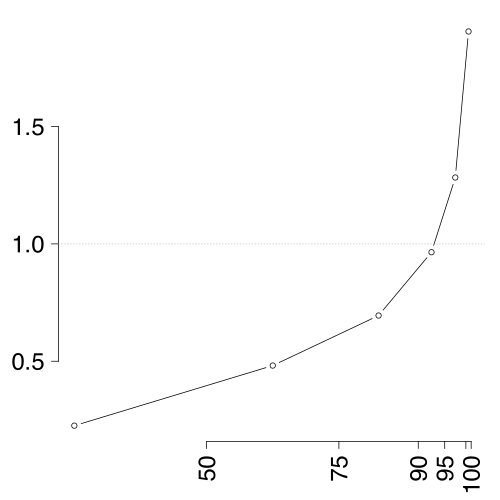
DavidMCEddy · CC BY-SA 4.0 · Share of taxes vs. AGI.svg
A tax refund, also known as the reimbursement of excess tax, refers to a financial settlement in which a tax authority returns overpaid tax funds to an individual or corporate taxpayer.
This mechanism ensures that the government collects no more than the exact amount of tax owed under existing statutory frameworks.
1. Overview
In many fiscal systems, taxes are collected on an estimated or provisional basis throughout the tax year. This occurs primarily through withholding tax systems, where employers subtract income tax directly from an employee's wages, or through provisional tax payments made by self-employed individuals and corporations.[1]Modern automatic pay-as-you-go income tax withholding was first introduced on a mass scale in the United States under the Current Tax Payment Act of 1943 to help stabilize steady wartime federal reven
At the end of the tax period, the taxpayer files a comprehensive tax return detailing total actual income, eligible deductions, tax credits, and exemptions. If the total amount of tax paid through periodic withholding or advance payments exceeds the final calculated tax liability, the tax authority is legally obligated to return the surplus to the taxpayer. Conversely, if the provisional payments fall short of the final liability, the taxpayer must pay the remaining balance.
2. Causes of Overpayment
Excess tax payments typically arise due to several structural factors within the tax administration process:
- Changes in Financial Circumstances: A drop in income, periods of unemployment, or fluctuating business revenues during the tax year can cause automated withholding systems to overestimate final annual tax liability.
- Underreported Deductions and Credits: Standard withholding rates generally calculate tax liabilities without accounting for individual-specific deductions. Expenses such as medical costs, charitable donations, higher education tuition, retirement contributions, and child tax credits are often applied only during the final annual tax settlement, substantially lowering the net tax obligation.
- Overestimated Advance Payments: Business entities and independent contractors who pay estimated quarterly taxes may experience lower-than-projected profits, resulting in an advance payment total that exceeds the year-end liability.
- Legislative and Policy Adjustments: Retroactive changes in tax legislation, such as the mid-year expansion of tax relief programs or adjusted tax brackets, can render previously collected tax amounts excessive.
3. Processing and Disbursement
The process of receiving a tax refund begins with the formal submission of an annual tax declaration to the relevant government tax agency. Tax authorities review the submitted declaration against institutional financial records, such as wage reports provided by employers and documentation from financial institutions.
Upon verification and approval of the tax return, the tax authority calculates the refund balance. The disbursement is typically rendered through direct bank deposit or official paper check. In many jurisdictions, taxpayers may elect to apply their refund balance toward their estimated tax liabilities for the subsequent tax year instead of receiving an immediate cash payout.
If a government agency delays the issuance of a verified tax refund past a statutorily defined deadline, the tax authority may be legally required to pay interest on the overpaid amount to the taxpayer.
4. Economic Implications
While a tax refund is frequently perceived by taxpayers as a sudden financial windfall or forced savings mechanism, it effectively represents an interest-free loan extended by the taxpayer to the government for the duration of the tax year.[2]Despite the math showing it is an interest-free loan to the government, surveys frequently show that many taxpayers prefer overwithholding because they treat the refund as a psychological mental accou
From a macroeconomic perspective, the annual tax refund season injects substantial liquidity into the consumer economy. Many households utilize these lump-sum payments to clear existing debts, make major purchases, or increase personal savings. For government treasuries, managing the timing and volume of refund disbursements requires careful cash-flow management to ensure state liquidity remains balanced.
5. Trivia
5.1 Overpayment Interest and State Liabilities
In many tax jurisdictions, when a government delays the processing of a tax refund beyond a legally mandated period, it is statutory bound to pay the taxpayer interest on the refunded amount. In the United States, the Internal Revenue Service (IRS) is required to pay interest if a refund is not issued within 45 days of the tax filing deadline.[3]https://www.law.cornell.edu/uscode/text/26/6611 — Under Title 26 of the United States Code, the IRS is statutorily mandated to pay interest at a rate established quarterly if a refund check or direct deposit is not sent out within 45 days of the fili Conversely, government entities frequently employ refund offset programs. Under these mechanisms, a taxpayer's refund is automatically intercepted and applied toward outstanding non-tax debts, such as defaulted federal student loans, delinquent child support payments, or unpaid state debts, prior to the disbursement of any remaining capital.
5.2 Refund-Driven Consumption and Microeconomic Shocks
The seasonal disbursement of tax refunds creates predictable microeconomic shifts, often referred to by economists as the "refund effect." Because tax refunds represent the single largest annual liquidity event for many lower- to middle-income households, consumer spending spikes dramatically in the first quarter of the fiscal year. This influx of capital alters short-term velocity of money and temporarily shifts household behavior from risk-averse saving to durable goods purchasing, debt service acceleration, or speculative consumption. Retailers frequently align high-margin promotional campaigns specifically with the peak refund cycle.
5.3 Refund Anticipation Loans and Financial Intermediaries
The structural delay between tax filing and refund disbursement catalyzed the growth of a specialized financial services sector focused on monetization of pending refunds. Refund Anticipation Loans (RALs) and Refund Anticipation Checks (RACs) are short-term consumer credit instruments secured by the taxpayer's anticipated refund.[4]https://www.consumerfinance.gov/about-us/newsroom/cfpb-takes-action-against-tax-preparer-for-deceptive-refund-anticipation-loan-marketing — Refund Anticipation Loans peaked in popularity during the late 1990s and early 2000s, but major federal regulations later curbed their availability due to predatory pricing concerns. Historically characterized by high effective annualized percentage rates (APR) and processing fees, these products allow financial intermediaries to capture a portion of the tax refund value in exchange for immediate liquidity. Regulatory tightening in various jurisdictions has shifted the market toward fee-based tax preparation software integrated with direct-deposit banking services.
5.4 Tax Loss Harvesting and Strategic Refund Generation
In high-net-worth portfolio management, tax refunds are rarely the result of simple wage withholding errors; rather, they are engineered through tax loss harvesting and capital allocation strategies. By intentionally realizing capital losses to offset realized capital gains—and up to a statutory limit of ordinary income—investors dynamically adjust their net tax liability. In corporate finance, loss carryback provisions allow corporations to apply current net operating losses (NOL) to previous tax years' profits, resulting in substantial refund checks from the state to bolster corporate cash flows during economic downturns.
5.5 Behavioral Economics and Hyperbolic Discounting
From a pure classical economic perspective, receiving a large tax refund is financially suboptimal, as it represents an interest-free loan extended by the taxpayer to the state for up to 15 months. Optimal financial behavior dictates adjusting tax withholding (e.g., via Form W-4 in the United States) to equalize liability, thereby maximizing monthly cash flow for investment or yield generation. However, behavioral economics demonstrates that taxpayers overwhelmingly prefer forced savings mechanisms. Due to bounded self-control and hyperbolic discounting, individuals utilize the tax refund as a psychological commitment device to aggregate wealth into a lump sum that would otherwise be dissipated through fragmented daily consumption.
5.6 The Identity Theft and Refund Fraud (ITRF) Ecosystem
Tax refunds constitute a major target for organized cybercrime through Identity Theft and Refund Fraud (ITRF). Exploiting the structural asymmetry of the tax system—where tax returns are processed before third-party wage data (such as Form W-2) is fully reconciled—perpetrators use stolen Personally Identifiable Information (PII) to file fraudulent returns early in the tax season. The illicit refunds are routed to prepaid debit cards or untraceable accounts before the legitimate taxpayer files. This security vulnerability has forced tax authorities to implement biometric verification, machine learning fraud detection algorithms, and delayed processing windows for high-risk returns.
5.7 The "Nudge" Effect of Refund Choice Architecture
The mechanism by which a tax refund is delivered heavily influences its ultimate economic utility. Research in applied behavioral intervention demonstrates that when tax filing platforms present default options splitting refunds directly into savings vehicles (such as U.S. Series I Savings Bonds or individual retirement accounts), allocation rates to long-term asset accumulation increase substantially. Conversely, when refunds are disbursed as a single liquid lump-sum checking deposit, the probability of immediate non-essential expenditure rises. Consequently, choice architecture within tax software plays a regulatory role in national savings rates.[5]https://www.irs.gov/forms-pubs/about-form-8888 — The IRS introduced Form 8888 specifically to allow taxpayers to split their refunds across multiple financial accounts or directly purchase physical or electronic savings bonds.
Child documents of "Tax refund"
None yet.