Published page
Airport delays


Airport delays refer to a operational disruption phenomenon in which aircraft takeoffs, landings, or ground operations are postponed beyond their originally published timetables d…
Airport delays
Airport delays refer to a operational disruption phenomenon in which aircraft takeoffs, landings, or ground operations are postponed beyond their originally published timetables d…
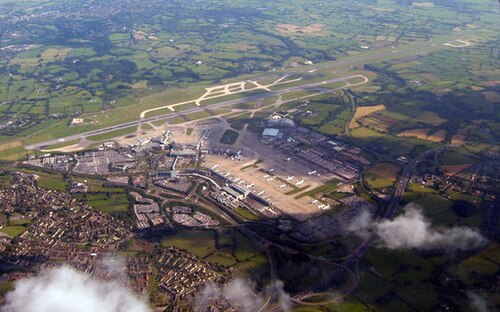
Dave Croker · CC BY-SA 2.0 · Manchester Airport.jpg
Airport delays refer to a operational disruption phenomenon in which aircraft takeoffs, landings, or ground operations are postponed beyond their originally published timetables due to a multitude of environmental, technical, and logistics factors.
It represents one of the most critical operational challenges in modern civil aviation, directly affecting global supply chains, passenger satisfaction, and corporate revenues. While minor deviations of a few minutes are considered normal operational variances within standard aviation procedures, delays exceeding industry-defined thresholds trigger widespread logistical ripple effects across interconnected international transport networks.
1. Overview
In the global air transport system, flight schedules function as a tightly coordinated matrix where individual aircraft, crew members, ground handling services, and air traffic control slots are precisely synchronized. An airport delay occurs when any component of this complex system fails to meet its allocated timeframe, preventing an aircraft from operating its scheduled flight leg on time.
From a regulatory standpoint, major civil aviation authorities—such as the International Air Transport Association (IATA), the Federal Aviation Administration (FAA), and Eurocontrol—generally classify a flight as "delayed" if it departs or arrives 15 minutes or more past its scheduled time.[1]This standard 15-minute grace period was originally popularized to account for minor variations in ground traffic and baggage handling without artificially penalizing performance statistics. Beyond individual inconvenience, chronic delays serve as a key metric for assessing the operational efficiency, structural capacity, and infrastructure maturity of specific airports and airspace sectors.
2. Primary Causes
Flight schedule disruptions rarely stem from a single isolated event; rather, they are typically the result of complex interactions among diverse internal and external operational variables.
- Meteorological Factors
Severe weather remains the single largest catalyst for flight delays worldwide. Phenomena such as low visibility caused by dense fog, localized thunderstorms, heavy snowfall, freezing rain, and high crosswinds severely compromise safety margins. Under adverse weather conditions, air traffic control authorities must artificially widen the spatial intervals between aircraft, drastically reducing the overall hourly capacity of runways and airspace blocks.
- Air Traffic Control and Airspace Congestion
As global demand for commercial aviation has expanded, primary international hubs often operate at or near maximum theoretical capacity. Airspace congestion, coupled with staffing constraints among air traffic controllers, frequently forces civil aviation managers to issue Ground Delay Programs (GDP) or flow management initiatives.[2]Ground Delay Programs permit aircraft to absorb delays at their origin gates rather than burning expensive jet fuel in circling patterns near their destination. Under these conditions, aircraft are held at their departure gates or assigned extended airborne holding patterns to maintain safe separation standards.
- Operational and Technical Issues
Mechanical failures discovered during pre-flight inspections necessitate immediate maintenance, holding the aircraft at the gate until airworthiness is recertified. Furthermore, ground handling bottlenecks—such as delayed baggage loading, slow fueling operations, extended aircraft cabin cleaning, or late arriving flight crews due to duty-time limits—contribute significantly to initial departure delays.
- Reactionary Delays (Propagation Effect)
Because commercial airlines design their fleets for high utilization, a single aircraft typically operates multiple sequential flight sectors in a single day. A delay incurred during an early morning flight leg naturally propagates to all subsequent flights operated by that specific aircraft. Known as reactionary or cascade delays, this compounding effect often accounts for the majority of total delayed minutes experienced across an airline's network by the end of the operating day.
3. Operational Impact
The consequences of flight schedule disruptions extend far beyond the immediate waiting areas of airport terminals, causing extensive economic and operational strain.
- Economic Losses for Carriers
Flight delays inflict massive financial costs on commercial airlines. These expenditures include increased jet fuel burn during extended taxiing or airborne holding, overtime compensation for flight crews and ground staff, passenger rebooking fees, and mandatory duty-of-care expenses such as meal vouchers and overnight hotel accommodations.
- Passenger Disruption
For travelers, severe delays result in missed connections, disrupted itineraries, and loss of productivity. In high-density international hubs, a delay on an inbound feeder flight can cause dozens of passengers to miss outbound long-haul transoceanic flights, placing an immense burden on airline customer service desks to manage complex rerouting operations.
- Airport Infrastructure Strain
When departures are delayed, aircraft occupy gates longer than scheduled, preventing arriving flights from taxiing to their assigned positions. This gate congestion causes secondary tailbacks on taxiways, increasing ground traffic hazards, raising local carbon emissions from idling engines, and degrading the overall operational safety margin of the aerodrome.
4. Mitigation and Preventive Measures
To counteract the structural impact of schedule disruptions, the aviation industry continuously develops advanced technology and structural strategies aimed at enhancing network resilience.
- Advanced Air Traffic Management Technology
Modern navigation systems, such as Decision Support Systems (DSS) and Collaborative Decision Making (CDM) frameworks, allow airlines, airport operators, and air traffic managers to share real-time operational data. By predicting operational bottlenecks hours in advance, stakeholders can optimize arrival and departure queues, minimizing engine-on holding times.
- Buffer Management in Scheduling
Airlines mitigate the risk of delay propagation by embedding realistic schedule buffers into ground turnaround times and block times. By building conservative time cushions into schedules at high-congestion airports, carriers can absorb minor disruptions without allowing the delay to affect subsequent flight legs.
Governments and regulatory bodies have established formal consumer protection standards to hold airlines accountable for manageable delays. Protocols such as the European Union's Regulation EC 261/2004 mandate fixed monetary compensation and comprehensive care for passengers affected by long delays within the carrier's control, incentivizing airlines to maintain strict schedule integrity and maintain operational contingency plans.[3]https://eur-lex.europa.eu/legal-content/EN/TXT/?uri=CELEX%3A32004R0261 — European Union regulations force carriers to pay fixed cash compensation ranging from 250 to 600 euros for severe delays within their operational control.
5. Trivia
5.1 Wheel-to-Wheel vs. Gate-to-Gate Discrepancy
The standard aviation definition of an "on-time" flight permits a 15-minute margin of error relative to the scheduled arrival time (the "A15" metric utilized by the U.S. Department of Transportation). Because this metric measures the moment the aircraft reaches the gate rather than when its wheels touch the runway, airlines routinely utilize a strategy known as "schedule padding" (or flight time block padding). By artificially extending the published flight duration—adding 20 to 30 minutes to historical flight times—airlines systematically absorb anticipated ground and air traffic control delays without triggering official regulatory penalties or public reliability downgrades.
5.2 The Ground Stop Protocol and First-Come, First-Served Abrogation
During severe operational disruptions, air navigation service providers (such as the FAA or Eurocontrol) implement a Ground Delay Program (GDP) or Ground Stop (GS). This operational intervention overrides the standard "first-come, first-served" sequence of air traffic control. Under a GDP, aircraft destined for an affected hub are assigned specific Expected Departure Clearance Times (EDCT) while still parked at their origin airports. This practice converts expensive, high-risk airborne holding patterns into fuel-efficient "ground delays," effectively transferring the spatial burden of congestion hundreds of miles away from the target airport.
5.3 The Tarmac Delay Rule and the Economic Tipping Point
Following high-profile incidents of passenger confinement, global aviation authorities introduced stringent maximum limits for tarmac delays (typically 3 hours for domestic flights and 4 hours for international flights in the United States).[4]https://www.transportation.gov/airconsumer/tarmac-delays — The strict federal limits on tarmac delays stemmed from high-profile winter storms where passengers remained stranded inside grounded airliners for over eight hours. However, this consumer protection mechanism introduced an unintended systemic paradox. Because airlines face catastrophic fines per passenger for exceeding the threshold—often amounting to millions of dollars per flight—operational managers frequently elect to cancel a flight preemptively if the taxi-out time approaches the deadline. Consequently, regulations designed to mitigate passenger discomfort directly increased the macro-rate of outright flight cancellations.
5.4 The "Domino Effect" of Rotational Delay
Modern commercial aviation relies on ultra-high aircraft utilization rates, where a single airframe operates multiple route segments per day. A delay originating on a morning flight creates a cascade known as a "rotational delay" (or reactionary delay). Due to strict crew duty time limits mandated by aviation authorities (such as FAR Part 117), even if an aircraft recovers lost time in flight, the flight crew may hit their legal operational ceiling ("time out"), requiring a complete crew swap and multiplying a minor 20-minute weather delay into a multi-hour labor-induced cancellation.
5.5 Slot System Constraints and Use-it-or-Lose-it Rules
At severely congested "Level 3" slot-controlled hubs (e.g., London Heathrow, Tokyo Haneda, New York JFK), arrival and departure rights are strictly allocated. Under the historic "80/20 Rule" enforced by IATA, an airline must operate assigned slots at least 80% of the time over a scheduling season to retain them for the following year.[5]The usage rule incentivizes airlines to operate empty flights during demand drops simply to secure valuable long-term landing rights at capacity-constrained hubs. During major systemic disruptions, this regulatory requirement forces airlines to prioritize flying empty or heavily delayed aircraft ("ghost flights") purely to preserve market equity, rather than canceling operations to reset their delayed schedules.
5.6 Micro-Meteorological Microbursts and De-icing Bottlenecks
While macro-weather phenomena like blizzards are obvious causes of delay, subtle atmospheric variations generate far greater operational paralysis:
- De-icing Holdover Times: In freezing conditions, aircraft must undergo de-icing via Type I and Type IV glycol fluids. Type IV fluid provides a strict "Holdover Time" (HOT)—a limited window before its anti-icing properties degrade. If an aircraft experiences a taxi delay exceeding the HOT while waiting in the queue, it must abandon its takeoff sequence and return to the pad to repeat the expensive process entirely.
- Convective Weather and Airway Closures: High-altitude thunderstorm cells (cumulonimbus clouds) alter airspace geometry. Because civil aircraft cannot fly through severe convection, ATC must reroute entire streams of traffic into narrow "airway corridors." This sudden reduction in lateral airspace capacity causes massive tactical ground delays even at airports experiencing perfectly clear local weather.
Child documents of "Airport delays"
None yet.