Published page
Daylight Saving Time


Daylight Saving Time (DST), commonly referred to as summer time in many parts of the world, is the practice of advancing clocks forward by one hour from standard time during warme…
Daylight Saving Time
Daylight Saving Time (DST), commonly referred to as summer time in many parts of the world, is the practice of advancing clocks forward by one hour from standard time during warme…
TimeZonesBoy · CC BY-SA 3.0 · DST Countries Map.png
Daylight Saving Time (DST), commonly referred to as summer time in many parts of the world, is the practice of advancing clocks forward by one hour from standard time during warmer months to extend evening daylight and conserve energy.
Current civil time is artificially shifted ahead, effectively borrowing an hour of daylight from the morning and transferring it to the evening. While the primary historic justification was energy conservation, modern debates surrounding the system focus on economic benefits, public health impacts, and lifestyle adjustments.
1. Overview
The fundamental mechanism of Daylight Saving Time involves shifting standard time forward—typically by sixty minutes—in early spring and reverting to standard time in late autumn. When the transition occurs in spring, individuals lose an hour of sleep, but late afternoon and evening daylight lasts longer. Conversely, the autumn transition restores standard time, granting an extra hour of sleep while causing earlier sunsets.
The implementation and rules of the system vary greatly across different countries and regions. In the Northern Hemisphere, DST generally begins around March or April and concludes between October and November. In the Southern Hemisphere, where seasons are reversed, the implementation period runs from October or November through March or April.
While the phrase "Daylight Savings Time" with an extra "s" is widely used in casual conversation, the official and grammatically standard terminology remains "Daylight Saving Time" in the singular form.[1]The inclusion of the extra letter remains one of the most widespread grammatical slip-ups in the English language.
2. History and Background
The conceptual origin of adjusting human schedules to natural sunlight traces back to ancient civilizations, which often divided daytime into twelve equal hours regardless of the season, making summer hours inherently longer than winter hours. However, the modern proposal for adjusting civil clocks emerged during the late nineteenth and early twentieth centuries.
New Zealand entomologist George Hudson first formally proposed a two-hour clock shift in 1895 to allow more evening hours for bug collecting and outdoor activities.[2]https://www.royalsociety.org.nz/150-women-in-150-words/1899-1948/george-hudson — His passion for shift-work stems from his shift as an astronomer and shift as an insect collector, requiring ample post-work daylight. Unaware of Hudson's proposal, British builder William Willett independently advocated for a similar concept in 1907 to prevent people from wasting daylight hours sleeping during summer mornings.
The widespread adoption of Daylight Saving Time began during World War I. The German Empire and its allies were the first to implement the system in April 1916 as a wartime measure to conserve coal fuel used for artificial lighting. The United Kingdom, the United States, and numerous other belligerent nations adopted similar measures shortly thereafter. Although many countries abandoned the practice after the war, it was reinstated on a large scale during World War II and became deeply embedded globally during the energy crises of the 1970s.
3. Implementation Across the World
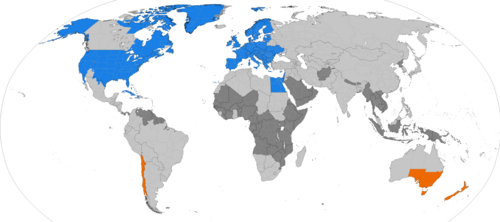
The global map of Daylight Saving Time usage is dynamic and constantly shifting due to regional political and economic decisions. Today, less than forty percent of the world's countries observe DST.
- North America and Europe
The practice remains predominantly utilized in North America and Europe. In the European Union, DST operates under a synchronized system known as Summer Time, transitioning on the last Sunday of March and reverting on the last Sunday of October. In the United States and Canada, the rules are governed by regional laws, though most states and provinces follow a standardized schedule starting on the second Sunday in March and ending on the first Sunday in November. Certain regions, such as Arizona and Hawaii in the United States, choose to opt out of the system entirely.
- Tropical and Polar Regions
Countries located near the Equator generally do not observe Daylight Saving Time. Because daylight hours near the tropical zone remain relatively constant throughout the entire year, shifting clocks offers virtually no functional advantage. Similarly, extreme polar regions experience periods of continuous daylight or total darkness regardless of clock adjustments, rendering the practice ineffective.
- Recent Trends and Abolition
In recent years, the global momentum has swung noticeably toward abolishing clock changes. Countries such as Russia, Turkey, Brazil, and Belarus have completely abandoned seasonal time shifts in favor of permanent standard time or permanent summer time. Both the European Union and the United States Congress have introduced legislative efforts to permanently end seasonal transitions, though final implementations remain delayed due to regulatory coordination and political debates.
4. Debates and Effects
The debate over the utility of Daylight Saving Time encompasses economic, environmental, and medical perspectives.
The traditional argument that DST saves significant amounts of electricity has been increasingly challenged by modern empirical studies. While artificial lighting energy usage decreases slightly, the increased demand for evening air conditioning and morning heating often offsets or even exceeds those savings. Economically, industries related to outdoor recreation, retail, and tourism tend to benefit from prolonged evening sunlight, whereas agricultural sectors often face disruptions in farming and livestock routines.
- Health and Biological Impacts
Medical professionals and chronobiologists express significant concern regarding the bi-annual clock shifts. The abrupt disruption of human circadian rhythms—particularly during the spring transition—is associated with measurable spikes in sleep deprivation, cardiovascular events such as heart attacks, workplace accidents, and traffic collisions in the days immediately following the time change. Consequently, numerous health organizations advocate for the permanent adoption of natural standard time to maintain stable biological clocks.
5. Trivia
5.1 Benjamin Franklin’s Satirical Essay
The conceptual origin of Daylight Saving Time (DST) is frequently attributed to Benjamin Franklin’s 1784 essay, *An Economical Project for Diminishing the Cost of Light*. However, this essay was a satirical piece written during his tenure as a U.S. envoy in Paris. Franklin did not propose shifting clock hands; rather, he humorously suggested firing cannons at sunrise, ringing church bells, and taxing window shutters to force habitual late-risers out of bed to conserve candle wax.[3]His satirical essay calculated that Parisian households could save tens of millions of pounds of candle wax by rising at dawn. The modern mechanics of DST were instead formally proposed by New Zealand entomologist George Hudson in 1895, who sought additional evening daylight hours to collect insects, and British builder William Willett in 1907, who lamented the waste of morning sunlight during his early morning golf rounds.
5.2 Wartime Implementation and the German Empire
The first nation to adopt DST on a national scale was not the United Kingdom or the United States, but the German Empire during World War I. On April 30, 1916, Germany and its ally Austria-Hungary implemented *Sommerzeit* (Summer Time) to conserve coal reserves necessary for the war effort.[4]The wartime policy aimed to maximize industrial productivity by reducing dependence on imported lighting fuel. The Allied powers quickly recognized the resource management advantages and followed suit, with the UK implementing British Summer Time in May 1916 and the US introducing "War Time" in 1918.
5.3 Socioeconomic Disparities in Indiana
The state of Indiana served as a primary historical case study for regional daylight chaos due to its location on the boundary between the Eastern and Central time zones. For decades, the state maintained a fragmented system where some counties observed DST while others rejected it, and certain jurisdictions shifted time zones entirely. This lack of uniformity ended only in 2006, when Indiana officially standardized DST statewide under Governor Mitch Daniels. Subsequent economic studies revealed that the statewide adoption of DST in Indiana actually increased residential electricity consumption by approximately 1 percent, as the reduced need for electric light was offset by an increased demand for air conditioning during warmer summer evenings.
5.4 Arizona, Hawaii, and Tropical Exceptions
Within the United States, Hawaii and the vast majority of Arizona do not observe Daylight Saving Time. Hawaii opted out due to its proximity to the equator, where seasonal fluctuations in sunrise and sunset times are negligible, rendering clock adjustments functionally redundant. Arizona abolished DST in 1968 due to extreme summer temperatures; shifting daylight hours to the evening prolonged peak heat exposure, leading to higher energy consumption for cooling. However, a geographic anomaly exists within Arizona: the Navajo Nation observes DST to align with its territory extending into Utah and New Mexico, while the Hopi Reservation, entirely enclosed within the Navajo Nation, follows Arizona's standard non-observance.[5]https://www.navajo-nsn.gov — The spatial arrangement creates an island of standard time nestled within an enclave that observes daylight saving time.
5.5 Physiological Impacts and the "Spring Forward" Phenomenon
Chronobiological and statistical research indicates that the bi-annual time shift exerts measurable physiological stress on the human circadian rhythm. The loss of one hour of sleep during the spring transition correlates with a statistically significant spike in adverse health and safety events. Multiple studies published in medical literature demonstrate an approximate 24 percent increase in acute myocardial infarctions (heart attacks) on the Monday immediately following the spring transition, alongside measurable upticks in workplace injuries, motor vehicle collisions, and temporary drops in financial market returns attributed to sleep disruption.
5.6 Economic Controversies and the "Candy Lobby"
The political retention of DST is heavily influenced by corporate lobbying efforts centered around consumer behavior. Retail, golf, and leisure industries strongly favor extended evening daylight, as consumer spending increases significantly during daylight hours. A notable historical instance occurred in 1985 in the United States, when the confectionery industry actively lobbied to extend DST through late October. The objective was to encompass Halloween night, allowing children an extra hour of daylight to collect candy, thereby increasing overall confectionery sales.[6]https://www.congress.gov/bill/99th-congress/house-bill/3180 — The candy trade group went so far as to put small candy pumpkins on the desks of senators during key legislative hearings. The extension was officially signed into federal law in 1986.
5.7 The Chaos of November 2, 2007, in Sleep Medicine
Because internal medical devices rely on hardcoded software, time transitions occasionally cause software glitches in clinical settings. A documented phenomenon in medical informatics involves automated insulin pumps, cardiac monitors, and electronic health record (EHR) systems. During the autumn transition, when 1:59 AM recurs twice, improperly programmed systems have inadvertently duplicated medication doses, overwritten critical patient diagnostic logs, or triggered systemic software halts due to time-stamp conflicts.[7]https://www.ncbi.nlm.nih.gov/pmc/articles/PMC3217482 — This rare temporal overlap forces software engineers to create specialized exception routines specifically for the repeated hour.
5.8 Global Polarization and Abandonment Trends
Worldwide adoption of DST is currently in a state of net decline. While approximately 70 countries currently observe DST, its application is predominantly concentrated in North America and Europe. Equatorial and tropical regions almost universally reject the practice, as the variation in daylight duration throughout the year is insufficient to justify time shifts. In recent years, several nations—including Russia (2014), Turkey (2016), and Brazil (2019)—have permanently abolished DST in favor of year-round standard time or year-round daylight time, citing public health concerns and minimal energy savings.
Child documents of "Daylight Saving Time"
None yet.