Published page
Father's Day


Father's Day (holiday honoring paternal bonds) is a global commemorative occasion dedicated to celebrating fatherhood, paternal bonds, and the pervasive influence of fathers in so…
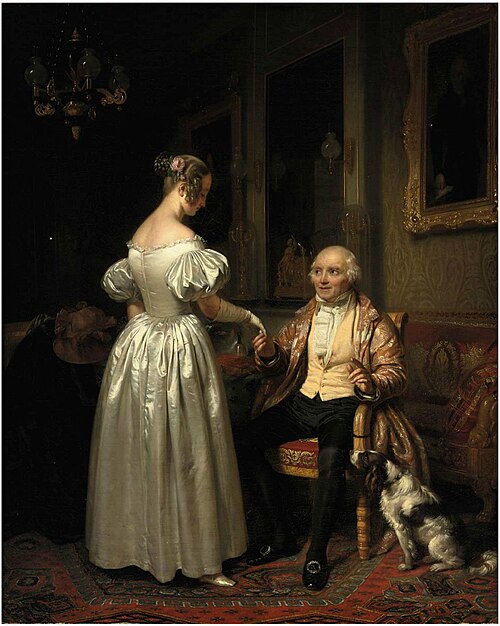
Father's Day
Father's Day (holiday honoring paternal bonds) is a global commemorative occasion dedicated to celebrating fatherhood, paternal bonds, and the pervasive influence of fathers in so…
Josephus Laurentius Dyckmans · Public domain · Josephus Laurentius Dyckmans - Paternal advice.jpg
Father's Day (holiday honoring paternal bonds) is a global commemorative occasion dedicated to celebrating fatherhood, paternal bonds, and the pervasive influence of fathers in society.
1. holiday honoring paternal bonds
While it functions similarly to Mother's Day, it specifically highlights the role of paternal figures in emotional, moral, and economic support within the traditional and modern family structures. Although the dates and cultural traditions vary significantly depending on the country, the underlying purpose remains focused on expressing gratitude toward biological fathers, grandfathers, stepfathers, and other male mentors.
1.1 Overview
Father's Day serves as a counterpart to Mother's Day, completing the dual recognition of parental figures within the family ecosystem. In many Western nations, particularly the United States, Canada, and the United Kingdom, the holiday is observed on the third Sunday of June. However, numerous regions align the celebration with local religious, historical, or cultural milestones. For instance, several European nations with strong Catholic traditions commemorate fatherhood on Saint Joseph's Day, which falls on March 19.[1]https://www.vatican.va/content/vatican/en.html — Saint Joseph was historically honored as the ideal father figure in Western Christianity, making the liturgical feast a natural ancestor to the secular holiday.
The holiday is characterized by the exchange of greeting cards, handmade crafts, gifts, and family gatherings. In commercial contexts, it is widely associated with consumer spending, particularly on electronics, sporting goods, tools, and clothing. Despite its modern commercialized nature, the core ethos of the holiday retains a strong socio-cultural emphasis on acknowledging paternal care and guidance.
1.2 Historical Origin
The early initiative for a dedicated day to honor fathers emerged in the United States during the early 20th century, largely as a complement to the newly established Mother's Day.
- Fairmont, West Virginia (1908): The earliest recorded event resembling a modern Father's Day occurred on July 5, 1908, when Grace Golden Clayton organized a church service to honor the 361 men—most of them fathers—who perished in the Monongah mining disaster.[2]https://www.cdc.gov/niosh/mining/works/events/monongah.html — The Monongah explosion remains the deadliest mining disaster in American history, leaving hundreds of children fatherless overnight. While this was a localized memorial rather than an annual event, it marked the first formal church service designated specifically for fathers.
- The Movement by Sonora Smart Dodd (1910): The primary driving force behind the official establishment of Father's Day was Sonora Smart Dodd of Spokane, Washington. Raised by a Civil War veteran and single parent, William Jackson Smart, Dodd felt strongly that fathers deserved equal recognition as mothers. Through her advocacy with local clergy and civic organizations, the first statewide Father's Day was celebrated in Washington State on June 19, 1910.[4]https://www.spokanecity.org — The local YMCA in Spokane played a pivotal role in backing Sonora Smart Dodd's original petition to honor fathers.
Despite early grass-roots popularity, official government recognition in the United States proceeded slowly due to fears of over-commercialization and legislative inaction. President Woodrow Wilson spoke at a Father's Day celebration in Spokane in 1916, and President Calvin Coolidge backed the idea in 1924. However, it was not until 1966 that President Lyndon B. Johnson issued an executive proclamation establishing the third Sunday in June as Father's Day. Finally, in 1972, President Richard Nixon signed the holiday into federal law amid a reevaluation of traditional domestic roles.[3]https://www.nixonlibrary.gov — Presidential reluctance for decades stemmed largely from fears that the holiday would turn into a cheap commercial scheme.
1.3 International Variations
The dates and customs associated with Father's Day vary considerably across the globe, reflecting regional histories and cultural frameworks.
- North America and the United Kingdom: Adhere to the US-style observation on the third Sunday of June. Festivities usually involve breakfast in bed, family outings, and personal gift-giving.
- Catholic Europe (Spain, Portugal, Italy): Celebrate on March 19, coincided with the Feast of Saint Joseph, who is venerated as the earthly father of Jesus Christ.
- Germany: Celebrated on Ascension Day (the 40th day after Easter), known locally as *Vatertag* or *Männertag* (Men's Day). Traditions often involve outdoor excursions, hiking, and group gatherings involving wagons loaded with regional foods and beverages.[5]The German tradition heavily features Bollerwagen—small handcarts filled with beer and food pulled by groups of men on countryside hikes.
- Scandinavia: Countries such as Sweden, Norway, and Finland celebrate Father's Day on the second Sunday of November, a deliberate shift adopted in the mid-20th century to optimize retail calendar distribution relative to Mother's Day.
- Taiwan: Celebrated on August 8. The choice of date is based on the Mandarin pronunciation of "8/8" (*Bābā*), which sounds identical to the informal word for father (*Bàba*).[6]Wordplay is a frequent driver of Asian calendar observances, and the double-eight date remains unique to Taiwan.
- Australia and New Zealand: Observed on the first Sunday of September, coinciding with the beginning of spring in the Southern Hemisphere.
1.4 Social and Cultural Impact
Father's Day reflects evolving societal perspectives on the nature of masculinity and paternal responsibility. Historically centered around celebrating the primary economic breadwinner, contemporary observations increasingly emphasize active caregiving, emotional availability, and co-parenting responsibilities.
In educational contexts, elementary schools often organize activities around Father's Day, encouraging children to create personalized cards or drawings. In recent decades, public discourses surrounding the holiday have broadened to accommodate non-traditional family structures, ensuring that individuals without active male figures or those raised by single mothers, extended family members, or same-sex parents are included sensitively within domestic and educational observances.
2. play by Oliver Hailey
*Father's Day* is a 1971 dark comedy play written by American playwright Oliver Hailey that explores the strained relationships, bitter resentment, and underlying vulnerabilities among three divorced couples reuniting on Father's Day. Complete with Hailey's signature razor-sharp wit and cynical humor, the work serves as a poignant character study on modern marriage, divorce, and gender dynamics in mid-20th-century America.
2.1 Overview
First debuting on Broadway in 1971, *Father's Day* is widely recognized as one of Oliver Hailey's most defined theatrical works. Set entirely on a shared sun deck of a New York City apartment building, the play brings together three divorced women who live in the same complex and their respective ex-husbands, who have been invited over for a Father's Day drink.
Unlike conventional domestic comedies of its era, the play bypasses sentimental reconciliations in favor of biting dialogue, emotional combat, and unvarnished honesty. It captures the disillusionment of the post-sexual revolution era, where traditional family structures are fractured, yet the emotional ties—and grievances—between former partners remain stubbornly intact.
2.2 Plot Synopsis
The narrative unfolds on a single afternoon on an apartment terrace shared by three women: Marion, Louise, and Estelle. Each woman represents a different facet of independence and emotional defense following the collapse of her marriage.
To mark Father's Day, the women invite their ex-husbands—Richard, Tom, and Harold—to spend time with them, under the pretext of allowing the men to connect with their children. However, the children remain largely off-stage, leaving the six adults isolated together in an volatile arena of shared history.[7]Keeping the children entirely off-stage emphasizes that the evening is purely an arena for adult unresolved grievances. As alcohol flows, the initial polite pretenses dissolve into a series of verbal duels.
The conversation shifts rapidly between aggressive banter, sexual tension, and melancholic admissions of loneliness. Throughout the afternoon, the characters confront why their marriages failed, trade bitter insults, and occasionally expose their deep-seated regret. The play ends not with neat resolutions, but with a lingering sense of tragicomic acceptance of their chaotic, fragmented lives.
2.3 Characters
- Marion: The primary host of the gathering. She projects an aura of intellectual cynicism and sharp humor to guard against her emotional pain.
- Richard: Marion's ex-husband. He matches Marion's verbal agility, masking his own inadequacies behind a persona of sophisticated detachment.
- Louise: A woman struggling with intense anger and neurosis regarding her single status and past marital betrayals.
- Tom: Louise's ex-husband. He attempts to maintain a relaxed, modern attitude toward their divorce, which often exacerbates Louise's frustration.
- Estelle: The most outwardly fragile of the three women, who often hides her distress behind comedic naïveté.
- Harold: Estelle's ex-husband. A man who struggles to navigate the confusing demands of modern masculinity and post-divorce boundaries.
2.4 Themes and Style
The play relies heavily on rapid-fire, dark comedic dialogue reminiscent of the theater of the absurd mixed with classic American comedy of manners. Key thematic elements include:
- The Illusion of Independence: While all six characters claim to have moved on from their failed unions, their inability to detach emotionally reveals a deep fear of isolation.
- Gender Politics of the 1970s: The play reflects the cultural shift wherein traditional marital roles were being challenged, leaving both men and women uncertain of their identity within relationships.
- Communication Breakdown: A recurring motif is the characters' reliance on sarcasm and barbs as a defense mechanism, preventing genuine intimacy even when they crave it.
2.5 Performance History and Reception
*Father's Day* had its Broadway preview at the Golden Theatre in March 1971. Despite featuring a talented cast that included Brenda Vaccaro and Charles Kimbrough, the original Broadway production closed after just one official performance due to scathing reviews from major New York critics who found its tone overly cynical for mainstream audiences of the time.[8]https://www.playbill.com — The single-performance opening night became a legendary piece of Broadway trivia regarding critical harshness in the 1970s.
However, the play found significant redemption in subsequent years. A revival in Los Angeles shortly after its Broadway closure earned widespread critical acclaim and ran for several months. Critics gradually reassessed the work, praising Hailey's sharp ear for dialogue and his prescient take on the psychological toll of divorce. It subsequently became a popular selection for regional theaters and stock productions across the United States.
3. novel by Thomas Berger
Father's Day is a 1996 satirical novel by the acclaimed American author Thomas Berger, exploring the chaotic absurdities of modern fatherhood, gender roles, and family dynamics through his signature biting wit and dark comedy.
3.1 Overview
Published in 1996 by Pantheon Books, *Father's Day* serves as a thematic continuation or companion piece to Thomas Berger's 1983 novel *The Houseguest*.[9]https://www.nytimes.com — Thomas Berger frequently revisited thematic domestic suburban landscapes across his broader literary output. Known for his genre-bending works such as *Little Big Man* and *Neighbors*, Berger turns his satirical lens toward the domestic battleground of the suburban American family.
The novel juxtaposes the traditional, often oppressive expectations of fatherhood with the chaotic reality of contemporary domestic life. Through an exaggerated, almost surreal lens, Berger deconstructs the patriarchal figure, presenting a narrative that is equal parts suburban farce and trenchant social commentary.
3.2 Plot Summary
The story revolves around Alfred Belmington, an overbearing, hyper-masculine patriarch who resides in a comfortable suburban home. Alfred views himself as the undisputed ruler of his household, driven by a rigid code of traditional paternal authority. However, his domestic empire begins to crumble rapidly under the weight of his own absurd demands and the subtle rebellions of his family members.
The plot kicks into high gear during a fateful Father's Day weekend. Alfred's long-suffering family—including his wife, children, and an influx of bizarre guests—fails to accord him the absolute reverence he believes he deserves. As Alfred attempts to assert control over increasingly unruly situations, his efforts backfire spectacularly. Simple domestic tasks escalate into unmitigated disasters, culminating in a series of comedic, chaotic confrontations that expose the fragility of his authority and the delusion of his traditional worldview.
3.3 Characters
- Alfred Belmington: The protagonist and titular "father." Alfred is an eccentric, authoritarian, and deeply misguided man who desperately tries to maintain an outdated vision of the ideal 1950s patriarch in a rapidly changing world.
- Estelle Belmington: Alfred's long-suffering wife. Beneath her quiet and seemingly submissive exterior lies a pragmatic intelligence that often manages the actual crises Alfred creates.
- The Children: A cast of distinct, modern young adults and teenagers whose apathy, independence, and bizarre personal choices constantly thwart Alfred's attempts at paternal guidance.
- Intruders and Guests: Various uninvited relatives and eccentric acquaintances who disrupt the domestic peace, serving as catalysts for the novel's escalations.
3.4 Themes and Style
At its core, *Father's Day* is an indictment of toxic masculinity and outdated familial hierarchies. Berger systematically dismantles the myth of the wise, benevolent father figure. Alfred's insistence on traditional male dominance renders him absurd rather than commanding, highlighting the ridiculousness of rigid gender roles in modern relationships.
Berger employs his trademark prose style: formal, highly articulated, and slightly archaic language juxtaposed against thoroughly mundane or chaotic suburban events. This elevated style enhances the comic irony, as characters debate trivial domestic grievances with the gravity of philosophical or geopolitical crises.
Like many of Berger's domestic comedies, the novel operates on a frequency of logical absurdity. Events escalate exponentially from small misunderstandings to full-blown surreal crises, pushing the boundaries of realism while remaining anchored in recognizable human emotions and anxieties.
3.5 Reception and Legacy
Upon its release, *Father's Day* received praise for Berger's sharp dialogue and relentless comic pacing. Critics noted his unique ability to make an essentially insufferable protagonist like Alfred Belmington deeply entertaining through the sheer inventiveness of the prose.
While not as widely known as *Little Big Man* or *Neighbors*, the novel stands as a notable entry in Berger's later bibliography. It is frequently highlighted by scholars of American fiction as a masterclass in domestic satire, showcasing an aging master of comic prose continuing to dissect the anxieties of American middle-class life.
4. film by Ivan Reitman
Father's Day is a 1997 American comedy film directed by Ivan Reitman and starring Robin Williams and Billy Crystal. It is an American remake of the 1983 French comedy film *Les Compères*, directed by Francis Veber.[10]https://www.boxofficemojo.com — Francis Veber's original French farce was a massive domestic hit in France before its concept was optioned by Hollywood. The plot revolves around a woman who tricks two of her ex-lovers into searching for her runaway teenage son by convincing both men that they are the boy's biological father.
4.1 Overview
The film marks a notable collaboration between two of America's prominent comedy icons, Robin Williams and Billy Crystal, under the direction of Ivan Reitman, known for blockbuster comedy films such as *Ghostbusters* and *Twins*. Despite the high-profile cast and crew, the film focuses on a classic screwball premise driven by character dynamics, contrast in comedic styles, and the chaotic situations the two leads encounter during their shared quest.
4.2 Plot
Collette Andrews, a woman distressed by her teenage son Scott running away from home with his girlfriend, decides to take drastic measures to find him. Knowing her husband Bob is ineffective at searching, she contacts two former lovers from her past: Dale Putley, an emotionally fragile, suicidal playwright, and Jack Lawrence, a successful, no-nonsense lawyer.
To compel each of them to help, Collette secretly tells both Dale and Jack individually that Scott is their biological son. Unaware of the ruse, both men set out to locate the boy. Eventually, Dale and Jack cross paths in Sacramento and realize they are searching for the same teenager for the exact same reason. Suspecting that one of them is the real father—or that neither might be—they reluctantly team up.
As they navigate various mishaps, including encounters with dangerous drug dealers and chaotic rock concerts, the stark contrast between Jack's rigid demeanor and Dale's eccentric emotionally driven nature leads to frequent clashes. Through the shared experience, however, they develop a genuine bond with each other and attempt to earn the respect and affection of the young man they both believe to be their son.
4.3 Cast
- Robin Williams as Dale Putley: A sensitive, depressed writer who gains a renewed sense of purpose upon believing he has a son.
- Billy Crystal as Jack Lawrence: A high-powered, cynical lawyer whose disciplined life is thrown into disarray by the sudden news of fatherhood.
- Julia Louis-Dreyfus as Carrie Lawrence: Jack’s supportive yet skeptical wife.
- Nastassja Kinski as Collette Andrews: The mother of the runaway teenager who orchestrates the scheme.
- Charlie Hofheimer as Scott Andrews: The troubled teenage son attempting to escape his family issues.
- Bruce Greenwood as Bob Andrews: Collette’s current husband and Scott's legal father.
- Mel Gibson makes a brief uncredited cameo appearance as Scott's heavily tattooed body-piercer acquaintance.[11]Mel Gibson's uncredited appearance lasted less than two minutes, shocking contemporary moviegoers in theaters.
4.4 Production and Release
*Father's Day* was produced by Silver Pictures in association with Northern Lights Entertainment and distributed by Warner Bros. Pictures. The film was released in theaters across North America on May 9, 1997.
The musical score was composed by James Newton Howard, with additional music featuring pop and rock hits, notably including songs by the band Sugar Ray, who also make an appearance in the film during a concert sequence.
4.5 Reception and Legacy
The film received generally negative reviews from film critics upon its release. Critics noted that despite the undeniable charisma and talent of Robin Williams and Billy Crystal, the script relied heavily on predictable situational comedy tropes and failed to fully maximize the potential of its lead duo.
Commercially, the film underperformed relative to its substantial budget, grossing approximately thirty-five million dollars domestically against an estimated sixty-five million dollar production budget.[12]https://www.boxofficemojo.com — The film's high budget was largely driven by the top-tier salaries of its starring comedic cast. Over time, it has come to be regarded as a minor entry in the filmographies of both Reitman and its lead stars, though it remains a subject of interest for fans of 1990s Hollywood studio comedies due to the rare pairing of Williams and Crystal.
5. Trivia
5.1 Sonora Smart Dodd
The primary catalyst for the establishment of Father's Day in the United States was Sonora Smart Dodd of Spokane, Washington. Inspired by Anna Jarvis's successful campaign to create Mother's Day, Dodd sought to honor her father, William Jackson Smart, a Civil War veteran who raised six children as a single parent. Her advocacy led to the first local celebration of the holiday on June 19, 1910.
5.2 President Richard Nixon
Despite receiving early endorsement from President Woodrow Wilson in 1916 and President Calvin Coolidge in 1924, Father's Day was not officially designated as a permanent federal holiday in the United States for over six decades. It was not until 1972, amidst his re-election campaign, that President Richard Nixon signed Joint Resolution 187 into law, officially establishing the third Sunday of June as Father's Day.[13]https://www.archives.gov — Joint Resolution 187 permanently ended over half a century of legislative stalling on the federal level.
5.3 Father's Day (1971 Play)
written by American playwright Oliver Hailey, *Father's Day* is a dark comedy that premiered on Broadway at the Golden Theatre on March 16, 1971. The narrative revolves around three divorced women living in the same New York apartment building who invite their ex-husbands over for a Father's Day celebration. Despite its brief initial Broadway run of just one performance, the play garnered critical attention for its sharp, cynical commentary on contemporary gender roles and marriage.
5.4 Father's Day (1983 Novel)
Authored by picaresque novelist Thomas Berger, the 1983 book *Father's Day* serves as the sequel to his 1977 satirical novel *Arthur Rex*. The narrative explores the complexities of paternal relationships and domestic absurdities through his characteristic lens of sharp social satire and subversive humor, contrasting traditional mid-century American family ideals with unconventional character dynamics.
5.5 Fathers' Day (1997 Film)
Directed by Ivan Reitman, the 1997 comedy film *Fathers' Day* features Robin Williams and Billy Crystal as two strangers recruited by a former lover to locate a runaway teenager, under the pretense that each is the boy's biological father. The film is an official American remake of the 1983 French comedy *Les Compères*, directed by Francis Veber and originally starring Gérard Depardieu and Pierre Richard.[14]Gérard Depardieu and Pierre Richard formed one of the most famous comedic double acts in French cinema during the 1980s.
5.6 Global Calendar Divergence
Unlike Mother's Day, which exhibits relative international uniformity, the date for observing Father's Day varies significantly by region due to differing religious and historical traditions. While the United States and approximately 80 other countries observe it on the third Sunday of June, many Catholic nations—such as Spain, Portugal, and Italy—celebrate it on March 19 to coincide with Saint Joseph's Day. Conversely, Australia and New Zealand observe the holiday on the first Sunday of September.
Child documents of "Father's Day"
None yet.