발행된 페이지
상위 문서: Tax refund
How does tax refund work?


A tax refund is a reimbursement made to a taxpayer by a government tax authority when the individual or entity has paid more tax than their actual total tax liability for a given …
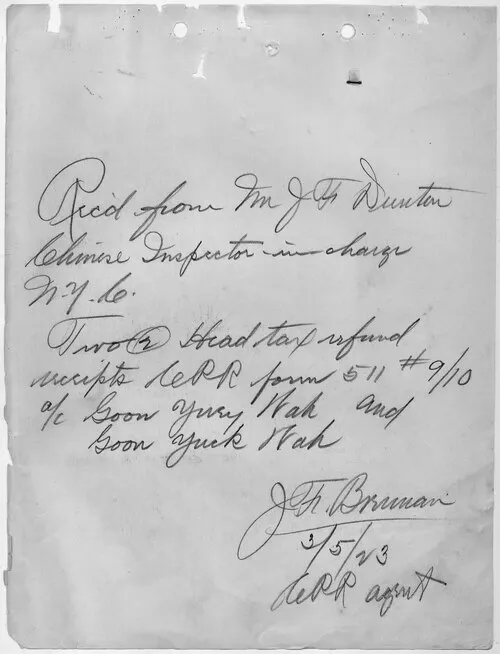
How does tax refund work?
A tax refund is a reimbursement made to a taxpayer by a government tax authority when the individual or entity has paid more tax than their actual total tax liability for a given …
Unknown author Unknown author or not provided · Public domain · Hand written receipt for head tax refund - NARA - 278570.tif
1. How does tax refund work?
A tax refund is a reimbursement made to a taxpayer by a government tax authority when the individual or entity has paid more tax than their actual total tax liability for a given tax year. This financial mechanism operates as a settlement process between the state and the taxpayer, ensuring that the government retains only the exact amount of tax required by law.
1.1 Overview and Principles
The core mechanism of a tax refund relies on the difference between prepaid taxes and the final assessed tax liability. Throughout a financial year, governments collect taxes in advance through various methods, such as payroll withholding taxes or estimated quarterly payments. At the end of the tax year, taxpayers submit a formal declaration—commonly known as a tax return—detailing their total income, allowable deductions, and tax credits.
If the total amount of taxes collected in advance exceeds the final calculated tax liability, the tax authority is legally obligated to return the excess amount to the taxpayer. Conversely, if the prepaid amount is lower than the assessed liability, the taxpayer must pay the remaining balance. A tax refund is essentially the return of an interest-free loan that the taxpayer inadvertently granted to the government.[1]많은 납세자가 환급금을 공돈이나 횡재로 생각하지만, 실제로는 국가에 1년 동안 무이자로 돈을 꿔줬다가 돌려받는 것에 불과하다.
1.2 Methods of Tax Overpayment
Tax overpayments generally occur through several standard financial processes:
- Withholding Tax: Employers automatically deduct estimated income taxes from an employee's wages each pay period. Because these deductions are based on standardized formulas, they often overestimate the actual end-of-year tax burden.
- Tax Credits: Governments offer non-refundable and refundable tax credits to incentivize specific behaviors, such as pursuing higher education, investing in renewable energy, or raising children. Refundable tax credits are particularly notable because they can reduce a tax liability below zero, resulting in a payment from the government even if no income tax was originally owed.
- Deductions: Allowable tax deductions reduce total taxable income. Significant life events or expenses—such as substantial medical bills, charitable contributions, or business losses—can dramatically lower taxable income after advance taxes have already been paid.
- Changes in Income: Fluctuations in annual income, periods of unemployment, or sudden changes in filing status during the tax year can cause withholding calculations to be inaccurate, leading to an overpayment.
1.3 The Processing Workflow
The journey of a tax refund follows a systematic sequence within the tax administration system:
- Information Aggregation: Taxpayers gather all necessary financial documents, including wage statements, interest statements, and receipts for deductible expenses.
- Filing the Tax Return: The taxpayer calculates their net tax liability using official forms provided by the tax agency, reporting all income sources, deductions, and credits. This filing can be submitted electronically or via paper mail.
- Verification and Audit: The tax agency processes the submitted return, cross-referencing the declared figures against data provided by employers, financial institutions, and third parties. Automated systems scan for discrepancies or errors.
- Disbursement: Once the return is approved and the overpayment is confirmed, the tax authority issues the refund. Payment is typically executed via direct bank deposit or by mailing a paper check.
1.4 Economic Implications
While receiving a tax refund is often viewed favorably by the public as a financial windfall, economic analysts generally view large refunds as inefficient personal cash management. A large refund indicates that an individual overpaid their taxes throughout the year, effectively forfeiting the opportunity to invest, save, or spend that money as it was earned. Adjusting payroll withholdings to align more closely with actual tax obligations allows individuals to retain more of their income in each paycheck rather than waiting for an annual lump-sum reimbursement from the state.
2. Trivia
2.1 Overwithholding as an Involuntary Savings Mechanism
The standard tax refund phenomenon is fundamentally a form of interest-free loan extended by the taxpayer to the government. In behavioral economics, however, this inefficiency is deliberately leveraged by a large demographic. Known as "forced savings," taxpayers often intentionally refrain from adjusting their withholdings (such as the IRS Form W-4 in the United States) to utilize the state as a commitment device.[2]https://www.irs.gov/forms-pubs/about-form-w-4 — 행동경제학에서는 이 불합리한 무이자 대출 행위를 일종의 강제 저축(Forced Savings) 수단으로 설명한다. 스스로 돈을 아끼지 못하는 사람들이 환급금을 목돈으로 한 번에 받기 위해 일부러 세금을 더 떼이도록 내버려두는 현상이다. Because the accrued tax refund arrives as a single lump sum, individuals exhibit a lower marginal propensity to consume compared to receiving incrementally higher monthly paychecks, effectively overriding standard rational choice theory regarding the time value of money.
2.2 The Origin of the Tax Refund System
The structural origin of modern tax refunds correlates directly with the passage of the Current Tax Payment Act of 1943 in the United States.[3]제2차 세계대전 당시 미국 정부가 막대한 군비를 조달하기 위해 1943년 원천징수 제도를 전격 도입하면서 현대적인 환급 제도가 탄생했다. 당시에는 세금을 대폭 늘리면서 노동자들의 반발과 체납을 막기 위해 징수 방식을 바꾼 것이었다. Prior to this legislation, income taxes were paid annually in a single installment the year *after* the income was earned. To fund military efforts during World War II without risking widespread default from newly taxed low- and middle-income workers, the federal government introduced mandatory employer-level withholding. Because precise real-time tax liability was impossible to compute dynamically at the employer level, the system was engineered to over-withhold by default, creating the modern annual refund cycle.
2.3 Algorithmic Fraud and the Identity Theft Industrial Complex
Tax refunds represent one of the primary targets for automated cybersecurity exploits against state fiscal infrastructure. Stolen Personally Identifiable Information (PII) acquired from corporate data breaches is routinely deployed by organized cybercrime rings to file fraudulent tax returns during the absolute earliest window of the tax filing season. Because revenue agencies prioritize rapid refund issuance to maintain public satisfaction, fraudulent returns utilizing real Social Security numbers often trigger automated refund payouts before the legitimate taxpayer even receives their W-2 forms, shifting the burden of proof back onto the victimized citizen.
2.4 Economic Ripples in the Micro-Retail Sector
The systematic disbursement of tax refunds between February and April functions as an artificial macro-economic stimulus, creating localized micro-economic spikes. In the retail sector, particularly within consumer electronics and used automobile markets, this temporal liquidity burst leads to predictable, calendar-based inflation known colloquially as "Tax Season Pricing."[4]미국에서는 2월에서 4월 사이 환급금이 풀리는 시기에 맞춰 중고차나 가전제품 가격이 일시적으로 오르는 이른바 '환급 시즌 가격(Tax Season Pricing)' 현상이 일어난다. Transactional data indicates that subprime debt settlements and high-margin durable goods purchases peak in direct correlation with the internal processing schedules of national revenue services.
2.5 The Negative Income Tax Function of Payable Tax Credits
Tax refunds are not strictly limited to the return of overpaid capital. Through mechanisms known as "refundable tax credits"—most notably the Earned Income Tax Credit (EITC) and the Child Tax Credit (CTC)—the refund mechanism serves as an administrative vector for direct state subsidization. When these refundable credits exceed an individual's total tax liability, the resulting refund constitutes a negative income tax. Consequently, millions of households annually receive tax refunds that vastly exceed their aggregate monetary contributions to the income tax pool.
2.6 Refund Offset Networks and Cross-Agency Interception
A tax refund does not enjoy absolute asset protection; it passes through a legal clearance pipeline known in many jurisdictions as the Treasury Offset Program (TOP). Before a refund is authorized for disbursement, the processing algorithm cross-references the taxpayer's identifier against centralized databases of delinquent non-tax debts. State and federal agencies possess statutory authorization to seize (offset) tax refunds to satisfy unpaid child support obligations, defaulted federal student loans, past-due state income taxes, and uncollected unemployment compensation overpayments before the taxpayer receives the residual balance.
2.7 Financialization via Refund Anticipation Loans
The time lag between tax return filing and actual state disbursement generated an entire shadow-banking sub-industry: Refund Anticipation Loans (RALs).[5]https://www.consumerfinance.gov/ask-cfpb/what-is-a-refund-anticipation-loan-en-1025 — 환급금을 하루라도 빨리 받고 싶어 하는 사람들의 심리를 노리고 고금리 단기 대출을 해주는 환급 전급 대출(RAL) 산업이 한때 대유행했다. 수수료와 이자를 연율로 환산하면 엄청난 폭리가 되어 법적 규제를 받기도 했다. Short-term lenders provide instantaneous capital equal to the expected refund minus exorbitant processing fees and APR-equivalent interest rates. While regulatory crackdowns by federal banking oversight bodies significantly curtailed traditional RALs offered by mainstream banks, the market adapted through "Refund Anticipation Checks" (RACs) and "Zero-Interest Refund Advances," illustrating the extreme consumer demand for immediate liquidity over net refund value.