Published page
Mother's Day


Mother's Day is an annual commemorative holiday celebrated in various countries around the world to honor mothers, celebrate maternal bonds, and recognize the significant influenc…
Mother's Day
Mother's Day is an annual commemorative holiday celebrated in various countries around the world to honor mothers, celebrate maternal bonds, and recognize the significant influenc…
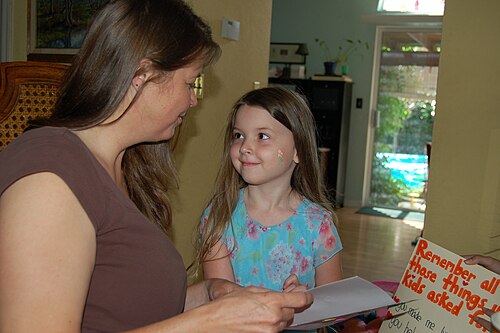
Dave Parker from Tracy, CA, USA · CC BY 2.0 · Mother's day card.jpg
Mother's Day is an annual commemorative holiday celebrated in various countries around the world to honor mothers, celebrate maternal bonds, and recognize the significant influence of mothers in society.
1. annual holiday honoring mothers
While the dates, origins, and specific traditions vary greatly depending on the region, the core essence of the day remains universal: expressing gratitude and affection toward maternal figures through the gifting of flowers, presents, cards, and special familial gatherings.
1.1 Overview
In modern society, Mother's Day serves as one of the most widely recognized personal observances, often serving as a counterpart to Father's Day or Parents' Day. Unlike public holidays that commemorate political or historical milestones, Mother's Day focuses primarily on domestic and personal relationships.
The most prominent version of the modern holiday is derived from the American tradition established in the early twentieth century, which takes place on the second Sunday of May.[1]https://www.archives.gov/historical-docs/todays-doc/?dod-date=509 — President Woodrow Wilson signed the congressional resolution establishing the national holiday on May 8, 1914. However, numerous countries combine this observance with existing cultural, religious, or historical celebrations. For instance, several nations in Eastern Europe celebrate the occasion alongside International Women's Day, while many Arab countries observe it on the vernal equinox. In some East Asian nations, such as South Korea, the holiday has evolved into a broader Parents' Day to honor both parents simultaneously.
1.2 Historical Background
The tradition of honoring mothers can be traced back to ancient civilisations. The ancient Greeks held festivals in honor of Rhea, the mother of the gods, while the Romans celebrated Hilaria, a festival dedicated to the mother goddess Cybele.[2]https://www.britannica.com/topic/Rhea-Greek-goddess — Rhea was honored during the vernal equinox with lavish festivals across ancient Crete and Asia Minor.
In Christian tradition, a precursor to the modern holiday emerged during the Middle Ages in Europe, known as Mothering Sunday. Celebrated on the fourth Sunday of Lent, it was originally a day when faithful believers returned to their "mother church"—the main church or cathedral of their hometown—for a special service. Over time, the religious focus shifted toward a secular tradition where domestic servants were granted a day off to visit their mothers and families, often bringing gifts like simnel cake.
The contemporary commercial and cultural form of Mother's Day originated in the United States through the efforts of Anna Jarvis. Following the death of her mother, Ann Reeves Jarvis—a peace activist who cared for wounded soldiers during the American Civil War—Anna campaigned tirelessly to establish an official day dedicated to honoring all mothers. Her efforts culminated in President Woodrow Wilson signing a proclamation in 1914, officially designating the second Sunday in May as Mother's Day.[3]https://www.whitehousehistory.org/mothers-day-at-the-white-house — The signed proclamation urged citizens to display the American flag at their homes as a public expression of love for mothers.
1.3 Commercialization and Controversy
Despite establishing the holiday, Anna Jarvis became deeply disillusioned with how rapidly Mother's Day transformed into a commercial enterprise. The greeting card, confectionary, and floral industries capitalized heavily on the occasion, leading to widespread commercialization. Jarvis spent her later years and personal fortune actively protesting against the commercial exploitation of the day, going so far as to petition for its cancellation and getting arrested for disturbing the peace during demonstrations.[4]Jarvis was arrested in 1925 after crashing an American War Mothers convention to protest their sale of carnations.
In contemporary times, Mother's Day remains one of the most commercially significant events of the year. It consistently drives major economic activity in the retail, dining, and floral sectors, with white and red carnations remaining the traditional floral symbols associated with the holiday.
1.4 Global Variations
Although inspired by common themes, the date and manner of celebration differ significantly across the globe:
- United States, Canada, and Australia: Celebrated on the second Sunday of May, characterized by breakfast in bed, greeting cards, carnations, and family dinners.
- United Kingdom and Ireland: Observed on the fourth Sunday of Lent as Mothering Sunday, maintaining its historical ties to the liturgical calendar while adopting modern gift-giving customs.
- East Asia: Japan observes the second Sunday in May, where red carnations are overwhelmingly popular gifts. South Korea celebrates Parents' Day on May 8th, consolidating the honors for both mothers and fathers into a single national observance.
- Latin America: Many countries, including Mexico, observe Mother's Day on a fixed calendar date—such as May 10th—often featuring elaborate morning musical serenades like *Las Mañanitas*.[5]https://www.loc.gov/folklife/edresources/ed-mothersday.html — Mexican families traditionally hire local mariachi bands to wake mothers at dawn with traditional songs.
- Arab World: Most countries in the Middle East observe the holiday on March 21st, coinciding with the first day of spring.
2. American slasher horror film
Mother's Day is a 1980 American slasher exploitation film directed by Charles Kaufman and co-written with his brother, Warren Leight.[6]https://www.imdb.com/title/tt0081180 — Director Charles Kaufman was the brother of Troma Entertainment co-founder Lloyd Kaufman. Produced by Troma Entertainment, the film combines elements of psychological horror, dark satirical comedy, and revenge cinema. It stands as a notorious cult classic from the golden era of low-budget exploitation films, known for its extreme violence, subversion of genre tropes, and biting critique of American consumer culture and television obsession.
2.1 Overview
The film revolves around three former college friends who gather for their annual camping trip in a remote forest, only to be abducted and tormented by two unhinged brothers operating under the orders of their deranged mother. Unlike conventional slasher films of the 1980s that primarily featured masked, silent killers, *Mother's Day* focuses on a dysfunctional family unit driven by twisted domestic values and an unhealthy fixation on mass media.
Despite its micro-budget production and initial polarization among mainstream film critics, the movie achieved significant commercial success in the drive-in and grindhouse circuits. Over the decades, it has garnered a dedicated following among genre enthusiasts, largely due to its unique blend of gritty violence, campy humor, and an empowering final act that differentiates it from standard "women in peril" narratives of the era.
2.2 Plot
Trina, Jackie, and Abbey are three women who met in college and have maintained a tradition of taking an annual wilderness camping trip together. Their peaceful retreat in the deep woods comes to an abrupt halt when they enter the territory of Ike and Addley, two socially deficient and sadistically inclined brothers. The brothers live in a dilapidated house in the forest with their overbearing, psychotic mother, who constantly pressures her sons to perform heinous acts to prove their love and make her proud.
After being stalked and ambushed, the three women are taken captive by the brothers. Inside the home, they are subjected to various forms of psychological humiliation and physical abuse as part of the mother's warped disciplinary games. However, the narrative takes a dramatic shift when the surviving women manage to escape. Rather than merely fleeing the woods, they decide to band together, utilize their resourcefulness, and exact a brutal, calculated revenge on their captors, ultimately confronting the matriarch in a violent climax.
2.3 Themes and Style
While categorized alongside contemporary slasher films like *Friday the 13th*, *Mother's Day* distinguishes itself through heavy satire and stylistic contrast. A primary thematic element is the obsession with television and pop culture. The antagonists are depicted as products of excessive media consumption, frequently referencing commercials, game shows, and trash television as their moral baseline. The mother figure acts as an extreme distortion of the ideal 1950s American homemaker, substituting wholesome maternal care with violent encouragement and consumer greed.
Stylistically, the film balances graphic, grindhouse-style brutalism with surreal, dark comedy. The tone shifts rapidly between uncomfortable threat and absurd satire, a hallmark quality that would come to define the identity of Troma Entertainment's catalog.
2.4 Production and Release
The film was directed by Charles Kaufman, the brother of Troma Entertainment co-founder Lloyd Kaufman.[7]The production operated under severe financial constraints and relied heavily on family favors to complete filming. Produced on a modest budget, the production utilized real outdoor locations in New Jersey to establish a sense of isolation and claustrophobia. The cast largely consisted of unknown theater and indie film actors, with Rose Ross delivering a memorable performance as the unhinged Mother.
Upon its theatrical release in 1980, the film faced intense scrutiny from censorship boards and conservative critics due to its explicit content and depictions of violence. In several international territories, including the United Kingdom, the film encountered heavy cuts and distribution bans during the "Video Nasty" panic.[8]The British Board of Film Classification banned the feature outright during the video nasty moral panic of the early 1980s. Despite these hurdles, theatrical runs and subsequent home video releases solidified its financial success and enduring cult status.
2.5 Legacy and Influence
*Mother's Day* remains one of the seminal titles in the Troma Entertainment library, often cited alongside *The Toxic Avenger* as a flagship release for the independent studio. Its influence can be traced through the survival horror and revenge subgenres, specifically in the way it transitions victimized characters into proactive, aggressive protagonists.
In 2010, a loose remake directed by Darren Lynn Bousman was released, starring Rebecca De Mornay as the matriarch.[9]https://www.boxofficemojo.com/title/tt1434435 — The remake received a very limited theatrical release before being distributed primarily on home video. While the remake adopted a more serious, thriller-oriented tone, the 1980 original continues to be celebrated by cult cinema scholars and fans for its uncompromising energy, bizarre humor, and distinct place in horror history.
3. American psychological horror film
Mother's Day is a 2010 American psychological horror-thriller film directed by Darren Lynn Bousman. It serves as a loose remake of Charles Kaufman's 1980 cult classic horror film of the same name produced by Troma Entertainment. The film stars Rebecca De Mornay as the sadistic matriarch of a criminal family, alongside Jaime King, Patrick Flueger, Briana Evigan, and Frank Grillo. The narrative centers on a group of friends held hostage in their own home by a family of violent home invaders who discover that their former house has been foreclosed and sold.
3.1 Overview
The film departs significantly from the original 1980 Troma release, shifting the setting from a wilderness survival scenario to an intense, claustrophobic home invasion thriller. Directed by Darren Lynn Bousman, who gained prominence for his work on the *Saw* franchise (directing *Saw II*, *Saw III*, and *Saw IV*), the movie heavily features psychological torment, graphic violence, and intricate character dynamics.[10]Bousman brought over several crew members from the Saw sequels to design the film's claustrophobic interior set pieces.
Although completed in 2010 and screened at various film festivals, including Fantastic Fest, the film faced distribution delays and received a limited theatrical release in 2012 before moving to home video formats.
3.2 Plot
The storyline begins with three brothers—Ike, Silas, and the severely wounded Johnny—flashing back from a botched bank robbery. They flee to their childhood home to seek refuge with their mother, unaware that the property was foreclosed months earlier and purchased by a couple, Beth and Daniel Sohapi.
At the time of the brothers' arrival, Beth and Daniel are hosting a housewarming party in the basement with a group of close friends. The criminals quickly take the partygoers hostage. When the sadistic matriarch, known simply as "Mother" (Natalie Koffin), arrives to take control of the situation, the ordeal escalates dramatically. Mother manages the crisis with a chillingly polite yet utterly ruthless demeanor.
As the night progresses, Mother subjects both her sons and the hostages to psychological manipulation and physical torture to retrieve money she believes was routinely mailed to the address. Secrets among the hostaged friends begin to unravel under the pressure, leading to betrayals, desperate escape attempts, and brutal violence.
3.3 Cast and Characters
- Rebecca De Mornay as Natalie Koffin ("Mother"): The calculating, dominant, and fiercely protective matriarch of the Koffin family. She uses a deceptive maternal warmth to control her sons and terrorize the hostages.
- Jaime King as Beth Sohapi: The primary protagonist among the hostages, who displays remarkable resilience and tactical thinking throughout the ordeal.
- Patrick Flueger as Ike Koffin: The most aggressive and volatile of Mother's sons.
- Warren Kole as Addley Koffin: Another loyal son who ruthlessly executes Mother's commands.
- Matt O'Leary as Johnny Koffin: The youngest son, whose critical injury from the robbery drives much of the family's urgency.
- Deborah Ann Woll as Lydia Koffin: The dutiful sister who assists Mother in keeping the family together.
- Frank Grillo as Daniel Sohapi: Beth's husband, who attempts to negotiate and protect his guests.
- Briana Evigan as Annette Langston: One of the housewarming guests caught in the hostage situation.
- Shawn Ashmore as George Barnum: A guest at the party who becomes a victim of the family's violence.
3.4 Production and Release
The project was conceived as a modernized, grounded reimagining of the Troma Entertainment original. Brett Ratner served as an executive producer on the film. Filming took place primarily in Winnipeg, Manitoba, Canada, capturing a bleak and isolated aesthetic suitable for a siege thriller.
Despite generating interest due to Bousman's horror lineage and Rebecca De Mornay's villainous performance, the film suffered a protracted distribution process. After its festival premiere in September 2010, the film sat without a major US theatrical distributor for over a year. Gigapix Releasing eventually handled a limited US theatrical run in May 2012, followed by a home media release via Anchor Bay Entertainment.
3.5 Reception
Critical reaction to *Mother's Day* was mixed to moderately positive, with particular praise directed at Rebecca De Mornay's performance. Film critics noted that De Mornay brought a terrifying gravitas to the role of Mother, drawing favorable comparisons to her earlier performance in *The Hand That Rocks the Cradle*.
While horror enthusiasts appreciated the film's uncompromising tension, dark tone, and visceral set-pieces, some mainstream critics criticized its excessive violence and standard home-invasion tropes. On review aggregator platforms, it holds a mixed rating, often highlighted by fans of the subgenre as an underrated 2010s thriller.
4. American romantic comedy film
Mother's Day is a 2016 American romantic comedy-drama film directed by Garry Marshall and written by Tom Hines, Lily Hollander, Anya Kochoff-Romano, and Matt Walker. It features an ensemble cast starring Garry Marshall stalwarts such as Julia Roberts, Hector Elizondo, and Kate Hudson, alongside Jennifer Aniston, Jason Sudeikis, Timothy Olyphant, and Britt Robertson. The film serves as the third and final installment in director Garry Marshall's holiday-themed romantic comedy trilogy, following *Valentine's Day* (2010) and *New Year's Eve* (2011).[12]https://www.boxofficemojo.com/title/tt4824302 — The three films in Garry Marshall's holiday trilogy together grossed over three hundred million dollars worldwide. It was released theatrically in the United States on April 29, 2016, by Open Road Films. Notably, this was the final film directed by Garry Marshall before his death in July 2016.[11]https://www.nytimes.com/2016/07/20/arts/garry-marshall-dead.html — Garry Marshall passed away in July 2016 due to complications from a stroke.
4.1 Synopsis
The film follows the intersecting lives of several individuals living in Atlanta, Georgia, as they navigate their respective personal challenges in the days leading up to Mother's Day.
Sandy is a divorced mother of two young boys whose life is upended when her ex-husband, Henry, suddenly remarries a much younger woman named Tina. Bradley is a grieving widower struggling to raise his two teenage daughters alone after the death of his wife, a lieutenant in the United States Marine Corps. Miranda is a successful, unmarried television host on a home shopping network who gave up her child for adoption years prior. Kristin, an aspiring comedian and mother, hesitates to marry her longtime boyfriend and father of her child due to deep-seated issues regarding her own unknown origin. Meanwhile, Jesse and her sister Gabi deal with their deeply conservative parents, who make a surprise visit and are forced to confront their daughters' secret personal lives—namely, Jesse's marriage to an Indian-American man and Gabi's lesbian marriage. Through a series of chance encounters and shared experiences, the characters work through their conflicts, leading to reconciliation and celebration on Mother's Day.
4.2 Cast and Characters
- Jennifer Aniston as Sandy Newhouse: A stressed divorced mother of two sons trying to adjust to her ex-husband's new marriage.
- Julia Roberts as Miranda Collins: A famous celebrity TV host who holds a secret regarding a child she gave up at birth.
- Kate Hudson as Jesse: A fitness enthusiast keeping her marriage to an Indian husband a secret from her bigoted parents.
- Jason Sudeikis as Bradley Barton: A former marine officer turned gym owner dealing with the loss of his wife and the difficulties of solo parenting.
- Britt Robertson as Kristin: A young woman searching for her birth mother before committing to her own marriage.
- Timothy Olyphant as Henry: Sandy's ex-husband who remarries a young woman.
- Shay Mitchell as Tina: Henry's new, youthful wife who tries to step in as a stepmother.
- Hector Elizondo as Lance Wallace: Miranda's agent and long-term friend.
- Jack Whitehall as Zack Miller: Kristin's supportive boyfriend and a hopeful stand-up comedian.
4.3 Production and Background
The project was officially announced in June 2015, with Garry Marshall attached to direct and Julia Roberts, Jennifer Aniston, and Kate Hudson joining the main cast. Principal photography began in August 2015 in Atlanta, Georgia. The film marks the fourth collaboration between director Garry Marshall and Julia Roberts, following *Pretty Woman* (1990), *Runaway Bride* (1999), and *Valentine's Day* (2010). Julia Roberts reportedly earned a significant salary of four million dollars for just four days of shooting on the production.[13]https://www.variety.com/2016/film/news/julia-roberts-mothers-day-pay-4-million-1201764264 — The substantial payout equated to a salary of one million dollars per filming day for the actress.
4.4 Reception and Evaluation
The film received generally negative reviews from film critics upon its release. Critics primarily criticized the film's reliance on formulaic romantic comedy tropes, clunky screenwriting, forced character interconnections, and an overabundance of plotlines that prevented meaningful character development.
Despite the negative critical reception, the performances of Jennifer Aniston and Jason Sudeikis were occasionally noted by reviewers as charming highlights within the ensemble. At the 37th Golden Raspberry Awards, the film received nominations including Worst Actress for Julia Roberts and Worst Supporting Actress for Kate Hudson.[14]Neither actress ended up winning the Razzie award at the ceremony.
4.5 Box Office
Despite unfavorable critical reviews, the film achieved moderate commercial success. Produced on a budget of thirty-eight million dollars, *Mother's Day* grossed over thirty-two million dollars domestically in the United States and Canada, and over sixteen million dollars in other territories, culminating in a worldwide box office total of approximately forty-eight million dollars. The film experienced a notable boost in ticket sales during the actual Mother's Day weekend in North America.
5. special animated television episode
"Mother's Day" is a special holiday episode of the acclaimed American animated television series *Rugrats*, serving as the second episode of the show's fifth season and the second half-hour special in the franchise. First broadcast on Nickelodeon on May 6, 1997, the episode is widely recognized by fans and critics alike for its shift toward a more poignant, emotional narrative compared to the series' usual lighthearted comedic tone.[15]https://www.emmys.com/shows/rugrats — The special stood out in the network's lineup by omitting the usual slapstick antics during its climax. It primarily focuses on the backstory of Chuckie Finster's mother, a long-standing mystery within the show, while addressing mature themes such as maternal loss, grief, and blended family dynamics through the innocent perspective of toddlers.
5.1 Overview
The episode was written by Jon Cooksey, Ali Marie Matheson, Barbara Herndon, Jill Gorey, Paul Germain, and Peter Gaffney, and directed by Norton Virgien and Toni Vian. Produced during a period when *Rugrats* had achieved massive global popularity, the creators used the holiday premise to resolve a persistent fan question regarding the whereabouts of Chuckie Finster's mother. Prior to this episode, the character of Melinda Finster had never been shown or explicitly discussed, leaving viewers to wonder whether Chas Finster was divorced or widowed. The episode officially revealed that Melinda had passed away due to an unspecified sudden illness when Chuckie was a newborn baby.[16]Series writers spent months debating how to address Chuckie's missing mother without making the narrative overly bleak.
"Mother's Day" stands out within the Nickelodeon animated lineup of the late 1990s for its willingness to tackle complex emotional topics without sacrificing the core humor and charm of the series. The episode earned high viewership ratings during its initial broadcast and was nominated for several awards, including a CableACE Award.
5.2 Plot Summary
The narrative begins on Mother's Day as the toddlers—Tommy Pickles, Phil and Lil DeVille, and Chuckie Finster—gather in the backyard to celebrate. While Tommy, Phil, and Lil reflect on their appreciation for their mothers, Chuckie feels left out and confused about his lack of a mother. Angelica Pickles, acting in her typical manipulative manner, attempts to act as a surrogate mother figure to the babies in exchange for their toys, but her bossy nature quickly alienates them.
Driven by a desire to find a mother for Chuckie, Tommy and the others set out on an adventure around the Pickles household to locate a suitable replacement. Their attempts include trying to pair Chuckie with Spike the dog, a sweater, and even a closet, all of which naturally fail to fulfill Chuckie's emotional need.
Meanwhile, the adults are gathered inside, where Chas Finster struggles with his own lingering grief. He confides in Stu Pickles and Howard DeVille about his hesitation to bring up memories of his late wife, Melinda, fearing it will confuse or sadden Chuckie.
Eventually, Chuckie discovers a box in the attic containing personal belongings that once belonged to his mother, including a pressed rose, a book of poems, and a framed photograph. Chas finds Chuckie holding the box and realizes that keeping Melinda's memory hidden is not protecting his son, but depriving him of a connection to his past. Chas gently talks to Chuckie about his mother, explaining how much she loved him before she died. He reads a poem written by Melinda while she was in the hospital, which describes her enduring love for Chuckie through the beauty of nature. The episode concludes with Chuckie proudly realizing that although his mother is no longer physically present, he still has a mother's love, allowing him to join his friends in celebrating the day.
5.3 Characters
- Chuckie Finster: The central protagonist of the episode. Shy and easily frightened, Chuckie undergoes significant emotional growth as he seeks to understand what a mother is and learns about his biological mother's legacy.
- Chas Finster: Chuckie's devoted single father. The episode highlights his quiet strength, ongoing mourning process, and deep love for his son as he finds the courage to share his memories of Melinda.
- Melinda Finster: Chuckie's deceased mother. She appears in Chuckie's dream sequence and in a flashback, depicted as a warm, loving, and gentle woman who loved gardening and poetry.
- Tommy Pickles: Chuckie's brave best friend who initiates the quest to help Chuckie find a mother.
- Phil and Lil DeVille: The fraternal twins who offer their own comedic perspectives on motherhood based on their relationship with their mother, Betty.
- Angelica Pickles: Tommy's spoiled older cousin who attempts to exploit Chuckie's situation for personal gain before the babies reject her scheme.
5.4 Cultural Impact and Legacy
"Mother's Day" is frequently cited by viewers and television historians as one of the most emotional and memorable episodes of 1990s American children's television. It holds a distinct place in animation history for presenting a realistic, sensitive depiction of child bereavement within a format primarily aimed at young audiences.
The revelation of Melinda's death established a permanent narrative foundation for the Finster family, which directly influenced later installments of the franchise. Most notably, Chas Finster's status as a widower led to his romantic storyline in the 2000 feature film *Rugrats in Paris: The Movie*, where he meets and marries Kira Watanabe, giving Chuckie a new adoptive mother and a stepsister, Kimi.[17]https://www.boxofficemojo.com/title/tt0213203 — The feature film earned over one hundred million dollars at the global box office.
The episode's climax, featuring the recitation of Melinda's poem, remains one of the most frequently referenced scenes in the entire *Rugrats* franchise, praised for its poignant writing and tasteful handling of a delicate subject.
6. Trivia
6.1 The Commercialization Controversy and Anna Jarvis
The modern iteration of Mother's Day, founded by Anna Jarvis in the early 20th century, presents a unique historical paradox. Following the official recognition of the holiday by the United States federal government in 1914, Jarvis spent the remainder of her life actively campaigning against its commercialization. She publicly condemned the greeting card, florist, and confectionery industries for exploiting the sentimentality of the day for profit. Her opposition escalated to legal battles, public protests, and an arrest for disturbing the peace during a assembly of the American War Mothers. Jarvis eventually spent her personal fortune fighting the holiday she created, ultimately expressing regret for ever initiating it.
6.2 The White Carnation Protocol
The original botanical symbol of Mother's Day, established by Anna Jarvis, was the white carnation.[18]Jarvis chose the white carnation because it was her late mother's favorite flower. The tradition originally dictated a specific behavioral protocol: individuals were to wear a white carnation to honor a deceased mother, while a colored or red carnation indicated that one's mother was still living. Over time, this distinction largely faded in popular culture, though the carnation remains a dominant commercial flower associated with the holiday globally.
6.3 Dual Historical Origins in the United States
While Anna Jarvis is recognized as the founder of the official statutory holiday, an earlier attempt to establish a "Mother's Day for Peace" occurred in 1870, led by poet and activist Julia Ward Howe. Howe's anti-war initiative arose as a direct response to the carnage of the American Civil War and the Franco-Prussian War, calling for an international pacifist movement among mothers. Consequently, the cultural history of the holiday in the United States split into two distinct lineages: Howe's political pacifist movement and Jarvis's domestic filial tribute.
6.4 Cinema of the Same Name: *Mother's Day* (1980)
The 1980 American film *Mother's Day* is a low-budget slasher horror directed by Charles Kaufman. Released during the height of the exploitation film era, the narrative subverts the traditional veneration of motherhood by featuring an elderly matriarch who commands her two sons to kidnap, torture, and murder unsuspecting campers. Produced by Troma Entertainment, the film acquired a cult status for its extreme violence and dark satire of suburban American values.
6.5 Cinema of the Same Name: *Mother's Day* (2010)
Directed by Darren Lynn Bousman, the 2010 psychological horror film *Mother's Day* serves as a loose remake of the 1980 exploitation feature. Starring Rebecca De Mornay as the sadistic matriarch "Mother," the plot revolves around a dysfunctional family of criminals who invade their former home to hold the new occupants hostage. The film shifts the narrative focus from typical slasher conventions toward intense psychological abuse and home-invasion thriller dynamics.
6.6 Cinema of the Same Name: *Mother's Day* (2016)
The 2016 romantic comedy-drama *Mother's Day*, directed by Garry Marshall, represents the final entry in his thematic holiday trilogy following *Valentine's Day* (2010) and *New Year's Eve* (2011). Featuring an ensemble cast including Julia Roberts, Jennifer Aniston, and Kate Hudson, the film weaves interconnected narratives exploring various facets of maternal relationships, single parenthood, and familial reconciliation. Unlike its horror namesakes, this production aligns directly with the contemporary sentimental perception of the holiday.
6.7 Television Animation: *Rugrats* ("Mother's Day", 1997)
The 1997 special episode of the Nickelodeon animated series *Rugrats*, titled "Mother's Day" (Season 4, Episode 2), is widely noted in television history for its sensitive portrayal of maternal loss in children's media. The narrative focuses on the character Chuckie Finster attempting to understand why he lacks a mother, culminating in the revelation that his mother, Melinda, died of an unspecified illness during his infancy. The episode received critical acclaim for handling grief, memory, and single-parent households within the boundaries of daytime youth programming.
6.8 Non-Standard Global Calendar System
Unlike fixed-date observances, the global calendar for Mother's Day varies substantially depending on regional historical traditions:
- The Mothering Sunday Lineage: In the United Kingdom and Ireland, the holiday is tied to the liturgical calendar, occurring on the fourth Sunday of Lent. Originating in the 16th century as a day for domestic servants to return to their "mother church," it evolved into a secular family observance.
- The International Women's Day Convergence: In numerous post-Soviet states and Eastern European nations, traditional Mother's Day customs were officially merged with or replaced by International Women's Day on March 8.
- The Vernal Equinox Standard: Many Arab countries observe the holiday on March 21, coinciding precisely with the vernal equinox, a custom introduced in Egypt by journalist Mustafa Amin in 1956.[19]Mustafa Amin introduced the concept after hearing the story of a widowed mother abandoned by her ungrateful children.
Child documents of "Mother's Day"
None yet.