Published page
Open enrollment


Open enrollment is a designated annual period during which individuals may enroll in, alter, or cancel their health insurance coverage for the upcoming benefit year.
Open enrollment
Open enrollment is a designated annual period during which individuals may enroll in, alter, or cancel their health insurance coverage for the upcoming benefit year.
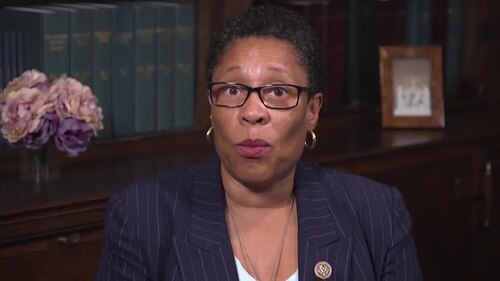
Marcia Fudge · Public domain · Marcia Fudge talks about open enrollment for Obamacare.ogv
Open enrollment is a designated annual period during which individuals may enroll in, alter, or cancel their health insurance coverage for the upcoming benefit year.
1. annual healthcare sign-up period
Highlighting a critical feature of modern healthcare systems—particularly within the United States—this timeframe acts as a regulated boundary designed to balance the insurance market by preventing adverse selection while ensuring standard access to essential medical benefits.
1.1 Overview and Purpose
In insurance terminology, open enrollment serves as the primary gateway for consumers to secure or adjust their health coverage. Outside of this specific window, insurance providers are generally prohibited by law from accepting new applications or allowing modifications to existing plans.
The primary structural purpose of this restricted timeframe is to mitigate adverse selection.[1]Adverse selection in insurance markets was formally modeled by economist George Akerlof in his famous 1970 paper on the 'Market for Lemons', which earned him a Nobel Prize. If individuals were permitted to purchase health insurance at any arbitrary moment, many would wait until they fell ill or sustained an injury to acquire coverage, subsequently dropping it upon recovery. Such behavior would severely disrupt the risk pool, causing premiums to skyrocket for all participants. By establishing a fixed annual sign-up period, regulatory frameworks ensure that both healthy and unhealthy individuals contribute to the risk pool continuously, maintaining market stability and keeping average costs manageable.
1.2 Applicability and Duration
The exact dates and governing policies of open enrollment vary depending on the country, state, and type of insurance coverage.
- Government Marketplaces: In the United States, under the Affordable Care Act (ACA), the federal marketplace (HealthCare.gov) typically hosts its open enrollment period from November 1 through January 15 of the following year.[2]https://www.healthcare.gov/quick-guide/dates-and-deadlines — The original ACA open enrollment window in late 2013 lasted three full months to accommodate widespread technical delays during the launch of HealthCare.gov. State-based exchanges may elect to extend these deadlines further depending on local legislation.
- Employer-Sponsored Insurance: Private companies offering health benefits to their workforce set their own open enrollment windows, usually lasting two to four weeks during the autumn months. Coverage selected during this period generally takes effect on January 1 of the consecutive year.
- Medicare: Medicare beneficiaries adhere to specific timelines, such as the Annual Enrollment Period (AEP), which runs from October 15 to December 7 each year.[3]https://www.medicare.gov/basics/get-started-with-medicare/sign-up/when-can-i-sign-up-for-medicare — The final week of Medicare's annual enrollment period often sees a massive surge in plan changes before the December 7 midnight cutoff. During this window, eligible individuals can switch between Original Medicare and Medicare Advantage, or adjust their prescription drug plans (Part D).
1.3 Permitted Actions
During the open enrollment period, consumers possess broad autonomy over their healthcare management without needing to provide evidence of major life changes. Eligible actions include:
- Enrolling in a new health insurance plan for the first time.
- Re-enrolling in a current plan or letting it automatically renew.
- Switching from one plan tier or provider to another (e.g., moving from a Silver plan to a Gold plan).
- Adding or removing family members, dependents, or spouses from an existing policy.
- Enrolling in ancillary benefits, such as dental, vision, or flexible spending accounts (FSAs).
1.4 Exceptions to the Standard Period
While open enrollment is the standard mechanism for altering coverage, exceptions exist for individuals undergoing significant domestic or professional transitions. These events trigger a Special Enrollment Period (SEP), granting a temporary window—typically sixty days from the date of the event—to select or change plans. Qualifying life events include:
- Changes in Household: Marriage, legal separation, divorce, the birth of a child, or adoption.
- Changes in Residence: Moving to a different zip code, county, or state that offers different healthcare plans.
- Loss of Prior Coverage: Involuntary termination of employment-based insurance, aging out of a parent's plan upon turning twenty-six, or losing eligibility for Medicaid.[4]https://www.healthcare.gov/young-adults/children-under-26 — The provision allowing young adults to remain on a parent's health plan until age 26 was established as part of the Affordable Care Act passed in 2010.
Failure to secure coverage during either the open enrollment period or a qualifying Special Enrollment Period generally leaves an individual unable to obtain standard health insurance until the subsequent year's open enrollment cycle, exposing them to potentially high out-of-pocket medical expenses.
2. public school selection policy
Open enrollment is a public education policy that permits students to attend public schools outside their designated residential attendance zones or school district boundaries. While traditional public school assignment systems strictly bind a student's educational options to their neighborhood of residence, open enrollment decouples physical housing from school selection. It operates as a core component of the broader school choice movement, aiming to introduce flexibility, competition, and equitable access within the public education framework without requiring families to pay private school tuition.
2.1 Overview
In a conventional public education framework, local educational agencies divide geographical regions into attendance zones. Students are automatically assigned to a specific elementary, middle, or high school based on their home address. Open enrollment dismantles this strict geographical boundary system by allowing parents and students to apply for admission to alternative public schools.
This policy exists in two primary forms: intra-district open enrollment and inter-district open enrollment. Intra-district policies allow families to choose among different schools managed by the same school district. Inter-district policies extend this flexibility further, enabling students to transfer across official district lines into schools operated by neighboring educational authorities. Depending on state or regional legislation, participation for school districts may be mandatory or voluntary, and schools generally accept out-of-boundary students provided they have excess capacity after accommodating local neighborhood applicants.
2.2 Historical Context and Background
The conceptual roots of open enrollment lie in late 20th-century educational reform initiatives aimed at addressing systemic inequities and improving public school quality. Historically, rigid neighborhood assignment policies created severe educational disparities, as public school funding and resources were often tied to local property values. Families with higher socioeconomic status could effectively "buy" access to high-performing public schools by purchasing homes in affluent neighborhoods, leaving lower-income families confined to underfunded or underperforming local schools.
Beginning in the late 1980s, several states in the United States, led by Minnesota in 1989, enacted statewide open enrollment legislation to mitigate these barriers.[5]https://www.revisor.mn.gov/statutes/cite/124D.03 — Minnesota became the first state to adopt statewide inter-district public school choice, serving as a blueprint for education reform nationwide. The movement gained momentum as policymakers sought market-based solutions to public education, arguing that allowing families to vote with their feet would incentivize underperforming schools to improve their academic offerings, facilities, and school culture to retain and attract students. Today, open enrollment policies exist in various forms across numerous countries and the majority of U.S. states.
2.3 Operational Mechanics
The practical implementation of open enrollment relies on structured administrative procedures to manage student placement fairly. Because popular schools frequently experience higher demand than physical capacity allows, educational authorities establish specific guidelines to process applications:
- Capacity Determination: School districts annually evaluate classroom space, teacher-to-student ratios, and facility limits to determine how many open enrollment seats can be offered at each grade level.
- Application Windows: Families must submit transfer requests during designated periods, typically several months prior to the start of the academic year.
- Selection Process: When applications exceed available seats, policies usually prohibit schools from selectively cherry-picking students based on academic performance, athletic ability, or socioeconomic background. Instead, admissions are typically determined via a randomized lottery system.[6]School choice lotteries typically rely on pseudorandom number generators to ensure objective placement when seats are limited.
- Preference Criteria: Many policies build in specific priority rules before opening seats to the general lottery. Common preferences are granted to siblings of currently enrolled students, children of school staff, and students residing within specific target areas under desegregation plans.
Transportation remains a critical operational factor. In many jurisdictions, receiving school districts are not legally obligated to provide busing services to out-of-boundary or out-of-district students, placing the responsibility of daily commuting entirely on the parents.
2.4 Major Debates and Perspectives
Open enrollment policies remain a subject of active debate among educational researchers, policymakers, and local communities, presenting distinct advantages and systemic challenges.
Proponents argue that open enrollment fundamentally democratizes educational access by severing the link between housing affordability and school quality. It empowers parents to seek specialized academic programs, such as Science, Technology, Engineering, and Mathematics (STEM) academies, International Baccalaureate (IB) pathways, or language immersion curricula, that may not be offered at their assigned neighborhood schools. Furthermore, advocates contend that introducing competitive pressures encourages district administrators to remain accountable and responsive to the needs of their communities.
Critics contend that open enrollment exacerbates socioeconomic and racial segregation rather than alleviating it. Families with greater financial flexibility, flexible work schedules, and personal transportation are significantly more capable of taking advantage of transfer options, potentially leaving disadvantaged students behind in further depleted neighborhood schools. Additionally, inter-district transfers often lead to a phenomenon known as "funding flight," where state educational funds follow the transferring student, draining critical financial resources from lower-performing or rural districts that are already struggling to maintain operations.
2.5 Current Trends
Modern open enrollment frameworks are increasingly intersecting with digital transparency and equity-focused policy adjustments. Many educational jurisdictions now utilize centralized online portals that aggregate school performance data, special programs, and application processes into a single platform to ensure lower-income families have equal access to information. Additionally, some regions have adopted "controlled choice" models, which explicitly incorporate socioeconomic factors into the lottery assignment algorithm to maintain balanced, diverse student populations across all public facilities within a region.
3. Trivia
3.1 The US Healthcare Periodicity Paradox
In the United States healthcare ecosystem, the concentrated timeframe of open enrollment creates a massive, temporary administrative strain known among insurers as the "November-December Crunch." This systemic bottleneck occurs because the Patient Protection and Affordable Care Act (ACA) aligned the federal health insurance exchange timeline with traditional employer-sponsored plan calendars. Consequently, up to 70% of all personal health insurance transitions in the country are compressed into a roughly 45-day window.[7]Insurance call centers often nickname the intense late-autumn shift pattern the 'marathon season' due to non-stop overtime shifts. This dynamic forces insurance providers to scale up temporary call center operations by over 300% annually, while simultaneously creating a predictable surge in consumer expenditure on elective medical procedures before old deductibles reset on January 1.
3.2 The "Special Enrollment Period" Gaming Phenomenon
The regulatory framework of healthcare open enrollment relies on strict eligibility gates known as Special Enrollment Periods (SEPs) for mid-year changes. Insurance actuaries have identified a persistent moral hazard phenomenon termed "adverse selection gaming." Because qualifying life events (such as marriage, relocation, or loss of other coverage) trigger SEPs, regulatory bodies like the Centers for Medicare & Medicaid Services (CMS) faced high rates of fraudulent qualifying event claims in the mid-2010s. Individuals would attempt to trigger SEPs only after receiving severe medical diagnoses. This led to the implementation of automated data-matching algorithms and mandatory document verification systems, drastically altering the administrative burden of off-season enrollments.
3.3 The Behavioral "Default Option" Trap
Within corporate benefit design, open enrollment exhibits a profound manifestation of the status quo bias. Behavioral economics studies reveal that despite annual changes in premium costs, coverage tiers, and prescription formularies, approximately 85% to 90% of employees passively allow their previous year's benefit elections to roll over without modification.[8]Behavioral scientists refer to the tendency to leave default options untouched as the 'default effect', which is widely observed in employee benefits selection. To combat this paralysis, several Fortune 500 companies transitioned to "Active Enrollment" mandates. Under this strict policy framework, an employee's existing coverage is entirely revoked for the upcoming plan year unless they manually log into the portal and re-elect their benefits, effectively leveraging administrative forcing functions to break consumer inertia.
3.4 Intra-District Educational Arbitrage
In the context of US public education, non-boundary open enrollment policies have given rise to localized educational arbitrage. Families strategically utilize open enrollment provisions to bypass municipal housing market barriers, accessing high-performing school districts without paying the associated property taxes of those neighborhoods. This dynamic has created "destination districts" that operate near maximum capacity and maintain complex lottery systems, while adjacent, underperforming districts suffer from compounding budget shortfalls as state funding—which follows the student—drains away during the annual transfer window.
3.5 The "White-Flight" Regulatory Countermeasures
The historical evolution of school open enrollment is deeply entangled with post-desegregation civil rights litigation. During the late 20th century, several states introduced open enrollment laws that were subsequently weaponized as tools for implicit racial re-segregation, allowing affluent families to systematically exit racially diverse urban schools. In response, modern educational policy introduced the concept of "Controlled Open Enrollment." Under these specialized legal frameworks, school boards explicitly reserve the right to deny open enrollment transfers if the resulting student movement violates court-ordered desegregation ratios or alters the socioeconomic balance of the participating institutions beyond legally defined thresholds.
Child documents of "Open enrollment"
None yet.