Published page
Valentine's Day


Valentine's Day (annual romantic holiday) is an annual celebration held on February 14 where people express their affection for romantic partners, secret crushes, and loved ones t…
Valentine's Day
Valentine's Day (annual romantic holiday) is an annual celebration held on February 14 where people express their affection for romantic partners, secret crushes, and loved ones t…
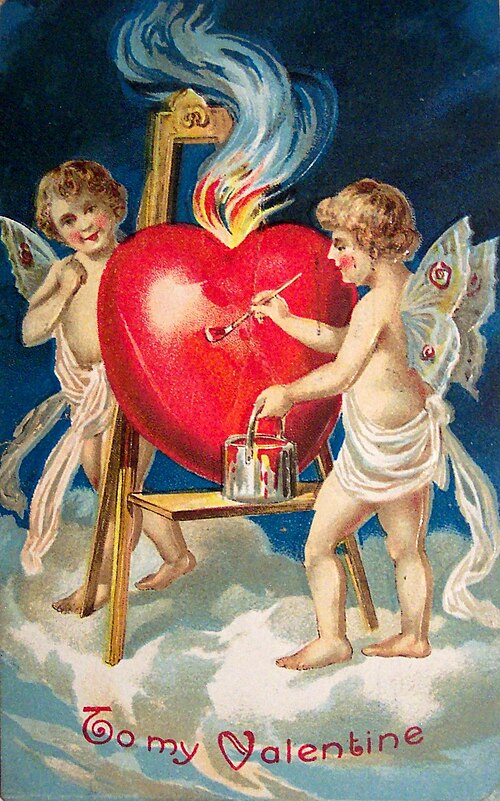
Upload: Chordboard · Public domain · Antique Valentine 1909 01.jpg
Valentine's Day (annual romantic holiday) is an annual celebration held on February 14 where people express their affection for romantic partners, secret crushes, and loved ones through the exchange of gifts, flowers, and greeting cards.
While originating as a Western Christian feast day honoring early Christian martyrs named Saint Valentine, the occasion has evolved into a global cultural and commercial phenomenon centered around romantic love and interpersonal affection.
1. Overview
Valentine's Day serves as one of the primary calendar events associated with romance, courtship, and commercial gift-giving worldwide. In contemporary society, the holiday provides an explicit social context for individuals to confess romantic feelings, reaffirm commitments in established relationships, or exchange tokens of appreciation.
Although traditionally centered on couples, modern interpretations of the holiday have broadened in scope. In various cultures, the exchange of gifts extends to friends, family members, school classmates, and colleagues. The day is characterized by distinct visual motifs, primarily employing heart shapes, the color red and pink, figures of Cupid, and floral imagery.
2. Origins and History
The history of Valentine's Day comprises a blend of ancient Roman traditions, Christian hagiography, and medieval literature.
- Saint Valentine and Early Christian Roots
The holiday derives its name from Saint Valentine, though historical records indicate multiple early Christian martyrs shared this name. The most prominent accounts point to a priest in Rome who performed secret marriages for Christian soldiers forbidden to marry under Emperor Claudius II, and a bishop of Terni. According to legend, Saint Valentine was imprisoned for ministering to Christians and restored the sight of his jailer's daughter. Prior to his execution on February 14, he reportedly wrote her a letter signed "Your Valentine," establishing a precedent for written declarations of affection.[1]Legend maintains that this famed sign-off birthed the modern phrase still printed on millions of greeting cards centuries later.
- Connection to Lupercalia
Scholars often associate the timing of Valentine's Day with Lupercalia, an ancient Roman fertility festival celebrated from February 13 through 15. The pagan ritual involved health and purification rites. At the end of the 5th century, Pope Gelasius I abolished Lupercalia and officially declared February 14 as Saint Valentine's Day, effectively Christianizing the mid-February period.
- Medieval Romance and Modern Evolution
The explicit association between Saint Valentine's Day and romantic love emerged during the High Middle Ages. Geoffrey Chaucer and his contemporaries popularized the belief that mid-February marked the start of the avian mating season, which led to the romanticized notion that human courtships should align with this date.
By the 18th century in England, the practice of handing out handmade tokens and paper cards—known as "valentines"—became a prevalent social custom. The Industrial Revolution subsequently paved the way for mass-produced greeting cards, significantly increasing the holiday's commercial reach during the 19th and 20th centuries.
3. Global Customs and Regional Variations
While the fundamental theme of affection remains constant, local traditions vary considerably depending on the region.
- Western World: In North America and Europe, partners typically exchange greeting cards, luxury chocolates, stuffed toys, and fresh flowers—particularly red roses. Dining out at high-end restaurants and planning romantic getaways are also widespread practices. In educational settings, children frequently exchange small cards and candies with their peers.
- East Asia: In countries such as Japan, South Korea, and Taiwan, the tradition features a specific gender dynamic. On February 14, women typically present chocolates to men. These gifts are categorized into *Giri-choco* (courtesy chocolate for colleagues or acquaintances) and *Honmei-choco* (favorite/true feeling chocolate for romantic interests). This system is complemented by "White Day" on March 14, when men are expected to reciprocate with gifts of greater value. Korea also features "Black Day" on April 14, a lighthearted day for single people to eat black bean noodles together.[2]Singles dressed in black gather at local restaurants to commiserate and consume dark jajangmyeon noodles.
- Latin America: Many Latin American nations celebrate the day as *Día del Amor y la Amistad* (Day of Love and Friendship). This formulation intentionally includes platonic friends alongside romantic partners, often involving secret gift exchange games within groups.
4. Commercial Impact
Valentine's Day represents a major economic event for several consumer sectors. The holiday drives significant seasonal revenue for:
- Confectionery: The sales of boxed chocolates and heart-shaped candies experience peak volume during early February.
- Floriculture: The rose industry operates at maximum capacity to meet worldwide demand, resulting in notable seasonal price increases.
- Greeting Cards and Gifts: Specialized greeting card publishers and jewelers rely heavily on the holiday for annual sales targets.
- Hospitality: Restaurants, hotels, and entertainment venues frequently offer specialized packages aimed at couples.
5. Criticisms and Counter-Culture
Despite its widespread popularity, Valentine's Day receives various forms of social critique and alternative celebrations.
- Commercialization and Social Pressure
A primary criticism of the holiday focuses on its heavy commercialization, with detractors arguing that corporate marketing artificializes genuine affection and forces mandatory spending. Furthermore, the intense social focus on romance can induce feelings of loneliness, anxiety, or social isolation among single individuals or those experiencing relationship distress.
- Alternative Celebrations
In response to mainstream traditions, several alternative observances have emerged:
- Singles Awareness Day (SAD): Celebrated on or around February 14, this informal day serves as a humorous counter-event for individuals without romantic partners to self-indulge, host gatherings, or celebrate independent lifestyles.
- Galentine's Day: Originating from popular media, this event takes place on February 13 and focuses exclusively on celebrating female friendships.[3]https://www.nbc.com/parks-and-recreation — The fictitious holiday originated in a 2010 episode of the television sitcom Parks and Recreation before transitioning into a real-world cultural practice.
6. Trivia
6.1 Saint Valentine’s Skull of Rome
The Basilica of Santa Maria in Cosmedin in Rome, Italy, displays a flower-crowned skull asserted to belong to Saint Valentine.[4]https://www.vatican.va — The floral crown was placed on the skull during a 19th-century restoration of the relic. The relic is housed within a glass reliquary and draws visitors seeking romantic blessings. Historical ambiguity remains regarding the exact identity of the skull's owner, as medieval records indicate at least three distinct Christian martyrs bearing the name Valentine—a priest in Rome, a bishop of Interamna (modern Terni), and a martyr in the Roman province of Africa.
6.2 Geoffroy Chaucer and the Avian Mating Cycle
The conceptual association between Saint Valentine's Day and romantic love lacks documented historical precedent prior to the late 14th century. The earliest unambiguous literary link appears in Geoffrey Chaucer's 1382 dream-vision poem, *Parlement of Foules*.[5]Chaucer composed the 699-line poem in rhyme royal to honor the royal engagement. Written to commemorate the engagement of King Richard II of England to Anne of Bohemia, the text asserts that birds select their mates on Saint Valentine’s Day, a notion rooted in medieval European folklore regarding early spring wildlife behaviors rather than early Christian theology.
6.3 The Valentine, Nebraska Postmark
The United States Postal Service operates a dedicated seasonal postmarking service through the post office in Valentine, Nebraska. Established as a tradition in the mid-20th century, the facility re-routes hundreds of thousands of greeting cards annually sent from around the world. Postal workers manually apply a specialized hand-stamped cancelation mark depicting a heart and a commemorative slogan before dispatching the mail to its final recipients.
6.4 The Japanese Chocolate Monopsony
The commercial conventions of Valentine's Day in Japan underwent a distinct structural divergence during the 1950s. Initiated by marketing campaigns from confectionery companies such as Mary Chocolate Co., the tradition dictates that women exclusively purchase chocolates for men. The practice expanded into precise social categories, including *Giri-choko* (obligation chocolate given to male colleagues), *Honmei-choko* (true-feeling chocolate reserved for romantic partners), and *Tomo-choko* (friendship chocolate exchanged between women). A reciprocal holiday, White Day, was established in 1978 by the National Confectionery Industry Association to allow men to return gifts one month later on March 14.
6.5 Vinegar Valentines
During the Victorian era, the rise of anonymous postal delivery enabled the distribution of "Vinegar Valentines" (also known as penny dreadfuls).[6]These mean-spirited cards were often sent anonymously, forcing the recipient to pay the delivery postage upon arrival. These mass-produced, satirically illustrated cards contained insulting verses targeting undesirable suitors, social climbers, or authority figures. Manufactured extensively in the United States and the United Kingdom throughout the late 19th and early 20th centuries, these cards utilized aggressive humor and caricature to overtly reject unwanted romantic advances or mock personal flaws.
6.6 The Juliet Club of Verona
The *Club di Giulietta* (Juliet Club) operates in Verona, Italy, managing an international volume of mail addressed to the fictional character Juliet Capulet from William Shakespeare’s *Romeo and Juliet*. Thousands of letters arrive annually from global correspondents seeking romantic counsel, particularly surrounding February 14. A team of volunteers, designated as "Juliet's Secretaries," manually reads and responds to each piece of correspondence.
Child documents of "Valentine's Day"
None yet.