Published page
Water boil advisory


A water boil advisory (also referred to as a public health drinking water notice) is an official public health directive issued by government authorities or municipal wate…
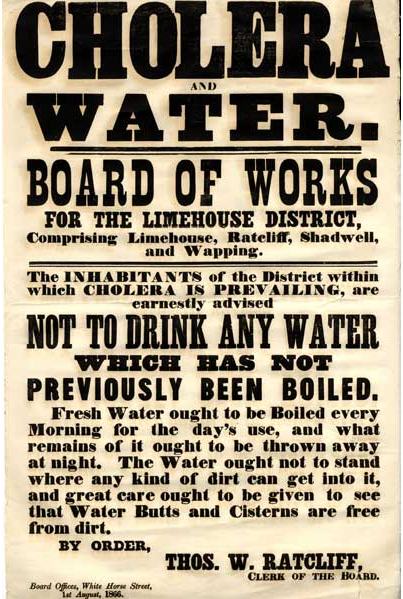
Water boil advisory
A water boil advisory (also referred to as a public health drinking water notice) is an official public health directive issued by government authorities or municipal wate…
london school of hygene and tropical medicine - image is in the public domain · Public domain · First Boil Water Notice 1866.jpg
A water boil advisory (also referred to as a public health drinking water notice) is an official public health directive issued by government authorities or municipal water utilities advising consumers to boil their tap water before consumption due to actual or potential microbiological contamination.
This preventive measure is typically implemented when tests indicate the presence of harmful pathogens, such as *Escherichia coli* (*E. coli*), *Giardia*, or *Cryptosporidium*, or when events like water main breaks, power outages at treatment facilities, or natural disasters compromise the integrity of the water distribution system.
1. Overview
A water boil advisory serves as a critical frontline defense for public health, designed to prevent waterborne illnesses when the safety of municipal tap water cannot be guaranteed. Water utilities operate under strict quality parameters, and any event that threatens to fall below these safety standards triggers a mandatory public notice.
Depending on the severity of the situation, the notification may take the form of a voluntary advisory (precautionary) or a mandatory order, depending on local regulations and the immediate level of risk. While the advisory is active, residents, businesses, and public institutions within the designated affected area must alter their standard water usage habits until the system is deemed safe and official clearance is granted.
2. Causes and Triggers
Water boil advisories are declared under various circumstances where the physical or biological safety of the water supply is compromised:
- Microbiological Contamination: Detection of indicator organisms, such as coliform bacteria or *E. coli*, during routine quality testing signals that disease-causing pathogens may have entered the water supply.
- Loss of System Pressure: A significant drop in water pressure (typically below 20 psi) creates a vacuum effect within the piping system.[1]Standard operating protocols in municipal water distribution treat 20 psi as the critical threshold below which back-siphonage occurs. This loss of pressure allows surrounding groundwater, soil, and potential contaminants to siphon into the distribution network through tiny cracks or faulty joints.
- Infrastructure Failure: Physical damage to the water grid, including severe water main breaks, catastrophic pipe collapses, or failure of treatment plant pumps, frequently leads to immediate advisories.
- Natural Disasters and Extreme Weather: Heavy rainfall, severe flooding, hurricanes, or earthquakes can overwhelm water treatment facilities, cause run-off contamination in source water reservoirs, or physically rupture distribution infrastructure.
- Operational and Treatment Failures: Equipment malfunctions, power outages at treatment plants, or errors in the chemical disinfection process (such as inadequate chlorination) render the water inadequately treated.
3. Standard Protocols and Instructions
During a water boil advisory, standard municipal tap water must undergo proper thermal treatment to destroy bacteria, viruses, and parasites. Public health agencies outline specific guidelines for daily activities:
- Boiling Method: Tap water must be brought to a continuous, vigorous rolling boil for at least one full minute. At higher elevations (typically above 6,500 feet or 2,000 meters), the boiling time should be extended to three minutes to compensate for the lower boiling point of water.[2]https://www.cdc.gov/healthywater/drinking/travel/boiling-water-advisory.html — The reduction in atmospheric pressure at higher altitudes lowers the boiling point of water, requiring prolonged heat exposure to ensure complete pathogen destruction. The boiled water must then be allowed to cool naturally in clean, covered containers before use.
- Ingestion Uses: All water intended for drinking, ice making, food preparation, cooking, washing fruits and vegetables, making infant formula, and brushing teeth must be boiled prior to use. Alternatively, commercially bottled water may be used.
- Hygiene and Cleaning: Unboiled tap water may generally be used for showering and bathing, provided care is taken to avoid swallowing any water. Infants, young children, and immunocompromised individuals should be given sponge baths with boiled or bottled water to eliminate the risk of accidental ingestion. Dishwashing should be performed using boiled water or a high-temperature dishwasher with a sanitizing cycle.
- Pet Care: Pets should also be provided with boiled (and cooled) water or bottled water, as animals are susceptible to many of the same waterborne pathogens as humans.[3]Domestic pets are vulnerable to protozoan parasites like Giardia, which cause similar gastrointestinal distress in mammals regardless of species.
4. Vulnerable Populations and Health Risks
Ingestion of contaminated water during an active advisory poses varying degrees of health risks. Microorganisms like *Giardia lamblia*, *Cryptosporidium*, *Salmonella*, and pathogenic strain *E. coli* can cause gastrointestinal illnesses characterized by severe cramps, diarrhea, nausea, vomiting, fever, and dehydration.
While healthy adults may experience mild to moderate illness, specific vulnerable populations face significantly higher risks of severe complications or life-threatening conditions:
- Immunocompromised Individuals: Patients undergoing chemotherapy, individuals living with HIV/AIDS, transplant recipients, and those taking immunosuppressive medications possess weakened immune defenses against opportunistic pathogens.
- Infants and Young Children: Developing immune systems and smaller body masses make younger demographics particularly vulnerable to rapid dehydration and acute severe enteritis.
- The Elderly: Older adults often experience more severe systemic impacts from gastrointestinal infections and dehydration.
5. Resolution and System Disinfection
A water boil advisory remains in effect until the utility provider and public health authorities officially rescind it. Lifting the notice requires a multi-step verification process to ensure absolute safety:
- Repair and Flushing: Infrastructure defects are repaired, and the affected distribution system is thoroughly flushed at high velocities to clear out compromised water and debris.
- Disinfection: Chlorination levels within the system are adjusted and monitored to ensure adequate residual disinfectant is present throughout all branches of the grid.
- Bacteriological Testing: Water samples are collected from multiple points across the affected area over a designated timeframe (typically 24 to 48 hours). The advisory is only rescinded after consecutive rounds of laboratory testing confirm the complete absence of bacterial contamination.
Upon official rescission of the advisory, consumers are generally instructed to flush their household plumbing by running cold water taps for several minutes, empty and clear automatic ice makers, and replace any inline water filters before resuming normal water usage.
6. Trivia
6.1 The Pathogen-Specific Advisory Spectrum
A water boil advisory is rarely a blanket declaration; public health agencies categorize advisories based on the specific microscopic threat detected. While general advisories target total coliforms as indicator organisms, specialized advisories arise when specific pathogens like *Giardia lamblia*, *Cryptosporidium*, or *Escherichia coli* are isolated. Notably, *Cryptosporidium* oocysts possess a thick outer shell that renders them extremely resistant to conventional chlorine disinfection, making thermal inactivation through boiling the only reliable household mitigation strategy.[4]https://www.cdc.gov/parasites/crypto/gen_info/infect.html — Cryptosporidium oocysts feature a outer protective shell that resists chemical disinfectants like chlorine, making thermal destruction necessary. Consequently, the discovery of *Cryptosporidium* triggers an immediate, non-negotiable boil advisory regardless of the system's chemical chlorination capacity.
6.2 The Altitude Invalidation Threshold
Standard boil advisories generally prescribe a mandatory rolling boil duration of one minute. However, this parameter is physically invalidated at higher elevations due to the decrease in atmospheric pressure and the corresponding reduction of water's boiling point. At an elevation of 2,000 meters (approx. 6,500 feet), water boils at approximately 93°C (199°F), a temperature insufficient to guarantee the swift destruction of heat-resistant endospores and certain viral strains within 60 seconds. To compensate for this thermodynamic deficit, official guidelines issued by agencies such as the US CDC mandate an extension of the boiling duration to three continuous minutes for all regions situated above 1,000 meters (3,280 feet) in altitude.[5]https://www.cdc.gov/healthywater/emergency/drinking/making-water-safe.html — Official public health guidelines mandate an extended boiling period of three minutes at elevations higher than 1,000 meters.
6.3 Backsiphonage and Pressure-Drop Dynamics
The majority of municipal boil advisories do not originate from an actual, confirmed biological outbreak at the treatment plant, but rather from hydraulic integrity failures within the distribution network. When a water main fractures or experiences a sudden drop in operating pressure below 20 psi (pounds per square inch), a phenomenon known as backsiphonage occurs. The net pressure differential causes surrounding groundwater, stormwater, and potential contaminants to be drawn backward through micro-fissures in the pipes or cross-connections directly into the clean water supply. Regulatory frameworks therefore mandate prophylactic boil advisories whenever pressure drops below this critical physical threshold, operating under the assumption of contamination prior to laboratory verification.
6.4 System Flushing Protocols Post-Rescission
The official lifting or "rescission" of a water boil advisory does not signal an immediate return to normal water consumption for end-users. The administrative clearance relies on two consecutive negative water samples taken 24 hours apart, but residual contaminated water often remains trapped within localized building plumbing. Consequently, municipal protocols require complex "flushing" procedures post-rescission. Facilities must purge all cold-water taps for several minutes, flush automated ice makers through multiple discard cycles, and execute high-temperature drain cycles on commercial dishwashers to clear stagnant, unboiled water from the micro-plumbing ecosystem.
6.5 Appliance Limitations and False-Security Risks
A frequent point of friction during advisories involves the widespread reliance on domestic appliances that alter water temperature or filtration, creating a false sense of biosecurity. Refrigerator ice/water dispensers, domestic point-of-use carbon filters, and standard coffee makers fail to reach or sustain the thermal threshold required for sterilization. Standard home drip coffee makers typically heat water to between 85°C and 93°C, which, while adequate for beverage extraction, falls short of the sustained sustained rolling boil necessary to neutralize encysted protozoa.[6]Drip coffee makers rarely heat water to its actual boiling point, leaving protozoan cysts viable despite the beverage being served hot. Similarly, activated carbon filters serve solely to adsorb chemical compounds and aesthetic impurities, acting as potential amplification media for bacterial colonies during an active contamination event.
6.6 Micro-Aerosolization and Dermal Exposure Dynamics
While primary advisories focus on direct ingestion, secondary exposure vectors present significant public health considerations, particularly regarding micro-aerosolization. Pathogenic species such as *Legionella pneumophila*, which may proliferate during system-wide pressure losses, pose negligible risk through oral ingestion but present high mortality risks if inhaled as microscopic water droplets. Consequently, during advisories involving potential *Legionella* or aerosol-stable pathogens, health authorities explicitly advise against taking hot showers or utilizing high-pressure misting devices, as the mechanical action of the showerhead creates respirable aerosols capable of penetrating deep into alveolar tissue.
Child documents of "Water boil advisory"
None yet.