발행된 페이지
상위 문서: Daylight Saving Time
When do clocks go back?


"When do clocks go back?" refers to the common inquiry regarding the annual end of Daylight Saving Time (DST), a system where clocks are set back by one hour during the autumn sea…
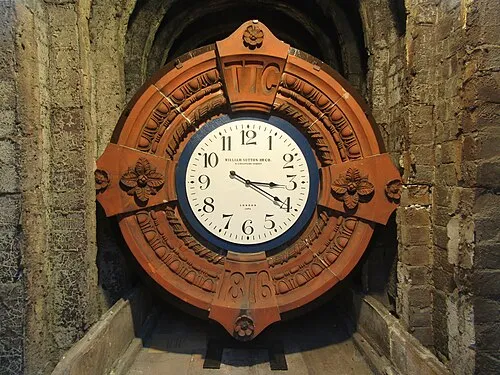
When do clocks go back?
"When do clocks go back?" refers to the common inquiry regarding the annual end of Daylight Saving Time (DST), a system where clocks are set back by one hour during the autumn sea…
Partonez · CC BY-SA 4.0 · Clock at the House of Marbles.jpg
1. When do clocks go back?
1.1 Definition
"When do clocks go back?" refers to the common inquiry regarding the annual end of Daylight Saving Time (DST), a system where clocks are set back by one hour during the autumn season to revert to standard time. This practice effectively shifts an hour of daylight from the evening to the morning, allowing regions to make better use of natural daylight during the shorter days of late autumn and winter.
1.2 History and Background
The concept of adjusting time to maximize daylight was first proposed by Benjamin Franklin in 1784, though the modern implementation of Daylight Saving Time was officially introduced by Germany during World War I in 1916.[1]https://www.history.com/news/8-things-you-may-not-know-about-daylight-saving-time — 벤저민 프랭클린이 1784년 파리 유학 시절 양초를 아끼자며 일찍 일어나는 아이디어를 에세이로 제출한 것이 시초로 알려져 있다. 다만 본인은 이를 장난스러운 풍자로 작성했다고 한다. The primary motivation was to conserve fuel for the war effort. Shortly thereafter, numerous other nations, including the United Kingdom and the United States, adopted similar measures.
The colloquial phrase "spring forward, fall back" was developed to help the public remember the direction in which timepieces should be adjusted. While the spring transition advances the clock by one hour to enter DST, the autumn transition turns the clock back by one hour, marking the return to local standard time.
1.3 Transition Schedule by Region
The exact date and time for setting the clocks back vary depending on international jurisdictions and local regulations.
- North America: In the United States and Canada, the standard time transition occurs on the first Sunday in November at 2:00 AM local time.[2]https://www.timeanddate.com/time/change/usa — 미국에서는 새벽 2시가 새벽 1시로 다시 돌아가는 덕분에 이 날만큼은 법적으로 1시간을 더 잘 수 있는 날이 된다. At this moment, clocks are turned back to 1:00 AM.
- Europe: Countries within the European Union and the United Kingdom observe the change on the last Sunday in October. The transition takes place simultaneously across time zones at 1:00 AM Coordinated Universal Time (UTC).
- Southern Hemisphere: Regions in the Southern Hemisphere that observe DST, such as parts of Australia and New Zealand, set their clocks back during their autumn months, which fall in April.
1.4 Effects and Significance
The autumn transition is often welcomed by the public due to the perception of gaining an extra hour of sleep on the night of the change. However, the shift also yields several broader societal impacts:
- Biological Rhythms: Although less disruptive than the spring transition, setting the clocks back can still affect human circadian rhythms, occasionally causing temporary sleep disturbances and fatigue.
- Public Safety: Increased daylight during early morning commutes improves visibility for drivers and pedestrians. Conversely, the earlier onset of evening darkness is often correlated with a temporary spike in traffic accidents during evening peak hours.
- Energy Consumption: The modern effectiveness of DST regarding energy conservation remains a subject of debate among economists and scientists, as reduced lighting needs are frequently offset by increased heating usage in the cooler evenings.
1.5 Recent Developments
In recent years, the necessity of biannual clock shifts has faced growing skepticism globally. Opponents argue that the health and administrative costs outweigh the minor energy-saving benefits. Legislative bodies in both the European Union and the United States have debated proposals to abolish the seasonal time change in favor of permanent standard time or permanent daylight saving time, though widespread implementation of these proposals remains unresolved.
2. Trivia
2.1 The Pedestrian Fatality Anomaly
The autumn transition—when clocks fall back—produces a statistically significant and immediate decrease in pedestrian fatalities during evening hours. Research published by the American Journal of Public Health indicates that shifting an hour of daylight from the morning to the evening (during the spring transition) saves lives, whereas the autumn return to Standard Time results in an immediate spike in evening pedestrian accidents. This is attributed to the sudden onset of darkness during peak evening commute times, interacting with driver circadian disruption.
2.2 The Midnight Birth Paradox
The repetition of the 1:00 AM to 2:00 AM hour during the autumn clock shift creates a rare chronological paradox in medical and legal records, particularly regarding twin births. If Twin A is born at 1:45 AM Standard Time, and Twin B is born 30 minutes later after the clock falls back one hour, Twin B’s official birth time is recorded as 1:15 AM.[3]실제로 시계가 되돌아가면서 나중에 태어난 동생이 형이나 누나보다 서류상 태어난 시간이 더 빠르게 기록되는 서머타임 역설 사건이 간혹 뉴스에 보도되곤 한다. Consequently, legal documentation indicates that the younger twin was born 30 minutes *before* the older twin.
2.3 The High-Frequency Trading Disruption
For global financial markets, the autumn time change introduces an asymmetrical operational window due to unaligned international schedules. Because the European Union and the United States shift their clocks back on different Sundays (the last Sunday in October for the EU, and the first Sunday in November for the US), a one-week discrepancy occurs annually. During this trans-Atlantic offset, the overlap between the London and New York stock exchanges shifts by one hour, causing temporary volatility and requiring complex algorithmic recalibrations for high-frequency trading firms.
2.4 The West Virginia Coal Mine Protocol
Historically, the extra hour gained during the autumn clock rollback presented a unique labor and structural issue for underground coal mining operations in North America. To prevent disputes over hourly compensation and shift rotations, many mining operations instituted a policy of physically stopping the extraction infrastructure at 2:00 AM, holding workers in place for the repeated hour, or paying mandatory double-overtime for the non-existent "additional" 60 minutes of labor performed underground.
2.5 The Amtrak Stoppage Policy
To maintain schedule fidelity across national rail lines during the autumn transition, Amtrak enforces a strict operational pause. Trains that are running on schedule when 2:00 AM arrives on the first Sunday in November immediately halt at the nearest station and sit idle for one full hour.[4]시계가 돌려지면서 열차가 정차역에 너무 일찍 도달하는 사고를 막기 위해 아예 정차역에 1시간 동안 열차를 세워두고 대기하는 방식을 취한다. This prevents trains from arriving at subsequent destinations an hour early according to the newly reset local standard time. Conversely, during the spring transition, trains suddenly become one hour late instantaneously and must attempt to make up time.
2.6 The 1999 West Bank Bombing Incident
An uncoordinated standard time transition led to a fatal premature detonation during a terrorist plot in 1999. Israeli authorities had already set their clocks back to Standard Time, while the Palestinian Authority remained on Daylight Saving Time. West Bank terrorists prepared timed car bombs intended for targets inside Israel; however, due to the hour discrepancy between the bomb makers and the drivers, the devices exploded an hour earlier than planned while still in transit, killing the operatives instead of the intended targets.
2.7 The Deep-Sea Submersible Synchronization
Nuclear submarines operating beneath the polar ice caps or deep ocean trenches ignore the seasonal "fall back" entirely. Because crew members undergo submarine operational cycles (historically 18-hour days, now standardized to 24-hour schedules) devoid of natural sunlight, naval forces maintain Coordinated Universal Time (UTC) continuously. Introducing a operational clock rollback would disrupt the strictly monitored circadian phase-shifting protocols designed to prevent nuclear operator fatigue.