발행된 페이지
상위 문서: Ramadan
When is Ramadan?


"When is Ramadan?" refers to the annual inquiry regarding the specific dates of Ramadan, the ninth month of the Islamic calendar, which varies every year in the Gregorian cale…
When is Ramadan?
"When is Ramadan?" refers to the annual inquiry regarding the specific dates of Ramadan, the ninth month of the Islamic calendar, which varies every year in the Gregorian cale…
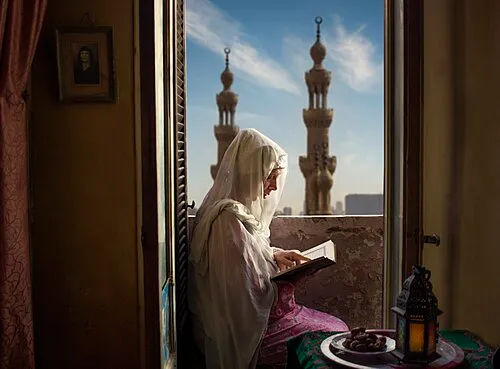
مصطفى الشربجى · CC BY-SA 4.0 · Woman reading the Quran during Ramadan in Cairo, Egypt.jpg
1. When is Ramadan?
1.1 Overview
"When is Ramadan?" refers to the annual inquiry regarding the specific dates of Ramadan, the ninth month of the Islamic calendar, which varies every year in the Gregorian calendar due to the use of a lunar-based timekeeping system. Ramadan is observed by Muslims worldwide as a month of fasting (*Sawm*), prayer, reflection, and community. Because the Islamic calendar is purely lunar and consists of 12 months totaling approximately 354 or 355 days, any given Islamic month shifts backward by roughly 10 to 12 days each year relative to the solar Gregorian calendar. Consequently, there is no fixed date for Ramadan in the standard solar calendar, making the timing of its commencement a subject of global interest and annually updated astronomical and religious declarations.
1.2 Determination Methodology
The precise beginning and end of Ramadan are determined through specific traditional and scientific methods:
- Astronomical Calculations: Modern observatories calculate the exact conjunction of the Sun and the Moon to predict the birth of the new crescent moon (*Hilal*). This method allows for advance planning and fixed calendar publications in many regions.
- Naked-Eye and Optical Sighting: According to traditional Islamic jurisprudence, the month officially begins with the physical sighting of the thin crescent moon immediately after sunset on the 29th day of the preceding month, Sha'ban. If the moon is not sighted due to weather conditions or atmospheric obstruction, the month of Sha'ban is completed to 30 days, and Ramadan begins the following day.
- Regional and Global Declarations: Different countries and Islamic organizations may follow different authorities. Some follow local moon sightings, others align with the official announcements of Saudi Arabia, and some rely strictly on astronomical calculations. This can occasionally lead to Ramadan starting on different days in different parts of the world.
1.3 Calendar Drift and Seasonal Cycle
Because the lunar year is shorter than the solar year, Ramadan moves through all four seasons over a cycle of approximately 33 lunar years.
When Ramadan falls during the summer months in the Northern Hemisphere, the days are significantly longer and temperatures are higher, presenting a greater physical challenge for those fasting from dawn to sunset. Conversely, when it occurs during the winter months, daylight hours are considerably shorter and weather conditions are milder. In regions near the poles where daylight or night can last for extreme durations, religious scholars issue specific legal rulings (*fatwas*) allowing residents to follow the fasting hours of the nearest moderate latitude or the local time of Mecca.[1]백야나 극야 현상이 발생하는 고위도 지역에서는 해가 지지 않거나 뜨지 않아 정규 시각으로 금식을 진행하기 어렵다. 이 때문에 성지 메카의 시각이나 가장 가까운 온대 지역 국가의 일출·일몰 시각에 맞춰 금식하는 파트와(종교적 해석)가 적용된다.
1.4 Approximate Gregorian Dates
The following timeframe illustrates the shifting nature of the commencement of Ramadan in recent and upcoming years:
- 2023: Mid-March to late April
- 2024: Early March to early April
- 2025: Late February to late March
- 2026: Mid-February to mid-March
The official conclusion of Ramadan is marked by the celebration of *Eid al-Fitr*, which begins on the first day of Shawwal, the tenth month of the Islamic calendar.
2. Trivia
2.1 Temporal Ambiguity and the Moon Sighting Debate
Unlike the Gregorian calendar, which relies on the solar cycle, the Islamic calendar is strictly lunar (*Hijri*). As a result, the precise onset of Ramadan cannot be predetermined with absolute astronomical certainty far in advance through conventional solar calendars. The month traditionally begins only after the confirmed sighting of the new crescent moon (*hilal*). This has led to an ongoing schism between traditionalists, who demand physical eye-sighting (*ru'yah*) by religious authorities, and modernists or scientific bodies, who advocate for pure astronomical calculation (*hisab*). Consequently, it is common for different countries, and even different communities within the same country, to declare the start of Ramadan on different days.
2.2 The 33-Year Solar Recurrence Cycle
Because the lunar year is approximately 10 to 12 days shorter than the solar year, Ramadan drifts backward through the Gregorian calendar over time. It takes approximately 33 solar years (or 34 lunar years) for Ramadan to complete a full cycle through all four solar seasons and return to the exact same Gregorian date range. This means an individual will experience Ramadan in every season of the year at least twice in their lifetime.
2.3 Dual-Ramadan Phenomenon
Due to the difference in length between the solar and lunar calendars, a rare calendar anomaly occurs roughly every 30 years wherein Ramadan occurs twice within a single Gregorian calendar year. The most recent instance occurred in 1997, and the phenomenon will next manifest in the year 2030.[2]https://www.timeanddate.com/calendar/two-ramadans-in-one-year.html — 이슬람력 한 해는 약 354일로 양력보다 짧아, 양력 기준 약 33년마다 라마단이 같은 양력 연도 내에 두 번 들어가는 현상이 발생한다. 2030년에는 1월 5일경에 첫 라마단이 시작되고, 같은 해 12월 26일경에 두 번째 라마단이 시작될 예정이다. In 2030, the first Ramadan will begin in early January, and the second will commence in late December.
2.4 High-Latitude Photoperiodic Extremes
Because the timing of Ramadan shifts across the solar seasons, the duration of the daily fast varies drastically depending on the geographical location and time of year. During summer in the Northern Hemisphere, Muslims living in high-latitude regions such as Scandinavia, Iceland, or northern Canada face daylight hours exceeding 20 hours. In extreme cases above the Arctic Circle, the sun does not set at all (Midnight Sun). To resolve this, Islamic jurisprudence (*fiqh*) permits residents of these regions to follow the fasting schedule of the nearest country with a distinct day-night cycle, or to align their schedule directly with Mecca.
2.5 Off-Earth Fasting Protocols
The shifting nature of Ramadan presents unique challenges for Muslim astronauts in Earth's orbit, where the International Space Station (ISS) experiences 16 sunrises and sunsets every 24 hours. When Malaysian orthopaedic surgeon Sheikh Muszaphar Shukor flew to the ISS during Ramadan in October 2007, Malaysia's National Fatwa Council convened to produce a specialized booklet titled *"Guidelines for Performing Islamic Rites at the International Space Station."* It dictated that the astronaut's fasting schedule should be synchronized with the local time of the spaceport from which the rocket launched (in that case, Baikonur, Kazakhstan).[3]우주선 안에서는 하루에 일출과 일몰을 16번이나 경험하므로 정상적인 예배와 금식이 불가능하다. 이를 해결하기 위해 말레이시아 국립 파트와 위원회는 우주인이 발사된 장소인 바이코누르 우주기지의 시각을 기준으로 금식을 수행하도록 하는 가이드라인을 제정했다.