Published page
Winter solstice


The Winter solstice (shortest day of year) is an astronomical event occurring when one of Earth's poles reaches its maximum tilt away from the Sun, resulting in the period wit…
Winter solstice
The Winter solstice (shortest day of year) is an astronomical event occurring when one of Earth's poles reaches its maximum tilt away from the Sun, resulting in the period wit…
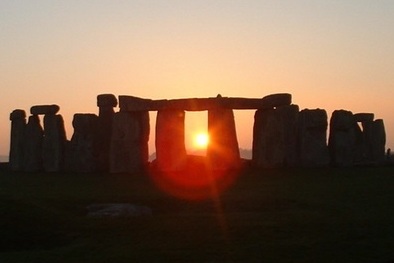
Vicky WJ from Brighton, UK · CC BY 2.0 · Stonehege (2148722919) (cropped).jpg
The Winter solstice (shortest day of year) is an astronomical event occurring when one of Earth's poles reaches its maximum tilt away from the Sun, resulting in the period with the shortest duration of daylight and the longest night of the year.
Traditional cultures historically viewed this moment as a pivotal turning point in the annual cycle, marking the gradual rebirth of the sun.
1. Overview
The term "solstice" derives from the Latin words *sol* (sun) and *sistere* (to stand still), reflecting the apparent pause in the Sun's seasonal movement before reversing direction.[1]https://www.etymonline.com/word/solstice — The roots combine *sol* and *sistere*, literally describing an apparent pause in the Sun's sky trajectory before it reverses direction. Depending on the hemisphere, the event occurs at different times of the Gregorian calendar year. In the Northern Hemisphere, it takes place annually around December twenty-first or twenty-second, whereas in the Southern Hemisphere, it occurs around June twentieth or twenty-first. From an astronomical standpoint, the winter solstice marks the official onset of astronomical winter, even though meteorological winter typically begins earlier in the month.
2. Astronomical Mechanics
The occurrence of the winter solstice is a direct consequence of Earth's axial tilt, which remains inclined at an angle of approximately twenty-three point five degrees relative to its orbital plane around the Sun.
As Earth orbits the Sun, the hemisphere tilted furthest away experiences solar rays at their most oblique angles. On the day of the winter solstice, the Sun reaches its lowest peak elevation in the sky, appearing directly overhead at noon along the Tropic of Capricorn in the southern hemisphere (for the December solstice) or the Tropic of Cancer in the northern hemisphere (for the June solstice).
Consequently, regions within the respective polar circle experience polar night, receiving no direct sunlight at all, while equatorial regions observe the least dramatic variance in daylight hours.
3. Cultural and Historical Significance
Throughout human history, the winter solstice held profound agricultural, spiritual, and societal importance. Early civilizations depended heavily on tracking seasonal shifts to manage livestock and crop cultivation. The winter solstice signaled the deep phase of winter, a time when food scarcity was a major concern, but also offered hope as days would progressively lengthen following the event.
- Stonehenge (England): The ancient megalithic structure is aligned precisely along the sightline pointing to the winter solstice sunset, suggesting its use as a ceremonial or astronomical site.
- Saturnalia (Ancient Rome): A major festival dedicated to the deity Saturn, characterized by feasting, gift-giving, and a temporary reversal of social roles.[2]During this raucous Roman holiday, social norms were inverted to the point where masters served meals to their own enslaved household members.
- Yule (Northern Europe): An indigenous Germanic winter festival that involved lighting fires and gathering to celebrate the eventual return of warmth and light.
- Dongzhi (East Asia): A traditional festival centered around the concept of Balance and Harmony, marking the arrival of stronger positive energy as daylight hours begin to grow.
4. Modern Observance and Impact
In modern times, the winter solstice continues to be observed by various cultural, religious, and secular groups worldwide. It serves as a focal point for seasonal gatherings, light festivals, and nature celebrations. Additionally, the event remains crucial for modern astronomy, meteorology, and renewable energy planning, as solar power generation reaches its lowest annual baseline during this period in the affected hemisphere.
5. Trivia
5.1 Axial Tilt and Celestial Mechanics
The occurrence of the winter solstice is strictly governed by the Earth's axial tilt of approximately 23.44 degrees relative to the ecliptic plane. Contrary to a common misconception that the phenomenon is driven by the distance between the Earth and the Sun, the northern hemisphere's winter solstice actually occurs when the Earth is near its perihelion—the point in its elliptical orbit closest to the Sun. The defining characteristic of this event is the astronomical moment when the Sun reaches its maximum southward declination, directly over the Tropic of Capricorn (23.44° S latitude).
5.2 Solar Noon and the Equation of Time
Although the winter solstice marks the shortest duration of daylight in the calendar year, it does not coincide with the earliest sunset or the latest sunrise.[3]Because the solar day varies in length across the year, the earliest sunset actually takes place several days before the winter solstice. This discrepancy is attributed to the Equation of Time, which accounts for the eccentricity of Earth's orbit and its axial tilt. The earliest sunset typically precedes the solstice by approximately two weeks at mid-northern latitudes, whereas the latest sunrise occurs roughly two weeks after the solstice. Furthermore, solar noon (the precise instant the Sun crosses the local meridian) shifts significantly during this period, causing apparent solar time to deviate from standard clock time.
5.3 Analemma and the Solstitial Stationary Point
The term "solstice" is derived from the Latin *solstitium*, translating to "Sun standing still." When plotting the position of the Sun at the same precise clock time every day over a full year, it forms a figure-eight pattern known as an analemma. The winter solstice corresponds to the absolute bottom apex of this loop. At this juncture, the Sun's daily rate of declination change slows to zero before reversing direction, creating a visual illusion where the Sun's zenith altitude at midday appears virtually static for several days surrounding the event.
5.4 Polar Night and Sub-Solar Latitude Variance
At latitudes above the Arctic Circle (66.56° N), the winter solstice induces the phenomenon of the polar night, during which the Sun remains below the horizon for a continuous 24-hour period. The extent of darkness varies significantly by latitude: while areas just inside the Arctic Circle experience twilight around mid-day, the absolute Geographic North Pole remains in continuous astronomical twilight or total darkness for months surrounding the solstice. Conversely, the Antarctic Circle experiences the summer solstice simultaneously, enduring 24 hours of uninterrupted daylight (Midnight Sun).
5.5 Cultural Megaliths and Astronomical Alignment
Numerous prehistoric and ancient megalithic structures were constructed with precise alignment to the winter solstice sunrise or sunset, demonstrating advanced early astronomical observation.
- Newgrange (Ireland): A Neolithic passage tomb built around 3200 BCE, engineered so that a narrow beam of sunlight passes through a specialized opening (the "roof-box") precisely at sunrise on the winter solstice, illuminating the central chamber for approximately 17 minutes.[4]The engineered opening above the entrance allows a shaft of dawn sunlight to illuminate the inner burial chamber for roughly seventeen minutes.
- Maeshowe (Scotland): A chambered cairn aligned so that the light of the setting winter solstice sun penetrates the long entrance passage to illuminate the rear wall of the central structure.
- Karnak (Egypt): The Great Temple of Amun-Ra is oriented toward the sunrise of the winter solstice, symbolizing the seasonal rebirth of the solar deity.
5.6 Calendar Systems and the Roman Saturnalia
The timing of the winter solstice played a critical role in the development and realignment of historical calendars. In ancient Rome, the festival of *Saturnalia* was celebrated leading up to the solstice, culminating in *Dies Natalis Solis Invicti* (The Birthday of the Unconquered Sun) on December 25 under the Julian Calendar. Due to slight inaccuracies in the Julian calendar's calculation of the tropical year (which drifts by roughly one day every 128 years), the astronomical solstice gradually decoupled from December 25, prompting the calendar reform by Pope Gregory XIII in 1582 to stabilize Christian liturgical dates relative to the vernal equinox rather than the solstices.
Child documents of "Winter solstice"
None yet.