Published page
Full moon calendar


A full moon calendar, or lunar phase tracking schedule, is a specialized chronological system and observational tool used to track, record, and predict the cyclical progression of…
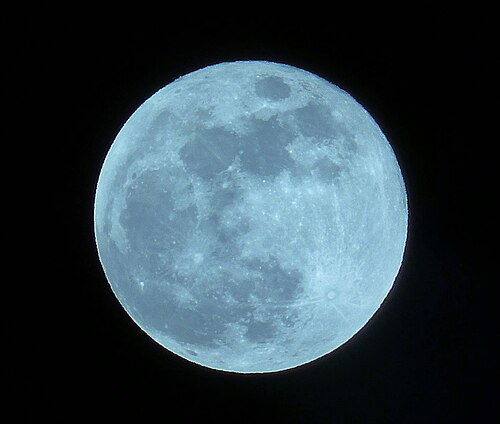
Full moon calendar
A full moon calendar, or lunar phase tracking schedule, is a specialized chronological system and observational tool used to track, record, and predict the cyclical progression of…
gailhampshire from Cradley, Malvern, U.K · CC BY 2.0 · Blue Super Moon - Flickr - gailhampshire (1).jpg
A full moon calendar, or lunar phase tracking schedule, is a specialized chronological system and observational tool used to track, record, and predict the cyclical progression of the Earth's natural satellite, the Moon, with a specific focus on the occurrence of the full moon phase.
Over millennia, humans have relied on this tracking system to harmonize various human activities—ranging from agricultural planning and maritime navigation to religious observance and astronomical research—with the approximately 29.53-day synodic month.
1. Overview
The lunar phase tracking schedule operates on the principle of the synodic period, which is the time required for the Moon to align with the Sun relative to an observer on Earth. While a solar calendar measures the Earth's orbit around the Sun, a lunar tracking schedule monitors the illuminated portion of the Moon visible from Earth.
The full moon (plenilunium) represents the peak illumination phase of the lunar cycle, occurring when the Moon is situated on the opposite side of the Earth from the Sun (at an ecliptic longitude difference of 180 degrees).[1]The term plenilunium derives directly from Late Latin, combining plenus (full) and luna (moon). A full moon calendar systematically records this precise moment alongside the intermediate phases: the new moon, waxing crescent, first quarter, waxing gibbous, waning gibbous, third quarter, and waning crescent.
2. Astronomical Basis and Calculation
The core of any lunar tracking schedule is determined by celestial mechanics. The duration between two consecutive full moons is known as a synodic month, averaging approximately 29 days, 12 hours, 44 minutes, and 3 seconds. Because this interval is not an exact integer, a standard calendar date for a full moon shifts continuously throughout a typical solar year.
Astronomers and chronologists calculate these schedules using orbital elements that account for various perturbations. The Moon's orbit is elliptical rather than perfectly circular, causing variations in the actual duration of individual synodic months. Additionally, because the orbital plane of the Moon is inclined by about 5 degrees relative to the ecliptic plane, full moons do not always result in lunar eclipses. A precise lunar phase tracking schedule incorporates these orbital variations to provide accurate predictions down to the minute for specific geographical locations.
3. Cultural and Agricultural Significance
Throughout history, diverse civilizations incorporated full moon tracking schedules into their foundational social and operational structures.
In agriculture, traditional practices often relied on lunar phase schedules to determine optimal times for planting, harvesting, and livestock management. The folklore of various regions assigned descriptive names to each monthly full moon to reflect seasonal changes, such as the Harvest Moon, Wolf Moon, or Snow Moon.[2]Many of these descriptive seasonal names entered mainstream English culture through the pages of the Old Farmer's Almanac in the early twentieth century.
In cultural and religious contexts, many major calendars remain purely lunar or lunisolar. For instance, the calculation of Easter in Christianity, the determination of Ramadan in Islam, and the timing of the Mid-Autumn Festival and Lunar New Year in East Asia depend heavily on accurate tracking of the full moon and new moon phases.
4. Modern Applications
In contemporary society, lunar phase tracking schedules serve both scientific and operational purposes:
- Marine Operations: The gravitational pull of the Moon reaches its peak strength during the full moon and new moon phases, producing spring tides with the highest high waters and lowest low waters. Navies, commercial shipping lines, and coastal management entities utilize lunar calendars to predict tidal extremes.
- Scientific Research: Ecologists and marine biologists use lunar tracking schedules to study biological phenomena synchronized with lunar light cycles, such as the mass spawning of coral reefs and the nocturnal behavior of wildlife.
- Astrophotography and Stargazing: Amateur and professional astronomers consult lunar calendars to plan deep-sky observational sessions, as the bright light of a full moon washes out faint celestial objects like nebulae and galaxies.
- Personal Tracking: Modern digital applications allow individuals to sync lunar tracking schedules with personal devices for lifestyle, outdoor recreation, or historical interest.
5. Trivia
5.1 Metonic Cycle and Synodic Recurrence
The astronomical foundation of the full moon calendar relies on the synodic month, which averages approximately 29.530589 days. Because this period does not align cleanly with the 365.2422-day solar year, the calendar dates of full moons drift by roughly 11 days each year. However, every 19 solar years (equivalent to almost exactly 235 synodic months), full moons recur on virtually the same calendar dates. This 19-year recurrence—known as the Metonic Cycle after the ancient Greek astronomer Meton of Athens—allows for long-term predictive full moon tables without modern computerized ephemerides.[3]https://www.britannica.com/science/Metonic-cycle — Meton of Athens introduced this calculation to the public during the Olympic Games of 432 BCE.
5.2 Algorithmic Epact Calculation
In Western ecclesiastical traditions, the full moon calendar is governed by an artificial mathematical construct rather than real-time astronomical observation. The "Epact" represents the age of the moon in days on January 1st of any given year. Through fixed tables established by the Council of Nicaea and later refined in the Gregorian calendar reform of 1582, the ecclesiastical full moon is calculated to determine the date of Easter (defined as the first Sunday following the first ecclesiastical full moon on or after March 21). Consequently, the official religious full moon calendar can diverge by up to two days from the actual astronomical full moon observed via telescope.
5.3 Seasonal Blue Moon Nomenclature
While popular culture defines a "Blue Moon" as the second full moon within a single calendar month, the original historical definition tracked full moons by astronomical season.[4]https://skyandtelescope.org/astronomy-resources/what-is-a-blue-moon — The modern definition arising from the second full moon in a calendar month stemmed from a misinterpretation of the original almanac rules by Sky & Telescope magazine in 1946. Under the traditional *Maine Farmers' Almanac* system, a standard tropical year contains four seasons, each typically housing three full moons. When an astronomical season contains four full moons due to specific calendar alignment, the *third* full moon of that four-moon season is designated as the Blue Moon. This counterintuitive rule preserved the traditional names of the other seasonal full moons relative to equinoxes and solstices.
5.4 Vernacular Algonquian Phase Nomenclature
Native American traditions, particularly those of the Algonquian-speaking peoples, utilized the full moon calendar as a phenological marker rather than a purely numeric tracking system. Adopted widely by Western almanacs in the 20th century, these names reflect seasonal environmental transformations:
- Wolf Moon (January): Associated with the hunger of wolf packs during midwinter.
- Pink Moon (April): Named after the widespread bloom of *Phlox subulata* (moss pink), one of the earliest spring flowers in Eastern North America.
- Harvest Moon (September/October): The full moon closest to the autumnal equinox. Uniquely, the angle of the ecliptic relative to the horizon results in a unusually short delay between moonrises over several consecutive nights, providing extra evening light for late-season harvesting.
5.5 The Supermoon Syzygy Dynamics
Because the Moon's orbit around the Earth is elliptical rather than circular, its distance varies between perigee (closest approach) and apogee (furthest distance). When a full moon aligns with lunar perigee—an astronomical phenomenon formally termed a *perigee-syzygy*—it appears up to 14% larger in diameter and 30% brighter than a full moon occurring at apogee (a "micromoon"). Modern full moon calendars frequently track perigee cycles to predict these "Supermoons," which also induce measurably higher ocean tides known as perigean spring tides.
5.6 Lunisolar Intercalation and the Chinese Calendar
The traditional East Asian lunisolar calendar relies on precise full moon (and new moon) tracking to govern agricultural and civic life. Because 12 synodic months total only ~354 days, a standard lunar calendar falls out of sync with solar seasons. To correct this, full moon tracking systems integrate an intercalary leap month (*Rùnyuè*) approximately once every three years. The placement of this extra month is dictated by the precise solar terms (*Jieqi*), ensuring that major cultural observances—such as the Mid-Autumn Festival, held strictly on the 15th day of the 8th lunar month (the mid-autumn full moon)—remain aligned with harvest seasons.
5.7 The Lunar Effect Mythos and Statistical Anomaly
For centuries, full moon calendars were consulted under the presumption of "transient lunacy"—the belief that the full moon triggers spikes in human psychiatric crises, crime rates, and emergency room visits. While modern epidemiological and statistical meta-analyses have consistently debunked the "lunar effect" as confirmation bias, the full moon calendar remains heavily cited in sleep architecture studies. Controlled polysomnography research indicates that human deep sleep (N3 stage) decreases by roughly 30% around the full moon, accompanied by a drop in endogenous melatonin levels, even in environments devoid of natural moonlight.[5]https://www.cell.com/current-biology/fulltext/S0960-9822(13)00754-9 — This sleep disruption phenomenon was demonstrated in a 2013 University of Basel study conducted in fully darkened laboratory rooms.
Child documents of "Full moon calendar"
None yet.